
Choosing the best Pvc Fittings in 2026 requires more than comparing prices or polished catalog photos. Global buyers must examine pressure ratings, temperature limits, dimensional accuracy, chemical resistance, and connection quality. A fitting that looks identical on a screen may perform differently after months of heat, vibration, or buried installation.
Industry data supports a careful approach. Grand View Research reports continued growth in the global PVC market, driven by construction, water infrastructure, and industrial applications. The United Nations Comtrade database also shows substantial international trade under HS 391740, covering plastic pipe fittings. These figures indicate strong demand, but they do not prove that every supplier offers dependable products. That distinction matters.
Field experience matters too.
John S. Summers, a recognized PVC-pipe engineer and author, offers a useful principle: “PVC pipe has unique characteristics that must be understood in design and installation.” Buyers should apply that idea to every Pvc Fittings shortlist. Verify standards such as ASTM, ISO, EN, or equivalent regional requirements. Request batch traceability, pressure-test records, and clear technical drawings. Check whether the socket depth is consistent and whether the fitting seats smoothly without excessive force.
This guide compares leading Pvc Fittings options for international purchasing teams in 2026. It considers material quality, manufacturing control, certification evidence, logistics, and after-sales support. No ranking is perfect. Supplier data can be incomplete, and local water chemistry may change the result. The strongest choice is usually not the cheapest fitting, but the one that remains reliable in its actual service environment.
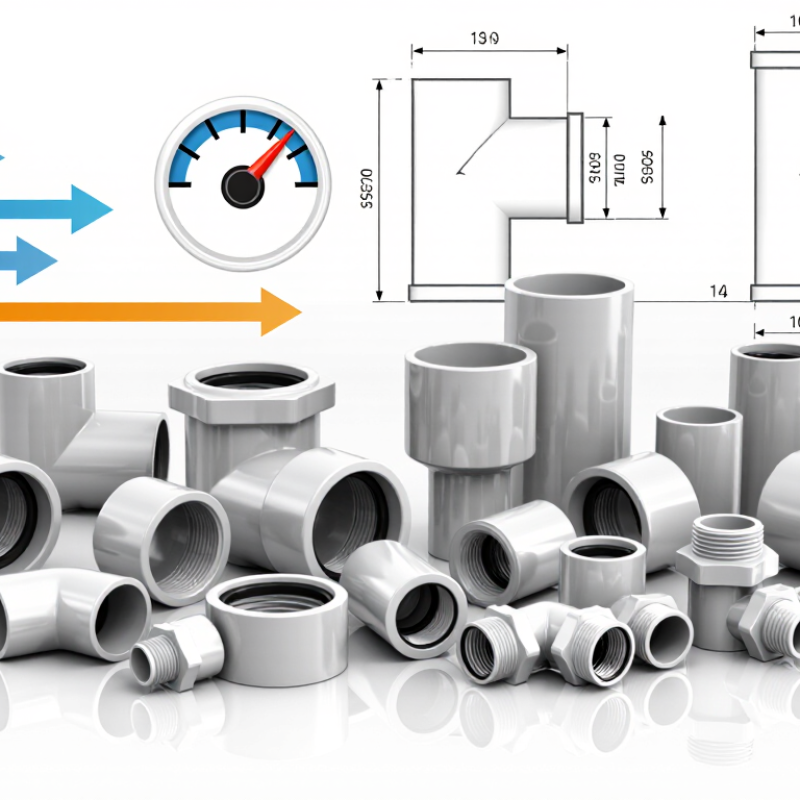
PVC fittings connect plastic pipes and control the movement of water, air, or compatible fluids. Common types include elbows, tees, couplings, unions, adapters, and valves. Each shape solves a practical installation problem.
Their importance goes beyond simple connection. A poorly matched fitting can cause leaks, pressure loss, noise, or early replacement. Reliable fittings need accurate dimensions, smooth internal surfaces, and consistent wall thickness. They should also match the pipe size, pressure rating, temperature range, and intended fluid. In global plumbing projects, buyers must check recognized testing requirements and installation guidance for their destination market. Local climate matters too. Heat, cold, sunlight, and soil movement can change long-term performance. The “best” PVC fitting is not universal. That assumption deserves careful review.
Tips: Measure both outside and inside dimensions before ordering. Confirm socket depth and thread type. Ask for test reports, material information, and batch traceability. Store fittings away from direct sunlight and sharp impacts. Clean, dry pipe ends improve solvent-welded joints. Do not force a misaligned connection. It may look acceptable today. Field experience shows that small installation shortcuts often become expensive repairs. Testing a sample assembly before bulk purchasing can reveal compatibility problems early, especially when suppliers use different dimensional systems. Keep records of inspections, pressure tests, and installation conditions. Those details support better decisions when a project crosses borders.
Global buyers should compare PVC fittings by service conditions, not appearance alone. Elbows, tees, couplings, reducers, unions, and adapters solve different installation problems. A 90-degree elbow changes flow direction, while a union allows easier maintenance near a pump. Check nominal size, outside diameter, wall thickness, and pressure class together. A fitting that looks heavy may still be unsuitable for the system.
Standards require careful attention. ASTM, ISO, and EN dimensions may not match perfectly, even when sizes appear similar. Confirm whether the pipe uses Schedule ratings, SDR values, or another classification. Review pressure limits at the actual operating temperature. Cold-water ratings can fall as temperatures rise. Request dimensional drawings, material data, pressure test records, and batch traceability from the supplier. These documents are more useful than a polished catalog.
Application changes the selection. Drainage systems often need gravity-flow fittings, while irrigation systems require dependable pressure performance and UV considerations. Industrial lines may carry chemicals that need specific PVC compounds and seals. Solvent-welded joints can provide compact connections, but poor surface preparation causes leaks. Threaded fittings are convenient, yet over-tightening can crack plastic. I once underestimated alignment during a small installation; the joint looked correct but carried stress. That mistake still matters. Leave room for expansion, support long runs, and inspect every connection before concealment. Local certification requirements also deserve checking, especially for drinking-water installations.
Typical nominal diameter ranges for commonly specified pressure-rated PVC fitting types in international procurement. Actual availability depends on the applicable standard, pressure class, connection method, and manufacturer.
Larger elbows, tees, couplings, and flange adapters are commonly used in municipal water, irrigation, and industrial distribution systems, while unions and crosses are more often selected for compact equipment connections and maintenance access. Buyers should confirm DN/inch conversion, pressure rating, temperature limits, socket or threaded dimensions, and compliance with standards such as ISO 1452, EN 1452, ASTM D2466, and ASTM D2467 before ordering.
For global buyers in 2026, PVC-U remains a practical choice for cold-water, drainage, and irrigation systems. A 2024 Grand View Research assessment valued the global PVC pipes market at approximately US$22 billion in 2023. The report also expects steady growth through 2030, driven by water infrastructure investment. That demand rewards fittings with consistent wall thickness, smooth internal surfaces, and clear pressure ratings.
Material selection still depends on temperature and local approval rules. PVC-U suits most ambient-water applications, while CPVC performs better in warmer service conditions. For potable water, buyers should verify migration testing and compliance with standards such as NSF/ANSI/CAN 61 or equivalent national requirements. The Ellen MacArthur Foundation reports that mechanical recycling usually preserves more material value than disposal, so clearly marked, single-material fittings support better recovery. It is a useful advantage.
Design details often decide field performance. Socket fittings with controlled insertion depth reduce installation errors. Gasketed joints can improve speed on larger pipelines, while solvent-cement joints need clean, dry surfaces and correct curing time. Radiused elbows reduce turbulence and pressure loss. ASTM D2466, ASTM D2467, and ISO 1452 provide useful reference points for dimensions and pressure performance. Yet standards do not replace site testing. Heat, ultraviolet exposure, poor alignment, and rushed assembly still cause failures. No fitting design removes every installation risk.
Global buyers should evaluate PVC fitting suppliers through evidence, not polished catalogs. Ask for factory photos, production records, and recent third-party test reports. A reliable supplier should explain resin grade, fitting dimensions, pressure ratings, and temperature limits clearly. Request samples from the same production line used for bulk orders.
Check practical details under bright inspection light. Socket depth, wall thickness, thread accuracy, and surface finish should remain consistent across samples. Pressure testing can reveal weak joints that visual checks miss. Batch numbers and traceable inspection records also support accountability. Supplier quality systems, such as ISO 9001 certification, can show process control, but certification alone proves little about every fitting.
Certifications must match the application and destination market. Potable-water projects may require approved material testing, while drainage systems follow different requirements. Confirm the certificate’s scope, issuing body, expiry date, and covered product range. Do not accept a scanned document without verification. It happens more often than buyers expect.
Pricing needs a wider lens than the unit quote. Compare resin content, mold quality, packaging, testing, freight, duties, and replacement risk. A cheaper fitting may become expensive after leakage or rejected shipments. Ask for a detailed quotation with payment terms and production lead time. I have found that small test orders expose communication gaps early. Still, no checklist is perfect. Even experienced buyers can overlook changing raw-material sources or inconsistent thread gauges. Regular inspections remain necessary.
| Evaluation Dimension | Recommended Benchmark for Global Buyers | Typical Evidence to Request | Commercial or Technical Impact | Buyer Assessment |
|---|---|---|---|---|
| Material Type | Use rigid PVC compounds suitable for the intended service. PVC-U is common for pressure water and industrial piping; CPVC is selected when higher temperature resistance is required. | Material declaration, technical data sheet, resin or compound specification, and batch traceability. | The material determines chemical resistance, temperature capability, pressure performance, and service life. | Pass / Review / Fail |
| Dimensional Standards | The fitting should match the target market’s pipe dimensions and joining system, such as ISO metric, ASTM inch-based, or other specified regional standards. | Dimension drawings, tolerances, socket depth, wall thickness, and standard reference printed on the product specification. | Incorrect outside diameter, socket dimensions, or tolerances can prevent assembly and cause leakage. | Pass / Review / Fail |
| Pressure Class | For pressure applications, select fittings with a clearly stated pressure rating at the operating temperature. Common PVC-U pressure classes include PN6, PN10, PN16, or equivalent schedule-based ratings, depending on the standard. | Pressure-rating table, hydrostatic test results, design temperature limits, and the applicable product standard. | Pressure capacity generally decreases as temperature rises; the rating must match the complete piping system. | Pass / Review / Fail |
| Temperature Suitability | PVC-U is generally used for relatively low-temperature service, while CPVC is preferred for hot-water applications within the manufacturer’s stated limits. Do not use a generic temperature assumption. | Temperature-pressure derating chart, application limitations, and installation instructions. | A fitting that is suitable for cold water may not be suitable for hot water or elevated process temperatures. | Pass / Review / Fail |
| Chemical Resistance | Confirm compatibility with the actual fluid, concentration, temperature, and exposure time. PVC is widely used for many water, drainage, and chemical services, but compatibility is application-specific. | Chemical-resistance chart, fluid compatibility statement, and written engineering confirmation for unusual media. | Chemical incompatibility can cause swelling, embrittlement, cracking, or premature failure. | Pass / Review / Fail |
| Product Range | A capable supplier should offer the required elbows, tees, reducers, couplings, adapters, unions, valves, and end caps in the target size and pressure range. | Current catalog, size matrix, mold availability, and compatible accessory list. | A complete range reduces mixed-source risks, installation problems, and spare-parts complexity. | Pass / Review / Fail |
| Manufacturing Quality | Look for controlled injection molding, stable process parameters, clean socket surfaces, uniform wall thickness, accurate dimensions, and no visible cracks, voids, burns, or warpage. | Quality-control plan, inspection records, production photographs or audit results, and pre-shipment inspection procedure. | Consistent molding improves joint reliability and reduces installation and warranty claims. | Pass / Review / Fail |
| Testing Capability | Testing should cover dimensions, appearance, hydrostatic pressure, leakage, impact or mechanical performance where required, and batch identification. | Laboratory equipment list, test methods, calibration certificates, factory test reports, and independent inspection options. | Reliable testing verifies that the delivered fittings meet the agreed specification rather than only passing visual inspection. | Pass / Review / Fail |
| Applicable Standards | Match the fitting to the project specification, such as ISO 1452 for PVC-U pressure piping systems, EN 1329 for certain soil and waste systems, ASTM D2466 for some PVC socket fittings, or another explicitly required standard. | Full standard reference, declaration of conformity, test reports, and independent certification when required by the destination market. | A standard number alone is insufficient unless the product dimensions, material, tests, and application scope also match. | Pass / Review / Fail |
| Certifications and Compliance | Request only certifications relevant to the application and destination country. Potable-water projects may require recognized drinking-water contact approval; building or fire applications may require additional local approvals. | Certificate number, scope, validity date, issuing body, covered product sizes, and verification link or database record. | Valid, product-specific certification supports customs clearance, project approval, and legal market access. | Pass / Review / Fail |
| Indicative Unit Pricing | For standard injection-molded PVC fittings, indicative bulk prices may range from approximately USD 0.10–0.80 for small sizes and USD 1.00–8.00 or more for larger or specialized fittings. Actual prices vary by size, standard, material, order volume, packaging, and freight. | Formal quotation showing Incoterm, currency, tooling, packaging, inspection, payment terms, and validity period. | The lowest unit price may not produce the lowest total cost after freight, rejects, testing, and compliance expenses. | Competitive / Average / High |
| Minimum Order Quantity | For standard stock items, a practical export MOQ may be about 100–1,000 pieces per size; custom colors, private packaging, or new molds can require higher quantities. | MOQ by size and product, mixed-size loading policy, sample policy, and tooling requirements. | MOQ affects inventory investment, container utilization, and the feasibility of market testing. | Suitable / Negotiable / Unsuitable |
| Lead Time | Standard stocked items may ship in approximately 1–3 weeks; production orders commonly require about 3–8 weeks, excluding certification, tooling, and international transport. | Production schedule, capacity confirmation, holiday calendar, shipment history, and delay-management procedure. | Predictable lead time is essential for construction schedules and inventory planning. | On Time / Review / Risk |
| Packaging and Marking | Use protective cartons or bags with size, quantity, batch or lot code, standard reference, pressure class where applicable, and country-of-origin information required by the destination market. | Packaging specification, loading photographs, carton drop-test approach, pallet dimensions, and marking artwork. | Proper packaging reduces deformation, contamination, counting errors, and transit damage. | Pass / Review / Fail |
| Traceability | Each production batch should be traceable to raw material, molding date, inspection results, operator or machine records, and shipment documentation. | Lot-code format, retention period for records, batch certificate, and recall or complaint procedure. | Traceability speeds up root-cause analysis and limits the scope of any quality issue. | Strong / Partial / Weak |
| Sample and Pre-Shipment Inspection | Approve production samples before mass shipment and define measurable acceptance criteria for dimensions, appearance, quantity, packaging, and test reports. | Golden sample, inspection checklist, agreed defect classification, independent inspection option, and corrective-action report. | Pre-shipment verification is usually less costly than replacing nonconforming goods after export. | Approved / Conditional / Not Approved |
| Warranty and After-Sales Support | Require clearly defined warranty duration, exclusions, claim evidence, replacement or credit process, and technical support for installation and application questions. | Written warranty, response-time commitment, complaint records, and named technical contact. | Responsive support reduces downtime and protects the buyer’s project and reputation. | Strong / Partial / Weak |
| Overall Supplier Score | Suggested weighting: quality and compliance 35%; technical suitability 25%; total landed cost 20%; delivery reliability 10%; service and traceability 10%. | Use a documented scorecard with evidence-based ratings from 1 to 5 for every criterion. | A balanced score prevents price alone from determining supplier selection. | Recommended / Conditional / Rejected |
What Are the Best PVC Fittings in 2026 for Global Buyers?
Before ordering PVC fittings, check the application, not just the unit price. The 2024 PlasticsEurope “Plastics—The Fast Facts” report records 413.8 million tonnes of global plastics production in 2023. This scale creates wide quality differences. Ask for the resin type, pressure class, wall thickness, and operating temperature. Confirm whether dimensions follow ISO 1452, ASTM D2466, or the standard required in your market. A fitting may look identical but seal differently. Verify socket depth, thread accuracy, and gasket compatibility. Request recent test reports, batch numbers, and a material declaration. Certificates without traceable batches deserve caution.
Tips: Order samples first. Measure them. Test assembly with your actual pipe. For outdoor systems, request UV and weathering data. For drinking-water projects, confirm the relevant local approval before shipment. Also inspect packaging: capped ends, moisture protection, carton strength, and readable labels reduce damage at the port. The World Bank’s 2023 Logistics Performance Index shows that shipment reliability varies sharply between markets, so delivery planning matters. I would also compare the supplier’s stated pressure rating with independent testing. A catalogue is not proof. Some buyers skip this step, and that mistake becomes expensive after installation.
Check the pro forma invoice carefully. It should state dimensions, standards, quantities, tolerances, inspection terms, and Incoterms. Calculate landed cost, not factory price alone. PVC formulations can change between batches, even when the drawing remains unchanged. That deserves a second review. Need help?
PVC fittings connect plastic pipes and guide water, air, or compatible fluids. Elbows change direction. Tees split flow. Valves control movement.
Measure outside and inside pipe dimensions before ordering. Confirm socket depth, wall thickness, thread type, and pressure class. Do not guess.
Different dimensional systems may use different outside diameters or socket measurements. A matching nominal size does not guarantee a secure joint.
Heat, cold, sunlight, soil movement, pressure, and fluid chemistry all matter. Pressure ratings may decrease as temperature rises. Climate changes the decision.
Drainage needs gravity-flow designs. Irrigation needs pressure and sunlight resistance. Industrial lines may require specific plastic compounds and seals.
Dirty pipe ends, poor alignment, shallow insertion, and excessive thread tightening can weaken connections. Clean and dry surfaces first. Never force a joint.
Request dimensional drawings, material information, pressure-test records, batch traceability, and samples from the intended production line. Catalog images are not enough.
Compare material content, mold quality, packaging, testing, freight, duties, lead time, and replacement risk. A low unit price may hide later costs.
Check destination-market requirements and local installation guidance. Test a sample assembly before bulk purchasing. Keep inspection and pressure-test records.
No. Verify the certificate scope, issuing body, expiry date, and covered products. Certification supports review, but regular inspections remain necessary.
This guide explains why Pvc Fittings remain important for global plumbing, irrigation, drainage, and industrial fluid systems in 2026. It covers how to compare fitting types, connection methods, sizes, pressure ratings, temperature limits, and international standards according to specific applications. Readers will also learn how material composition, wall thickness, corrosion resistance, flow design, and manufacturing consistency affect long-term performance and installation efficiency.
For global buyers, selecting the right supplier requires more than comparing prices. The article highlights essential checks for product quality, dimensional accuracy, testing procedures, certifications, packaging, production capacity, delivery reliability, and after-sales support. Before placing an order, buyers should confirm specifications, applicable standards, sample approval, inspection requirements, quantity, lead time, shipping terms, and documentation. With a structured evaluation process, buyers can reduce compatibility risks, control total purchasing costs, and choose Pvc Fittings that provide dependable performance across different plumbing environments.
