
+86-13534590764 [email protected] Foshan, Guangdong, China

Why Choose PVC Clamps for Pipe Installation?

Time:2026-11-02 Author:Charlotte
0%

Pipework is only as dependable as its support. A loose run can knock against a wall, while an over-tightened fixing may restrict movement or mark the pipe. Pvc Clamps help secure piping along walls, ceilings, and service routes, but the right choice depends on pipe diameter, operating conditions, and the installation surface. Small details matter.

The scale of plastic use offers useful context, not a product endorsement. The OECD’s Global Plastics Outlook (2022) reports that global plastics production grew to 460 million tonnes in 2019, while plastic waste reached 353 million tonnes. Those figures describe plastics broadly; they do not measure PVC pipe performance or clamp effectiveness. Still, they underline why specifying materials carefully and avoiding premature replacement deserve attention. That distinction matters.

For installers and specifiers, a suitable clamp should match the pipe’s outside diameter and provide stable support without crushing it. Check the manufacturer’s guidance for support spacing, temperature limits, and compatibility with the pipe material. Consider moisture, vibration, and access for future inspection, too. A clamp that looks sturdy on a shelf may not suit a damp plant room or a moving pipe run. Fit matters. PVC systems vary, and one fixing detail cannot cover every layout. Reviewing the actual route and operating conditions is a practical starting point, even when it takes extra time. This guide explores why Pvc Clamps are commonly considered for pipe installation, what to assess before selection, and where their limitations deserve a closer look.
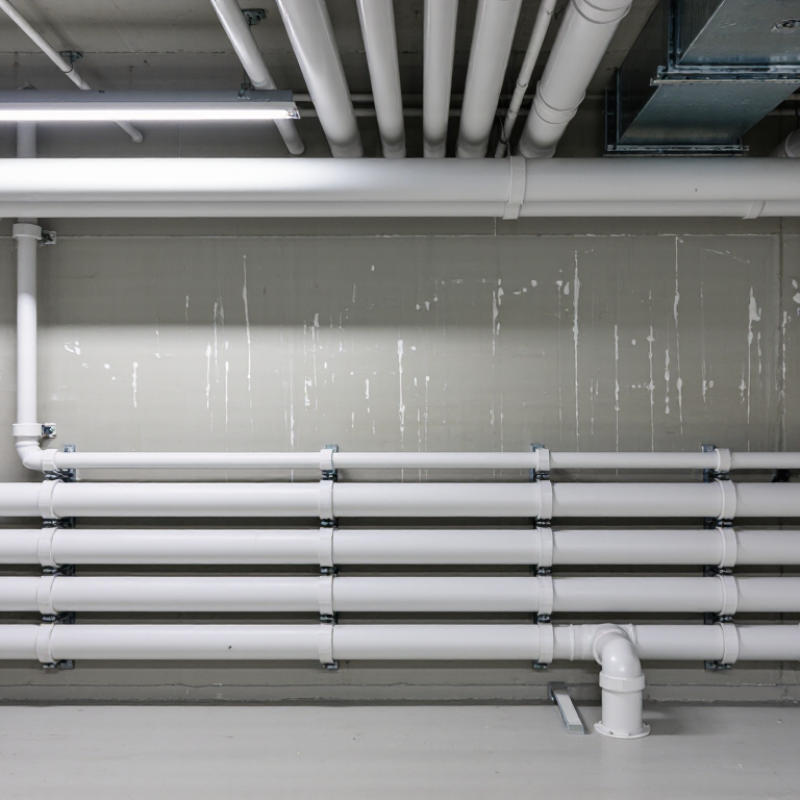
Why Choose PVC Clamps for Pipe Installation?

What PVC Pipe Clamps Are and How They Work

PVC pipe clamps are fittings that hold a pipe against a wall, ceiling, or support rail. Many use a curved saddle and a screw-fastened strap. The curved surface spreads contact around the pipe, while the fastener secures the clamp to a stable structure. Some designs allow the pipe to slide; others hold it more firmly. Check the fitting’s design before installation.

A clamp helps keep a pipe aligned and limits sagging between supports. It does not replace correct pipe sizing or a suitable structural anchor. Mark the support points, keep the pipe level, and tighten the fastener until the pipe is held without being squeezed out of shape. Too much force can mark or deform PVC. That matters.

Leave room for movement where temperature changes may expand or contract the line. Support spacing depends on pipe diameter, orientation, temperature, and the system’s installation requirements, so follow the applicable technical guidance. In practice, installers can underestimate how much a long run moves. Recheck alignment after fastening; a neat row of clamps is not enough if the pipe is under stress.

Key Properties of PVC Clamp Materials

Why Choose PVC Clamps for Pipe Installation?

PVC clamp performance starts with the material, not its shape. Rigid PVC is relatively light, with typical density around 1.3–1.45 g/cm³. Its tensile strength is commonly reported near 40–55 MPa, depending on formulation and test conditions. These are reference values, not guarantees for every clamp. The Uni-Bell PVC Pipe Association’s Handbook of PVC Pipe Design and Construction and ASTM D1784-20 provide useful industry context for PVC material properties and compound classification.

That balance of low weight and useful strength makes PVC clamps practical for supporting indoor pipe runs. A clamp is easier to position overhead than a comparable metal fitting. PVC also resists corrosion in damp spaces, such as utility rooms and basements. It does have limits. Heat, impact, and sustained loading can affect performance, so check the product’s temperature and load ratings before installation. Small details matter: an overtightened fastener can stress the clamp, while a poorly sized clamp may let the pipe shift. Not invincible. Material data helps, but real installation conditions still deserve careful review.

How PVC Clamps Support and Secure Pipes

PVC clamps help keep pipe runs aligned and limit unwanted movement along walls, ceilings, or equipment frames. Their curved contact surfaces spread pressure around the pipe instead of pinching one small area. A correctly sized clamp should hold the pipe firmly without crushing it or blocking normal movement. That fit matters. With temperature changes, a system may need both fixed points and sliding supports. Follow spacing and fastener guidance suited to the pipe diameter, load, and mounting surface.

Vertical runs benefit from supports near joints or other specified points, so the pipe’s weight does not strain connections. Along a long horizontal run, evenly spaced clamps help prevent sagging, which can stress fittings or create low spots.

Tighten screws until secure, not until the clamp visibly deforms the PVC. Too much force can damage the pipe. Check that anchors enter solid material; a clamp cannot make weak drywall reliable. It is easy to assume every section needs the same support, but spacing depends on pipe size, temperature, and installation conditions. Judge the setup by the actual run, not appearance alone.

Benefits of PVC Clamps in Pipe Installation

PVC clamps help keep pipe runs aligned along walls, ceilings, and equipment frames. A correctly sized clamp supports the pipe without crushing it or leaving excessive movement. This matters near elbows, valves, and joints, where poor support can add strain. Small details matter. During installation, check that the pipe sits fully inside the clamp and that fasteners enter a suitable structural surface. Tighten firmly, but do not force the clamp against the pipe.

Many PVC clamps resist corrosion in damp environments, unlike unprotected metal supports. However, material compatibility still depends on temperature, chemicals, and exposure conditions. PVC pipes also expand and contract as temperatures change, so supports should allow appropriate movement rather than grip every section rigidly. Follow the pipe system’s installation guidance for clamp spacing and support points; spacing varies with pipe size and service conditions. In practice, installers may find that uneven walls or crowded runs make neat alignment harder than expected. A quick visual check after fastening can reveal tilted sections, pinched pipes, or loose anchors before the system is put into service.

Why Choose PVC Clamps for Pipe Installation?

A comparison of representative material densities shows why PVC-U can be a lightweight choice for pipe-support components.

PVC-U has a representative density of about 1.4 g/cm³, compared with about 7.85 g/cm³ for carbon steel. Its lower material density can help keep clamp components lightweight. Values are typical references; actual density and finished clamp weight vary by formulation and design.

Factors to Consider When Choosing PVC Clamps

Why Choose PVC Clamps for Pipe Installation?

Factors to Consider When Choosing PVC Clamps

Choose clamps by pipe diameter, load, temperature, and installation environment—not appearance alone. A clamp should hold the pipe securely without crushing it or blocking planned movement. Check its contact surface, fastener material, and resistance to moisture or outdoor exposure. For a vibrating line, a suitable liner can reduce rubbing and noise. Support spacing must also match the pipe size and operating conditions; a clamp cannot compensate for supports placed too far apart.

Thermal movement deserves attention. The Plastics Pipe Institute’s Handbook of Thermoplastic Piping Design gives PVC a typical thermal expansion coefficient of about 3.0 × 10⁻⁵ in/in/°F. For a 20-foot run and a 40°F temperature change, that equals roughly 0.29 inches of movement. Small details matter. Allow for that movement with suitable guides or sliding supports, and verify spacing against current pipe-system data. I would not treat a snug-looking fit as proof of a sound installation; restraint can create stress at joints.

Tips: Measure the pipe’s actual outside diameter, check the clamp’s approved range, and inspect alignment before tightening. Leave room for movement where the design requires it. For unusual loads or temperatures, consult a qualified piping professional.

FAQS

What does a PVC pipe clamp do?

It holds a pipe against a wall, ceiling, or support rail. Its curved surface spreads contact around the pipe and helps limit sagging.

How tight should I fasten a clamp?

Tighten the screw until the pipe stays in place, without visibly deforming the clamp or pipe. More force is not better.

Should a pipe move inside its clamp?

Some clamps let pipes slide, while others hold them firmly. Check the design and allow for temperature-related movement where needed.

How far apart should pipe clamps be?

Spacing depends on pipe diameter, orientation, temperature, and installation requirements. Follow suitable technical guidance; one spacing pattern may not fit every run.

Where should clamps go on a vertical pipe?

Place supports near joints or other specified points to reduce strain on connections. Check the actual pipe layout before choosing locations.

Why use evenly spaced clamps along a horizontal pipe?

Even spacing helps limit sagging between supports. A long, unsupported section can strain fittings or create low spots.

Can PVC clamps support pipes in damp areas?

PVC resists corrosion and is relatively lightweight, making it practical in spaces such as basements. Still, check temperature and load ratings.

Can a clamp make a weak wall support safe?

No. The anchor must reach a suitable, solid structure. A tidy row of clamps can still leave a pipe under stress.

Conclusion

Pvc Clamps are designed to hold pipes in position while helping distribute support along an installation. Their shape surrounds or grips the pipe, while a fastening point secures the clamp to a suitable surface. PVC clamp materials are generally valued for being lightweight, resistant to moisture and corrosion, and suitable for many everyday piping environments. These qualities can make them a practical option where metal supports may be unnecessary or more prone to deterioration.

When selected and installed appropriately, Pvc Clamps help limit pipe movement, reduce sagging, and keep runs neatly aligned. They can simplify installation and maintenance, while providing an economical support solution. Choosing the right clamp involves checking the pipe’s outside diameter, the expected load, operating temperature, surrounding conditions, and the mounting surface. Proper spacing and secure fastening also matter: the clamp should support the pipe without squeezing it excessively, allowing the installation to remain stable and dependable.

Charlotte

Charlotte

Charlotte is a seasoned marketing professional with a deep understanding of the company's portfolio and a passion for elevating its presence in the market. With a keen eye for detail and a commitment to excellence, she ensures that our professional blog is regularly updated with insightful articles......