
Why Choose UPVC Pipe for Global Projects?
Global infrastructure projects demand materials that perform consistently across different climates, regulations, and installation conditions. Upvc Pipe is widely selected for water distribution, drainage, irrigation, and industrial applications. Its smooth internal surface supports efficient flow and reduces the risk of scale buildup. It is also lightweight, which can simplify transport and handling at remote construction sites.
The material offers strong resistance to corrosion, moisture, and many common chemicals. This advantage matters in coastal regions, humid cities, and areas with aggressive soil conditions. Experienced contractors often value its straightforward solvent-welded or mechanical installation methods. Fewer heavy lifting requirements can reduce labor pressure. However, installation quality remains critical. Poor joint preparation can cause preventable leakage.
Its long service potential can support lifecycle planning when engineers select the correct pressure class and diameter. Project teams should verify ISO 1452 requirements, local plumbing codes, and drinking-water certifications before approval. These checks improve reliability and demonstrate responsible procurement. Manufacturer testing, traceable batches, and clear technical data also strengthen confidence.
Upvc Pipe is not a universal answer. That assumption needs testing. Very high temperatures, severe impact exposure, or unusual chemical conditions may require another material. Engineers should review operating temperature, pressure, soil movement, and maintenance access before choosing. In practice, the best decision combines field experience, verified standards, and honest evaluation of project limits. This balanced approach helps global projects achieve dependable performance without ignoring practical weaknesses.
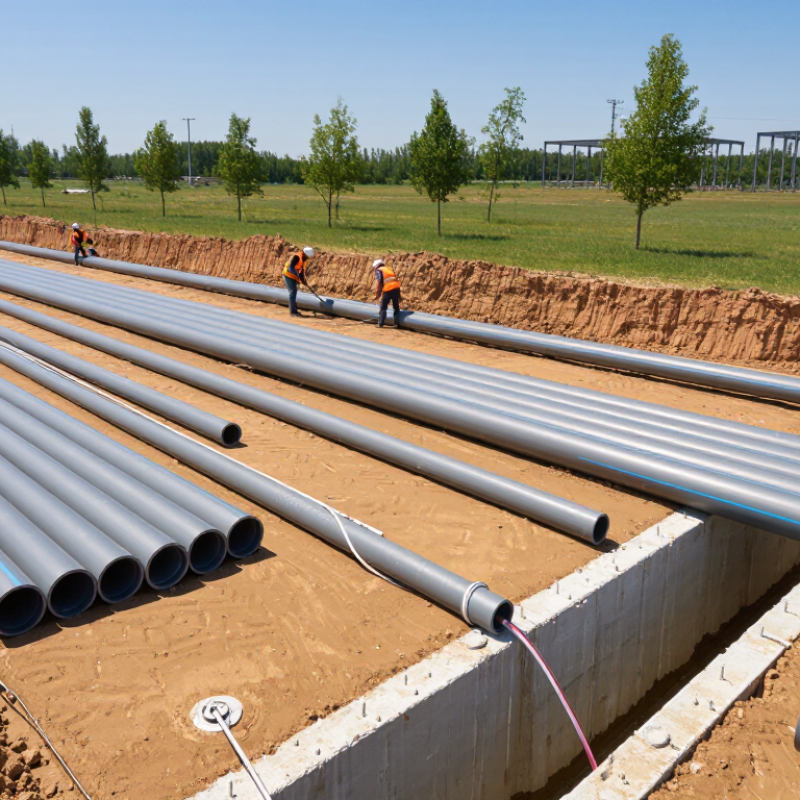
UPVC pipe is unplasticized polyvinyl chloride, formed from PVC resin, stabilizers, pigments, and processing aids. It contains no added plasticizer, which gives the pipe a rigid structure and stable dimensions. In practical projects, installers notice its smooth bore, low weight, and resistance to many common chemicals. It is not indestructible.
ISO 1452 classifies UPVC pressure piping through outside diameter, wall thickness, SDR, and pressure rating. The standard also uses MRS values, commonly 25 MPa for higher-grade PVC-U compounds. A lower SDR means a thicker wall and greater pressure capacity. For example, a pipe marked PN16 should match the required temperature, service life, and joint conditions. Pressure labels alone can mislead.
ASTM D1784 classifies the rigid PVC compound itself, rather than serving as a complete pipe-design standard. Its cell classification records impact resistance, tensile strength, modulus, and heat-deflection performance. This distinction matters during procurement. A compound may meet ASTM requirements, while the finished pipe still needs dimensional and pressure verification.
Industry demand supports careful specification. Grand View Research reported that the global plastic pipes market reached approximately USD 12.5 billion in 2023. A 2024 report from Fortune Business Insights also identified infrastructure renewal and water networks as major growth drivers. However, market figures combine several polymers and applications. They cannot replace project testing. Engineers should review certificates, batch records, hydrostatic results, and installation temperature limits. Small details matter.
For global water projects, hydraulic efficiency can shape every design decision. New UPVC pipes may reach a Hazen–Williams C-factor of 150 under suitable conditions. This high value reflects their smooth internal walls. Water encounters less resistance during flow. The result can be lower friction losses, smaller pumping requirements, or improved delivery pressure.
The number needs careful interpretation. A C-factor of 150 is not automatic in every installation. Engineers should confirm pipe dimensions, water temperature, flow velocity, and connection details. A clean pipe interior helps, but poorly aligned joints can still disturb flow. Field inspections often reveal small issues that calculations miss. They matter.
In a long irrigation line, reduced friction can preserve pressure across distant outlets. In municipal networks, it may support reliable service with less energy demand. UPVC also resists many common forms of corrosion, which helps maintain hydraulic performance over time. Yet aging, sediment, scaling, and installation quality deserve honest attention. Some project teams may use 150 too confidently. That deserves review. Hydraulic models should use verified data, recognized design standards, and realistic safety allowances. Independent testing and commissioning records make the final design more defensible across different climates, regulations, and operating conditions.
Why Choose UPVC Pipe for Global Projects?
Corrosion resistance is a practical advantage in demanding water networks. UPVC does not rust like steel or weaken through ordinary electrochemical corrosion. It also resists many salts, acids, and alkaline substances found in soil and water. This makes it useful for buried pipelines, coastal districts, and wastewater applications. A smooth internal surface can reduce friction and limit deposits. Operators may therefore use less pumping energy over time. Field performance still depends on design, installation quality, and operating conditions. A pipe is never better than its joints.
With correct sizing, proper bedding, and suitable pressure control, UPVC systems can provide a service life exceeding 50 years. Many projects rely on this long operating period to reduce replacement work and disruption. Lightweight sections can simplify handling on crowded construction sites. Solvent-welded or elastomeric joints also help create continuous, watertight networks when installed correctly. Inspection records, approved procedures, and trained crews remain essential. These details often decide whether laboratory expectations become field results.
There are limitations worth acknowledging. Prolonged sunlight can affect unprotected pipe, and excessive heat may reduce pressure capacity. Poor backfilling can create stress beneath roads. It happens. Engineers should check local soil chemistry, temperature, hydraulic pressure, and national standards before specifying the system. Practical reviews after installation can reveal small issues early, such as misaligned joints or inadequate support. That honest feedback improves future designs and protects the expected fifty-year-plus service life.
UPVC pipes are commonly specified for a service life of at least 50 years in water networks. Their resistance to internal and external corrosion helps reduce deterioration risks compared with metallic pipes, while actual service life depends on design, installation quality, operating conditions, and local standards.
Indicative industry service-life ranges; project-specific performance may vary.
Why Choose UPVC Pipe for Global Projects?
Global water projects need more than corrosion resistance. They need predictable pressure ratings, dependable joints, and installation rules that local teams can verify. The WHO and UNICEF Joint Monitoring Programme reported that 2.2 billion people lacked safely managed drinking water in 2022. That gap makes field reliability critical, not cosmetic.
Pressure ratings are not portable labels. ISO 1452-2 classifies UPVC systems by wall thickness, material strength, and service conditions. For example, an MRS 25 pipe at SDR 21 may correspond to PN10 at 20°C. Temperature, surge pressure, soil movement, and aging can reduce that working margin. Engineers should check the complete hydraulic profile. A catalog rating alone is insufficient.
Joint selection also changes project risk. Elastomeric push-fit joints support faster trench work, while solvent-cement joints require clean surfaces, correct curing, and controlled weather conditions. AWWA C605 and ASTM D2774 provide practical guidance for underground installation, including bedding, alignment, and backfill. EN 1610 adds drainage installation controls in many European projects. The details matter. Poor bedding can create point loads beneath a sound pipe. I have seen specifications focus heavily on pressure class, while ignoring joint deflection and backfill quality. That is an uncomfortable gap. Global projects should document local standards, installer training, inspection records, and pressure testing before commissioning.
Lifecycle cost often begins before installation. UPVC pipe is significantly lighter than metal pipe, making handling easier at remote sites. A crew can move many sections by hand instead of using heavy lifting equipment. This reduces fuel use, delivery planning, and the risk of handling injuries. Fewer trucks may also be needed when project routes are long or difficult.
Transport savings become clearer on large water, drainage, and irrigation projects. Pipes can arrive in compact, organized loads. They are easier to carry across narrow roads, uneven ground, or crowded urban areas. During installation, simple cutting and joining methods can reduce labor time. That matters when skilled workers are limited or construction schedules are tight.
Maintenance is another important cost factor. UPVC does not rust, and its smooth internal surface can help maintain efficient water flow. In suitable applications, this may reduce cleaning and replacement work over many years. Yet the material is not perfect. Poor storage, excessive heat, impact, or unsuitable pressure selection can cause failures. Engineers must check local standards, soil conditions, temperature ranges, and joint quality before approval. A low purchase price alone is not lifecycle value. Project records should compare transport, labor, repairs, and expected service life under real operating conditions.
UPVC pipe contains PVC resin, stabilizers, pigments, and processing aids. It contains no added plasticizer. The structure stays rigid.
The absence of plasticizer helps maintain rigidity and dimensional stability. Its smooth bore also supports consistent water flow. It is not indestructible.
ISO 1452 classifies pressure pipes by diameter, wall thickness, SDR, and pressure rating. It also considers material strength and service conditions.
A lower SDR indicates a thicker pipe wall. It usually provides greater pressure capacity. Ratings can mislead without temperature checks.
No. Engineers must check temperature, service life, surge pressure, soil movement, and joint conditions. The label alone is insufficient.
ASTM D1784 classifies the rigid PVC compound itself. It records impact resistance, tensile strength, modulus, and heat-deflection performance. Finished pipes still need testing.
Push-fit joints can speed trench work. Solvent-cement joints need clean surfaces, correct curing, and suitable weather. Small details matter.
Poor bedding can create point loads beneath the pipe. Misalignment, excessive joint deflection, poor backfill, and weak inspections increase risk.
UPVC is lighter than metal pipe, so crews may move sections by hand. It can reduce fuel use, lifting needs, and transport planning.
They should review certificates, batch records, pressure results, temperature limits, soil conditions, and joint quality. A low purchase price is not lifecycle value.
Choosing Upvc Pipe for global projects offers a practical balance of performance, durability, and cost efficiency. Manufactured from unplasticized polyvinyl chloride, these pipes can be classified according to requirements outlined in ISO 1452 and ASTM D1784, supporting consistent quality and application-specific selection. Their smooth internal surfaces reduce friction and improve hydraulic efficiency, with new PVC systems capable of achieving a Hazen–Williams C-factor of approximately 150. This helps maintain reliable water flow while potentially reducing pumping energy.
Upvc Pipe also provides strong resistance to corrosion, scaling, and many common chemicals, supporting a service life of 50 years or more in properly designed water networks. Global pressure ratings, compatible joint systems, and recognized installation standards make these pipes adaptable to different project conditions. Compared with metal alternatives, their lower weight simplifies handling, transportation, and installation, while requiring less maintenance over time. These advantages can reduce total lifecycle costs and make UPVC a dependable choice for water infrastructure projects across diverse environments.
