 LANGLI PVC Request a Catalog LANGLI PVC Request a Catalog
 Direct OEM/ODM solutions engineered to stringent international mechanical and thermal safety specifications.
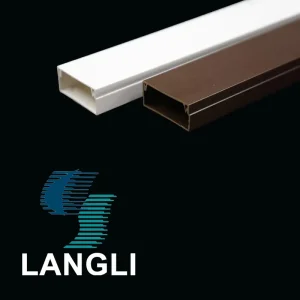
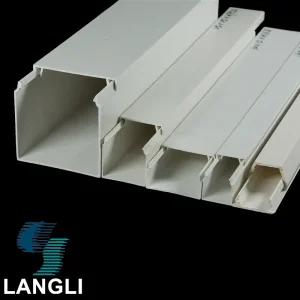
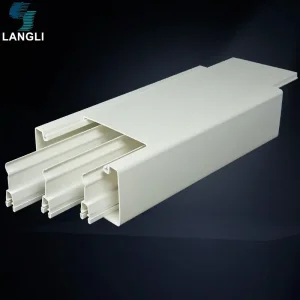
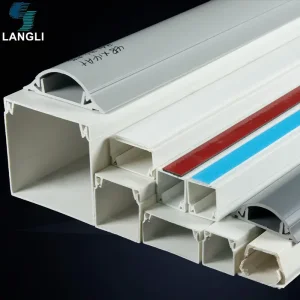
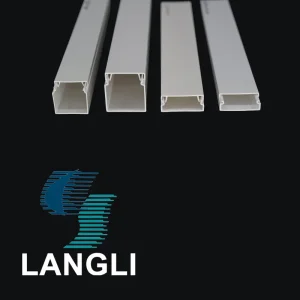
In modern electrical engineering, the choice of containment systems determines operational safety, physical aesthetic integration, installation velocity, and long-term lifecycle costs. Unplasticized Polyvinyl Chloride (UPVC) mini trunking has evolved from a basic retrofit cable cover into a high-engineered containment mechanism. As commercial architectures trend toward modular floorplans, rapid tenant fit-outs, and dense low-voltage networking (including Cat6A, Cat7, fiber optics, and building management sensors), the global demand for rigid, non-corrosive, highly flame-retardant surface mini trunking continues to expand exponentially.
China's manufacturing ecosystem, centered heavily in advanced polymer industrial clusters like Foshan in the Guangdong province, represents the epicenter of modern PVC containment manufacturing. By pairing high-capacity multi-cavity extrusion machinery with sophisticated automated compounding techniques, leading Chinese manufacturers deliver unmatched structural consistency, compliance with stringent international standards (such as BS EN 50085-2-1 and IEC 61084), and structural material integrity that withstands aggressive ambient temperatures, intense ultraviolet radiation, and high mechanical impact.
Technical Insight for EPC Contractors & Sourcing Managers: Mini trunking selection must prioritize not only physical cross-sectional dimensions, but also flexural modulus, dielectric strength, locking clip fatigue life, and flame extinction kinetics. Sourcing directly from an established original manufacturer guarantees uncompromised resin purity without excessive calcium carbonate filler degradation.
Addressing the exact procurement dynamics of electrical wholesalers, distributors, contractors, and system integrators worldwide.
Distributors require high turnover reliability, uniform color profiles across production batches (typically White RAL 9010/9016), durable barcoded packaging, and competitive nested container loading (CBM optimization) to maximize profitability margins.
On-site installers prioritize fast snap-on lid engagement that will not pop off during cable stress, pre-applied heavy-duty double-sided pressure-sensitive adhesive tape options, and clean-cutting profiles that do not shatter or splinter under mechanical shearing.
Architects and facility engineers insist on flame retardancy (UL 94 V-0), zero halogen or low-smoke toxicity formulations for public space retrofits, high UV stability to prevent yellowing under ambient light, and robust fitting accessories (angles, tees, junction boxes).
The operational lifespan and safety envelope of PVC mini trunking depend strictly on raw polymer chemistry and compounding precision. Inferior trunking products often over-incorporate calcium carbonate (CaCO3) as a cheap filler, resulting in brittle walls, chalking, low impact resistance, and lid failure under low ambient temperatures. Premium China manufacturing utilizes optimized Polyvinyl Chloride formulations balanced with acrylic impact modifiers, heat stabilizers, titanium dioxide (TiO2) UV inhibitors, and specialized flame retardants.
Electrical safety codes globally dictate that cable containment systems must actively prevent the propagation of fire. High-grade UPVC inherently contains roughly 57% chlorine by weight, imparting natural fire-resistant properties. When exposed to flame, the material releases chlorine radicals that extinguish combustion reactions. Premium mini trunking achieves a UL 94 V-0 flame rating, meaning vertical burning stops within 10 seconds without producing flaming drips. Furthermore, materials undergo Glow-Wire Testing at 960°C (IEC 60695-2-11) to confirm absolute fire integrity in energized fault conditions.
| Physical / Thermal Parameter | Standard Test Method | Engineering Specification Value |
|---|---|---|
| Material Composition | ASTM D1784 | Rigid Unplasticized PVC (UPVC) Virgin Resin Compound |
| Density / Specific Gravity | ISO 1183 | 1.42 – 1.48 g/cm³ |
| Flammability Rating | UL 94 / IEC 60695-2-11 | UL 94 V-0 / Glow-Wire 960°C Pass |
| Limiting Oxygen Index (LOI) | ISO 4589-2 | ≥ 32% (Self-Extinguishing) |
| Vicati Softening Temperature | ISO 306 | ≥ 80°C |
| Impact Resistance (Drop Hammer) | BS EN 50085-1 | Medium / Heavy Duty (2J Impact at -5°C) |
| Dielectric Strength | IEC 60243-1 | > 35 kV/mm (High Electrical Insulation) |
The mechanical efficiency of mini trunking relies heavily on profile geometry. High-precision extrusion dies with real-time laser gauging ensure dimensional tolerances within ±0.10mm. This precision enables the proprietary dual-locking rail clip mechanism. As the trunking lid is pressed onto the base channel, twin detents engage with an audible click, assuring the installer that the cover will remain securely attached even under high internal cable bundle pressure or vibration, while still permitting non-destructive cover removal during facility re-cabling.
The roadmap for PVC containment manufacturing is driving toward two major technological shifts: environmental sustainability and smart installation features.
Ensuring seamlessly interchangeable installations across global construction markets.
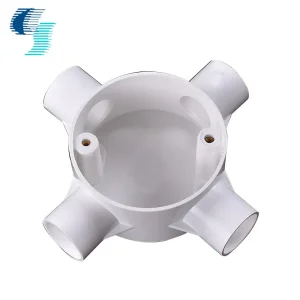
Common across the UK, Middle East (UAE, Saudi Arabia, Qatar), Singapore, Malaysia, and Africa. Key imperial and metric cross-sections include 16x16mm, 25x16mm, 38x16mm, 38x25mm, and 50x50mm mini trunking, designed to integrate directly with BS 4607 circular junction boxes, surface switch boxes, and standard wiring accessories.
Governed strictly by BS EN 50085 series specifications. Requires rigorous low-temperature mechanical testing (-15°C to +60°C operating window), precise IP40 ingress protection on installed fittings, and mandatory CE mark declarations backed by accredited Third-Party Laboratory test reports.
Focuses on UL 94 flame retardancy ratings, ASTM mechanical tensile specs, and high-impact structural configurations to suit surface-mounted conduit transitions, distribution panel feeds, and high-density residential telecom enclosures.
Direct factory collaboration eliminates intermediate trading markups while offering full customization agility. An established China mini trunking manufacturer provides a complete engineering pipeline from initial CAD tooling design to custom packaging delivery.
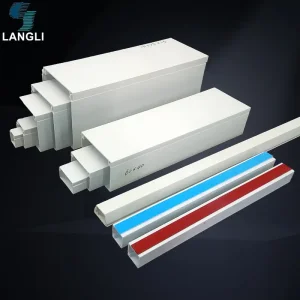
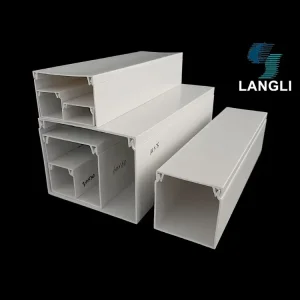
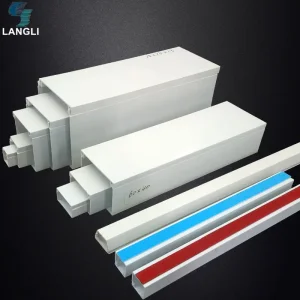
Shipping light, hollow plastic extrusions overseas can involve high freight costs if volumetric capacity is underutilized. Professional factories solve this by engineering nested packaging schemes. Smaller mini trunking sizes (e.g., 16x16mm or 20x10mm) are systematically inserted inside larger trunking channels (e.g., 50x50mm or 100x50mm) prior to outer packing. This nested loading methodology increases container volume efficiency by up to 35% to 50%, significantly reducing landed per-unit freight costs for international buyers.
In-depth responses from our senior electrical engineering and export logistics desks.
While both are extruded from rigid UPVC compounds, mini trunking features a rectangular or square cross-section with a removable snap-on lid designed specifically for surface-mounted cable retrofits and accessible wire management. Conduit pipes are enclosed cylindrical tubes meant for pull-through wire installation embedded inside concrete, masonry, or hollow walls. Mini trunking allows rapid inline cable additions without re-threading wire harnesses.
Factory-applied self-adhesive trunking utilizes high-tack modified acrylic or PE foam pressure-sensitive adhesive (PSA) tapes. These tapes undergo aging and peel-strength tests across 90%+ relative humidity environments. For high-vibration or heavy cable load installations, installers should supplement adhesive backing with mechanical screw fixings through the pre-punched base mounting holes provided along the trunking centerline.
Yes. By utilizing precision spectrophotometer liquid masterbatch dosing system during compound extrusion, trunking profiles can be produced in any solid color standard including custom RAL, Pantone, or wood-grain textured foil laminates. Minimum order quantities (MOQs) for custom color runs usually start at 5,000 to 10,000 meters depending on profile cross-section size.
Export shipments are accompanied by Comprehensive Material Test Reports (MTRs) detailing UL 94 flammability compliance, Glow-Wire ignition test verification, CE Declaration of Conformity (BS EN 50085 standard compliance), and SGS/TÜV test certifications verifying RoHS 2.0 (lead-free, cadmium-free) and REACH SVHC compliance.
Standard catalogue profiles maintain a lead time of 15 to 25 calendar days for a 20ft or 40ft High Cube container load. Custom tool production requires 25 to 30 days for design and trial sample testing, followed by 15 days for bulk production. Recommended order volumes leverage full container loads (FCL) to optimize freight efficiency via nesting techniques.
Explore matching junction boxes, heavy-duty cable trunking, and versatile electrical fittings.