 LANGLI PVC Request a Catalog LANGLI PVC Request a Catalog
 Engineered for electrical contractors, municipal infrastructure, and wholesale distributors globally.
The global demand for high-grade Unplasticized Polyvinyl Chloride (PVC-U) duct pipes and electrical raceway systems is experiencing a structural shift driven by modern infrastructure expansion, smart building retrofits, and strict electrical safety mandates. As megaprojects across North America, Europe, the Middle East, and Southeast Asia shift toward maintenance-free, non-corrosive, and fire-retardant cable management solutions, Chinese manufacturing ecosystems have evolved from low-cost plastic extruders into high-precision, smart-factory technological partners.
Modern electrical containment design demands uncompromising performance against physical impact, thermal stress, and chemical degradation. PVC duct pipes—acting as the protective neural pathways of industrial plants, commercial high-rises, data centers, and renewable energy farms—must meet exact dimensional tolerances to prevent moisture ingress, cable sheath abrasion, and mechanical collapse under concrete encasement or underground soil pressure.
Four primary factors are reshaping international procurement requirements for industrial PVC duct pipe and electrical trunking systems:
Photovoltaic power plants, wind farms, and EV charging grids require heavy-duty, UV-stabilized outdoor raceways capable of enduring extreme temperature fluctuations (-15°C to +75°C) without micro-cracking or structural embrittlement.
High-density urban infrastructure requires self-extinguishing raceways with Glow-Wire Flammability Index (GWFI) ratings up to 960°C. Halogen-free and flame-inhibited formulations prevent toxic fume propagation during critical electrical faults.
Engineers, EPC contractors, and global sourcing directors evaluating Chinese PVC duct pipe factories must align procurement specs with localized electrical installation codes. Standardizing on raw polymer selection, wall thickness uniformity, and socket interlocking integrity ensures seamless jobsite installation and operational longevity.
Suppliers must demonstrate certified compliance across multiple international standards to fulfill regional project specifications:
The operational safety of a PVC duct pipe depends on its virgin polymer formulation. Blending virgin PVC resin (K-67 value) with precise organotin non-toxic stabilizers, impact modifiers, and titanium dioxide (TiO2) UV inhibitors produces superior physical performance parameters compared to low-grade recycled alternatives:
| Physical / Mechanical Property | Testing Protocol | Standard Commercial Grade | Langli High-Spec Industrial Grade |
|---|---|---|---|
| Vicat Softening Temperature | ISO 306 / ASTM D1525 | ≥ 76°C | ≥ 84°C (Enhanced Thermal Stability) |
| Drop Impact Resistance (-15°C) | BS EN 61386-1 | Passes at 0°C | No fracture at -15°C (1kg / 1m drop) |
| Dielectric Breakdown Strength | IEC 60243-1 | ≥ 18 kV/mm | ≥ 28.5 kV/mm (High Voltage Rated) |
| Flame Retardancy & Flammability | UL94 / IEC 60695-2-11 | V-2 Rating | UL94 V-0 / GWFI 960°C Self-Extinguishing |
| Tensile Strength at Yield | ISO 527 / ASTM D638 | ≥ 36 MPa | ≥ 48.5 MPa (Heavy Mechanical Load) |
The Foshan Shunde industrial hardware cluster represents the pinnacle of global plastics manufacturing efficiency. Unlike isolated production facilities, Chinese Industry 4.0 clusters integrate upstream resin compounding, high-precision CNC mould engineering, high-speed multi-cavity injection moulding, and automated packaging within a localized supply ecosystem.
In-house mould design and manufacturing capabilities allow custom prototype modification in under 15 days, drastically lowering tooling costs for unique structural conduit profiles.
Real-time ultrasonic wall thickness monitoring systems automatically correct dimensional variance, maintaining wall tolerances within ±0.05mm across 3-meter continuous runs.
Strategic proximity to Nansha, Yantian, and Shekou deep-water ports allows flexible CBM container consolidation, minimizing freight costs for overseas importers.
Proper raceway selection requires matching mechanical properties with environmental exposure conditions. PVC duct pipes and trunking profiles perform vital roles across diverse structural settings:
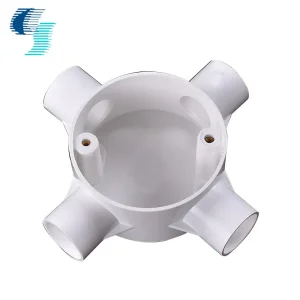
Vertical riser conduits demand rigid wall construction to resist compression under heavy wire pulls. Flame-retardant 20mm–50mm conduit paired with circular 4-way loop-in junction boxes ensures safe branch connections across multi-story distribution boards.
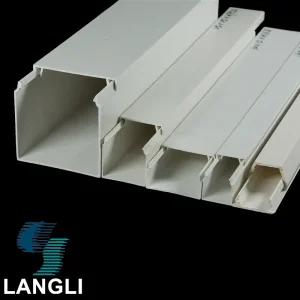
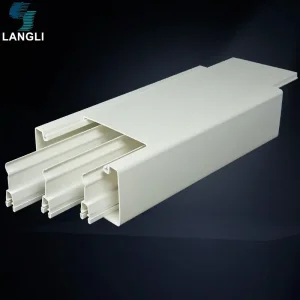
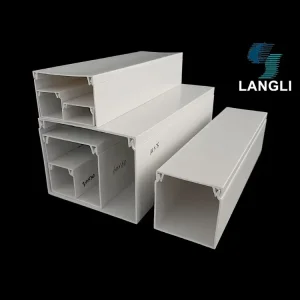
High-density fiber optic and power lines inside modern data centers demand wide-body surface trunking (100x50mm up to 200x100mm) with snap-fit lids that prevent vibration dislodgement and allow rapid cable access during network upgrades.
Inverter-to-combiner-box runs require continuous UV resistance. Special carbon black and TiO2 formulation additives prevent solar radiation from embrittling exposed conduit profiles over 25+ years of continuous service.
Unlike galvanized steel, PVC duct pipes remain completely impervious to acidic, alkaline, and saline ambient atmospheric conditions, eliminating rust, electrochemical corrosion, and frequent raceway replacement.
Comprehensive technical guidance based on real-world engineering inquiries and international project compliance requirements.
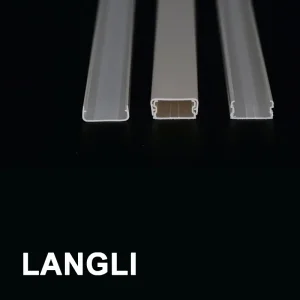
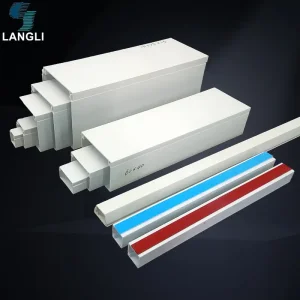
Integrate certified junction boxes, circular conduit entries, and self-adhesive wireways into your purchasing package.