 LANGLI PVC Request a Catalog LANGLI PVC Request a Catalog
 High-impact, flame-retardant electrical accessories manufactured under strict ISO 9001 and IEC/BS quality controls for global commercial and industrial builds.
In modern electrical infrastructure, the nomenclature PVC SWA PVC designates a heavy-duty power cable configuration featuring Polyvinyl Chloride (PVC) insulation, a robust layer of Galvanized Steel Wire Armour (SWA), and an exterior, weather-resistant PVC outer sheath. Engineered specifically for mains supply electricity in low-voltage networks (typically 600/1000V), this triple-layer system offers an unparalleled synthesis of mechanical protection, dielectric strength, and environmental resilience.
Parallel to the armored cables themselves, industrial systems rely heavily on rigid Unplasticized Polyvinyl Chloride (UPVC) conduit systems, electrical trunking, and high-impact circular junction boxes manufactured by leading Chinese industrial plants. Together, PVC SWA PVC cabling and protective UPVC enclosure systems create an impenetrable safeguard against physical crushing, moisture ingress, chemical exposure, and stray thermal spikes.
High-purity polyvinyl chloride resin compounded with thermal stabilizers ensures excellent dielectric breakdown voltage (>20 kV/mm) and maintains conductor integrity across operating temperatures from -15°C to +70°C.
Helically wrapped single or multi-core steel wire armor absorbs crushing forces up to 5000 N and high mechanical impact, while serving as a secondary Circuit Protective Conductor (CPC) ground path.
Formulated with antimony trioxide and chlorinated paraffin flame retardants, the external PVC sheath meets BS EN 60332-1-2 flame propagation requirements and resists UV degradation in outdoor mounts.
Engineering Gain Insight: Selecting between standard flexible conduit vs. rigid UPVC trunking for SWA terminations requires evaluating structural shear stress and bend radius compliance. Proper installation requires adherence to BS 7671 (IET Wiring Regulations), where SWA gland terminations must interface directly with high-tensile brass or UPVC adaptor boxes to preserve grounding continuity.
Empirical baseline comparison for electrical consultants, EPC contractors, and global procurement officers evaluating wiring protection options.
| Performance Standard / Feature | PVC SWA PVC Cable System | XLPE SWA PVC Cable System | Rigid UPVC Trunking / Conduit |
|---|---|---|---|
| Primary Application | Direct burial underground, mains supply lines | High-load industrial distribution networks | Surface wire management, wall/ceiling containment |
| Max Conductor Temp | 70°C Continuous / 160°C Short-circuit | 90°C Continuous / 250°C Short-circuit | 60°C Operating max ambient limit |
| Standard Compliance | BS 6346, IEC 60502-1, BS 5467 | BS 5467, IEC 60502-1, BS 7889 | BS EN 61386-21, BS 4607, RoHS, CE |
| Impact Resistance | Extremely High (Steel Wire Protection) | Extremely High (Steel Wire Protection) | High (Modified Rigid Polyvinyl Compound) |
| Flame Retardancy | Self-Extinguishing (LOI > 29%) | Self-Extinguishing / LSZH Options | UL94 V-0 Certified Self-Extinguishing |
| Corrosion & Chemical Risk | Resistant to acids, alkalis, subterranean soil | Resistant to hydrocarbons, solvents, moisture | Immune to rust, moisture, coastal salt mist |
The global dominance of Chinese manufacturers in the PVC SWA PVC and electrical conduit ecosystem is anchored in the comprehensive industrial infrastructure of regions like Foshan (Shunde) and Guangdong Province. As an established global manufacturing powerhouse, Chinese factories provide critical commercial levers that lower project CAPEX while elevating structural quality standards.
Leading Chinese factories synthesize raw S-PVC resin directly with non-phthalate plasticizers, heat stabilizers, and titanium dioxide UV blockers. This in-house compounding eliminates third-party resin markup, enabling superior batch consistency and tailored Shore D hardness.
Equipped with 30+ twin-screw extrusion lines and over 900 sets of injection moulds, Chinese facilities deliver high throughput speeds with precise wall-thickness tolerances (±0.1mm) across complex geometric profiles.
On-site quality assurance laboratories perform continuous glow-wire flammability tests (IEC 60695-2-11), drop-impact testing at sub-zero temperatures (-5°C to -15°C), and tensile elasticity testing prior to batch clearance.
Understanding the exact field dynamics of electrical installations is critical for procurement engineers. PVC SWA PVC cables and matching UPVC trunking/conduit systems serve across four primary high-stress engineering environments:
In municipal street lighting and underground sub-station feeders, PVC SWA PVC cables are laid directly into earth trenches backfilled with sand. The galvanized steel wire layer prevents damage from shifting soil, rocks, and accidental excavation, while outer UPVC ducting provides secondary conduit isolation against acidic groundwater.
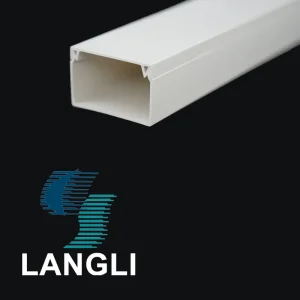
Heavy manufacturing facilities subject electrical runs to continuous mechanical vibration and electromagnetic interference. Over-wall trunking systems with snap-on lids protect sensitive control wiring, while SWA mains supply cables safely deliver high amperage to motor control centers (MCC).
Photovoltaic parks and onshore wind turbine bases demand cabling and raceways that endure extreme ambient thermal cycling and continuous UV radiation. Specially formulated UV-stabilized PVC compounds resist chemical cracking and embrittlement over 25+ year service lifespans.
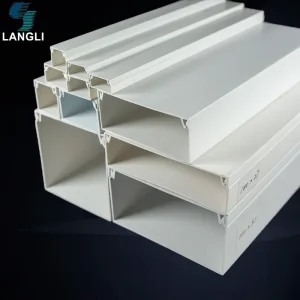
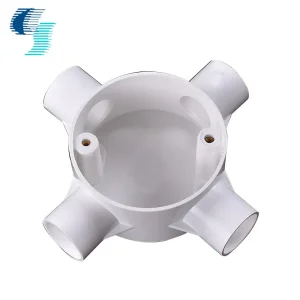
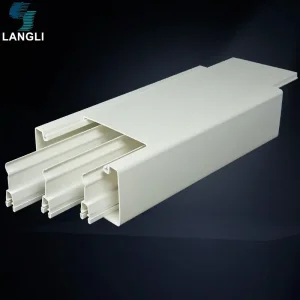
Modern commercial complexes mandate strict fire-safety compliance. Fire-retardant UPVC trunking and circular 4-way junction boxes provide neat, code-compliant cable routing in ceiling voids and riser shafts, restricting flame spread during structural thermal emergencies.
The global electrical containment and armored cable industry is experiencing a profound technological pivot driven by international environmental regulations (such as EU REACH and RoHS 3) and stringent fire-safety directives.
Lead-Free Calcium-Zinc (Ca-Zn) Stabilization: Traditional heavy-metal thermal stabilizers (lead and cadmium) are being systematically replaced across advanced Chinese manufacturing plants. Modern UPVC formulations utilize environmentally benign Calcium-Zinc complex systems that preserve mechanical rigidity and heat resistance without toxic eco-footprints.
Low Smoke Zero Halogen (LSZH / LSF) Engineering: In enclosed public spaces—such as underground transit systems, hospitals, and high-density office towers—the market is shifting toward LSZH polymer jackets. These compounds replace standard chlorine-rich PVC with polyolefin polymers filled with aluminum trihydrate (ATH). Upon combustion, LSZH sheaths emit minimal smoke and zero corrosive halogen gases (HCl), dramatically improving life-safety metrics during structural fires.
Circular Plastic Economy & closed-Loop Recycling: Premier China factories are introducing closed-loop post-industrial PVC recycling processes. Uncontaminated sprues, runners, and off-spec extrusions are re-granulated into core structural layers of multi-layer cable ducts, bounded by virgin outer layers to guarantee 100% mechanical performance with a reduced carbon footprint.
Navigating global OEM/ODM procurement for PVC SWA PVC cables and companion electrical trunking requires a rigorous verification protocol. Global buyers must evaluate key technical milestones before placing container-level volume orders:
Insist on third-party test reports (SGS, Intertek, TÜV) confirming compliance with BS EN 61386 for conduit fittings, BS 5467 for SWA cables, and CE/RoHS compliance certification. Ensure test certificates bear valid accreditation numbers traceable to official testing bodies.
Inconsistent socket dimensions cause severe delays on job sites. Verify that injection-moulded conduit elbows, couplers, and circular junction boxes adhere to strict ISO ring-gauge tolerances (e.g., 20mm, 25mm, 32mm) for seamless solvent-weld or push-fit joints.
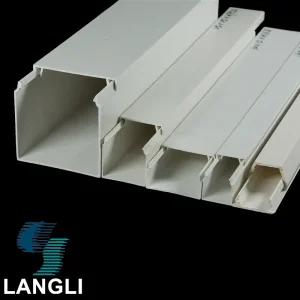
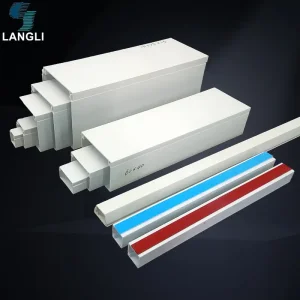
Freight optimization is vital for profitability. Experienced Chinese exporters nesting smaller mini-trunking profiles (e.g., 16x16mm) inside larger cable ducts (e.g., 100x50mm) can increase 40ft HQ container loading efficiency by up to 35%, drastically lowering unit shipping costs.
Direct technical answers addressing engineering standards, material behavior, custom manufacturing, and international export logistics.
The key difference lies in the inner conductor core insulation material. PVC SWA PVC uses standard Polyvinyl Chloride insulation with a maximum continuous conductor operating temperature of 70°C. XLPE SWA PVC utilizes Cross-Linked Polyethylene insulation, raising continuous thermal performance to 90°C and short-circuit rating to 250°C. XLPE cables carry higher current densities, whereas PVC SWA cables offer cost-effective efficiency for general-purpose low-voltage power networks.
Export-grade Chinese electrical conduit and trunking are produced in accordance with BS 4607, BS EN 61386 (for rigid conduit systems), BS 4678 (for cable trunking), DIN 8061/8062, and ASTM D1784 standards. Electrical circular boxes and switch boxes comply with BS 4662 and IEC 60670. Certifications typically on file include CE, RoHS, ISO 9001:2015, and UL94 V-0 flame testing.
Yes. The Steel Wire Armour (SWA) layer provides high tensile strength and crushing resistance specifically engineered for direct trench burial. However, engineering best practice recommends encasing SWA cables in rigid UPVC underground ducting when passing beneath roads, driveways, or heavy foundations to facilitate future cable replacement and prevent localized soil-shear stresses.
High-quality UPVC trunking and fittings achieve a UL94 V-0 flammability rating. This means the material self-extinguishes within 10 seconds after flame removal and does not produce flaming drips. Additionally, compounds meet Oxygen Index (LOI) levels above 32%, ensuring they will not support combustion under normal atmospheric oxygen levels (21%).
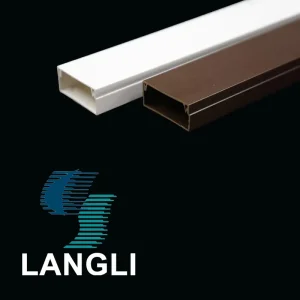
Through automated laser-marking and inline inkjet printing, Chinese factories can imprint client logos, part numbers, meter markings, and certification badges directly onto conduit, trunking, and cable jackets. Color matching is performed using precise Pantone or RAL color codes, offering standard White, Black, Grey, Ivory, and custom industrial colors like Orange or Blue.
For standard catalog SKUs (such as 20mm/25mm conduit fittings or standard trunking), MOQs start as low as 20 to 50 master cartons per item, or a mixed 20ft container load. Production lead time is typically 15 to 25 days following deposit confirmation. Custom mould tooling requires an additional 25 to 35 days for sample approval.
Steel Wire Armour (SWA) consists of round galvanized steel wires helically wrapped around the inner sheath, offering superior longitudinal tensile strength, flexibility, and impact resistance. It is ideal for multi-core power cables where pulling tension and potential ground movement occur. Steel Tape Armour (STA) uses overlapping flat steel tapes, which offer resistance against sharp tools or rodent bites but lower tensile strength, making it more common for multi-core control cables or static installations.
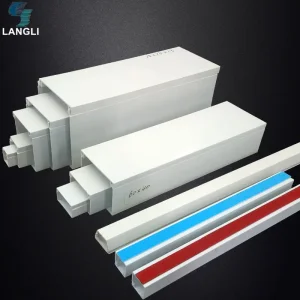
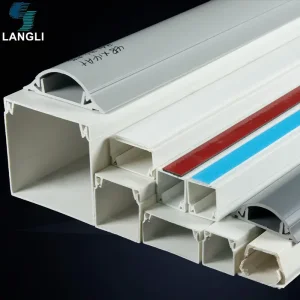
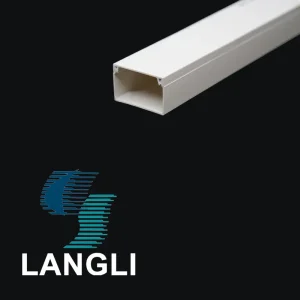
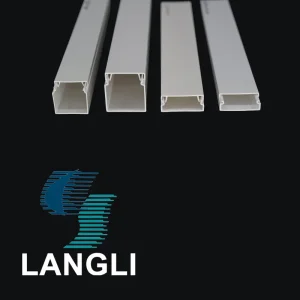
Select from our premier range of export-grade PVC cable pathways, junction enclosures, and self-adhesive ducting options.