 LANGLI PVC Request a Catalog LANGLI PVC Request a Catalog
 High-impact, flame-retardant, and precision-moulded cable protection components engineered for global compliance.
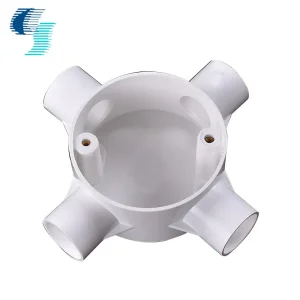
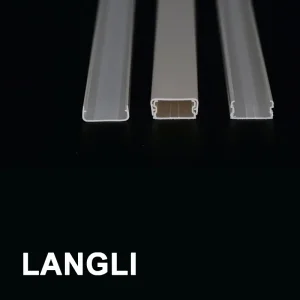
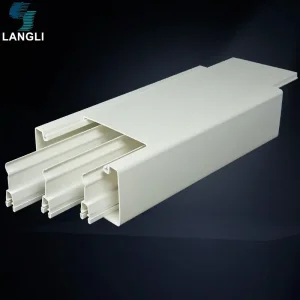
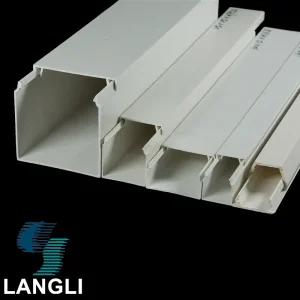
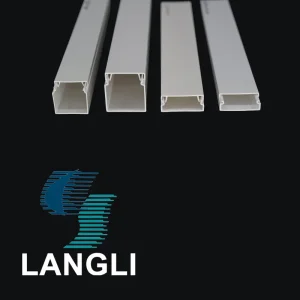
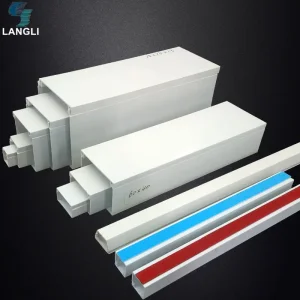
The global infrastructure and commercial construction ecosystems are undergoing unprecedented transformations. High-density urban developments, smart grid integrations, renewable energy installations, and industrial expansion require robust, non-corrosive, and long-lasting cable management infrastructure. Within this technological shift, Unplasticized Polyvinyl Chloride (uPVC) conduit fittings, junction boxes, and cable trunking systems have established themselves as non-negotiable standard requirements across global building codes.
This technical whitepaper examines why international EPC contractors, electrical wholesalers, and engineering procurement teams systematically turn to China uPVC fittings suppliers and factories. Specifically focusing on advanced manufacturing clusters like Foshan (Shunde), Guangdong, this report provides deep insights into material polymer formulations, automated injection moulding technologies, international certification pathways, and supply chain economies of scale that deliver unmatched Total Cost of Ownership (TCO) benefits.
Technical Information Gain Note: Unlike plasticized PVC (which incorporates flexible plasticizers such as phthalates), unplasticized PVC (uPVC / PVC-U) features a rigid polymer matrix engineered for high tensile strength, exceptional Vicat softening resistance (>81°C), flame self-extinguishing capabilities (UL 94 V-0), and superior dielectric strength exceeding 25 kV/mm.
Electrical safety begins at the molecular level. Standard raw PVC resin (polyvinyl chloride) requires specialized compounding to withstand mechanical impacts, thermal stress, and environmental degradation over a 50+ year service life.
Modern Chinese factories have transitioned entirely away from heavy metal lead-based heat stabilizers to advanced Calcium-Zinc (Ca-Zn) systems. This ensures compliance with EU RoHS 3 and REACH environmental directives without compromising thermal stability during high-temperature injection moulding.
Through precise additive loading of chlorinated paraffin and antimony trioxide synergists, uPVC fittings achieve automatic flame-extinguishing status within 10 seconds of source removal, preventing vertical flame propagation inside concealed walls and riser shafts.
Formulated with high-purity polymer chains, uPVC conduit fittings exhibit exceptional electrical volume resistivity (>1012 Ω·cm), protecting installation technicians against indirect contact faults and preventing stray currents from damaging sensitive low-voltage cabling.
uPVC fittings engineered in Chinese factories display near-total immunity to atmospheric oxidation, acidic soils, alkaline concrete encasements, and saline coastal environments. When embedded directly in poured reinforced concrete (a common construction methodology in high-rise residential projects), uPVC conduit couplings and circular junction boxes resist structural crushing forces and moisture ingress, preserving cable pathway integrity indefinitely.
Rigorous physical, thermal, and electrical performance parameters tested across top-tier Chinese manufacturing operations.
| Performance Parameter | Test Standard / Method | Typical uPVC Value | Engineering Benefit |
|---|---|---|---|
| Specific Gravity / Density | ASTM D792 / ISO 1183 | 1.38 - 1.45 g/cm³ | Lightweight handling compared to steel; reduces freight cost per container |
| Vicat Softening Temperature | ISO 306 / ASTM D1525 | ≥ 81 °C | Maintains mechanical shape in high-temperature ambient conduits |
| Flammability Rating | UL 94 Vertical Burning | V-0 Grade (Self-Extinguishing) | Will not sustain combustion or produce burning drops during fires |
| Dielectric Strength | IEC 60243-1 / ASTM D149 | > 25 kV/mm | Prevents electrical arc flash-through and short-circuit leakage |
| Impact Strength (Charpy) | ISO 179 / BS EN 61386 | > 5.0 kJ/m² (at -5°C) | Resists field cracking during cold-weather handling and concrete pouring |
| Cold Bend & Compression | BS EN 61386-21 | Heavy Gauge (750N / 1250N) | Suitable for structural slab embedding without wall collapse |
| Acid & Alkali Resistance | ISO 175 chemical exposure | Class A Resistance | Unaffected by mortar, wet concrete, saline, or chemical cleaning solutions |
The global dominance of Chinese uPVC conduit and trunking factories is not merely a result of labor availability, but the outcome of a highly integrated, technology-driven industrial ecosystem. Regions like Foshan Shunde represent world-class manufacturing epicenters where raw resin compounding, precision CNC toolmaking, automated injection molding, and export logistics coexist within a tight geographic radius.
A primary bottleneck in electrical fitting production is mold cavitation. Premium Chinese suppliers like Foshan Shunde Langli Hardware Electrical PVC Co., Ltd. utilize CAD/CAM engineered multi-cavity hot-runner molds capable of producing up to 32 circular boxes or 64 couplers per cycle. Mold surfaces are treated with specialized chromium plating or physical vapor deposition (PVD) coatings, achieving dimensional tolerances within ±0.05mm. This guarantees that every 20mm or 25mm conduit socket achieves a flawless interference fit with matching pipes during field solvent welding.
Equipped with high-tonnage automated injection machines (ranging from 120T to 650T clamping force), modern Chinese factories operate 24/7 continuous production cycles. Integrated robotic arms extract finished components from the mold cavity, placing them directly onto automated inspection conveyors. Optical sorting systems evaluate wall thickness uniformity, flash presence, and knockout tab integrity before automated box packing occurs.
Supply Chain Insight: With over 900+ existing sets of in-house tooling, established Chinese factories can deploy new SKU variants—such as deep junction boxes, dual-gang switch boxes, or custom imperial 1/2" to 2" adaptors—within 30 to 45 days, significantly shortening time-to-market for overseas distributors.
One key advantage of working with veteran China uPVC fittings manufacturers is their pre-existing tooling library covering international standard geometries:
Factory-direct electrical trunking, adhesive wire ducts, and specialized junction box accessories.
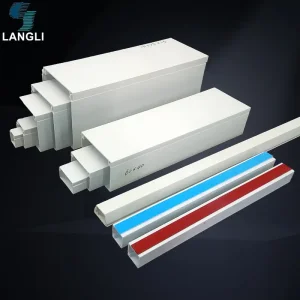
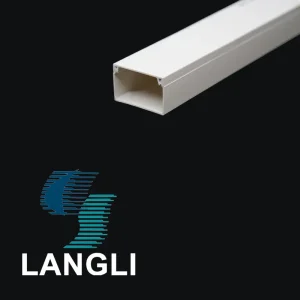
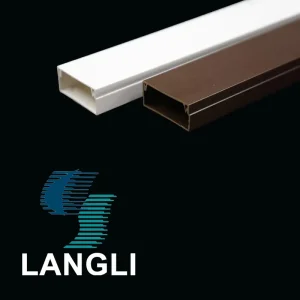
uPVC conduit, trunking, and fittings serve as the protective skeleton for electrical infrastructure across diverse environment classifications:
Concealed slab installations require heavy gauge conduit and circular junction boxes that withstand static loads during concrete pouring. Cold-bendable uPVC pipes combined with socketed elbows prevent moisture penetration into the wire pathway.
In chemical manufacturing or coastal processing plants where metallic conduits corrode rapidly under acid/alkaline vapors, heavy-duty uPVC trunking (100x50mm up to 200x100mm) provides total corrosion immunity.
Self-adhesive mini-trunking (10x10mm, 16x16mm, 25x16mm) allows clean surface cable routing without tearing open drywall. Integrated snap-on elbow fittings cover cut edges for clean interior finishes.
When sourcing uPVC fittings and trunking from Chinese factories, procurement managers must evaluate several operational levers beyond unit price:
Freight costs significantly impact landed margins. Experienced Chinese manufacturers offer optimized container loading plans by combining rigid, high-volume items (such as 3-meter conduit pipes or large cable trunking profiles) with high-density injection-moulded fittings (junction boxes, elbows, couplers, saddles). By stowing boxed fittings inside hollow trunking cavities or filling remaining container headroom, volumetric efficiency approaches 98-99%.
Before issuing purchase orders, buyers should verify the factory’s quality system across four key control gates:
The next decade of cable management will be defined by three distinct technological advancements:
1. Low Smoke Zero Halogen (LSZH) Alternatives: While standard uPVC remains the global benchmark for non-corrosive wiring protection, manufacturers are expanding production lines for halogen-free polyolefin compounds required in enclosed public transport hubs, subways, and data centers.
2. Smart Modular Snap-Fit Systems: Next-generation trunking accessories feature toolless click-lock mechanisms that reduce electrician installation time by up to 40% compared to traditional screw-fixed covers.
3. UV-Stabilized Outdoor Formulations: Enhanced Titanium Dioxide (TiO₂) loading allows uPVC fittings to maintain mechanical flexibility and resist discoloration even under intense solar exposure in desert regions like the Middle East and Australia.
Detailed technical solutions to common procurement, engineering, and compliance inquiries.