 LANGLI PVC Request a Catalog LANGLI PVC Request a Catalog
 Explore our export-ready UPVC electrical conduits, custom pipe nipples, and cable ducting systems manufactured to international standards.
A comprehensive analysis of polymer chemistry, mechanical stresses, and precision threaded fittings for industrial electrical and fluid management infrastructure.
In modern industrial engineering, rigid polyvinyl chloride (UPVC) nipples and electrical conduit fittings serve as essential components for structural cable protection and fluid handling. Custom PVC pipe nipple manufacturers utilize unplasticized virgin resin formulations optimized with specific titanium dioxide (TiO2) stabilizers and acrylic impact modifiers.
This exact polymer composition eliminates dielectric weakness and prevents stress cracking when exposed to aggressive industrial environments, acidic reagents, or prolonged UV irradiation. Standard Schedule 40 and Schedule 80 PVC nipples engineered by advanced factories maintain structural tensile strength exceeding 50 MPa under continuous hydrostatic and mechanical loads.
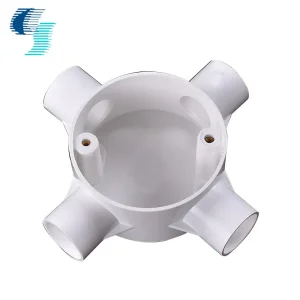
Custom PVC pipe nipples require exact thread geometries—such as NPT (National Pipe Taper), BSPT (British Standard Pipe Taper), or ISO metric threads—to guarantee leak-proof seals and seamless mating with electrical circular junction boxes, conduits, and female adapters.
High-precision factories employ CNC thread chasing and specialized injection molds calibrated to ISO 7-1 tolerances. This prevents micro-fractures along the root diameter of the thread, ensuring that torque applied during mechanical installation does not compromise the electrical insulation barrier or fluid containment layer.
Industrial building codes require PVC conduit fittings and pipe nipples to possess outstanding flame-retardant properties. High-tier Chinese manufacturers incorporate halogenated flame retardants and calcium-zinc environmental stabilizers into the compound matrix.
This formulation achieves UL94 V-0 flame rating and high Glow-Wire Test resilience (up to 960°C). When exposed to direct flame, the material self-extinguishes within 10 seconds without producing flaming drips, preserving structural integrity and protecting core cabling in critical commercial facilities.
Empirical technical data contrasting material grades, mechanical thresholds, and international standard compliance across modern PVC product lines.
| Performance Parameter | Standard Rigid PVC (Schedule 40) | Industrial Heavy-Duty UPVC (Schedule 80) | Flame-Retardant Electrical UPVC | Test Standard / Benchmark |
|---|---|---|---|---|
| Tensile Strength at Yield | 45 – 50 MPa | 52 – 58 MPa | 48 – 54 MPa | ASTM D638 / ISO 527 |
| Charpy Impact Resistance | 5.0 – 7.0 kJ/m² | 8.5 – 12.0 kJ/m² | 6.5 – 9.0 kJ/m² | ISO 179 / ASTM D256 |
| Vicat Softening Temperature | 80°C – 82°C | 84°C – 88°C | ≥ 82°C | ISO 306 / ASTM D1525 |
| Flame Retardancy & Flammability | UL94 V-2 / HB | UL94 V-1 | UL94 V-0 (Self-Extinguishing) | UL94 / IEC 60695-2-11 |
| Dielectric Strength | 35 – 40 kV/mm | 40 – 45 kV/mm | > 40 kV/mm | ASTM D149 / IEC 60243 |
| Applicable Thread Standards | NPT, NPSM | NPT, Heavy Wall BSPT | BS 4607, Metric, ISO Tapered | ANSI/ASME B1.20.1, BS 21 |
Conventional buyers frequently suffer from thread stripping and wall dynamic deformation when sourcing low-tier PVC pipe nipples. Advanced Chinese manufacturing facilities solve this through dual-stage mold cooling technology and localized resin degassing during extrusion and injection. This eliminates internal micro-voids, providing up to 35% higher crush resistance during heavy industrial installation.
How automated injection molding clusters, ERP integration, and local raw material ecosystems establish an unshakeable competitive edge for international buyers.
Modern factories in Foshan, Guangdong operate state-of-the-art injection lines equipped with servo-driven robotic arms. Automated material conveying systems feed precise resin formulations directly into temperature-controlled mold cavities, reducing cycle times by 25% while achieving consistent part density.
Quality control is transitioned from manual post-inspection to real-time machine vision tracking. Automated optical sorting devices inspect thread pitch, inner diameter clearances, flash generation, and concentricity directly on the production line.
Located within China’s premier hardware and plastic processing hub, direct proximity to resin suppliers, custom masterbatch developers, and Guangzhou/Shenzhen ports drastically lowers total landed cost and shipping lead times.
How customized PVC nipples and electrical raceway accessories service specialized infrastructure across commercial, industrial, and residential sectors.
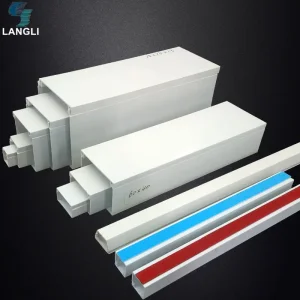
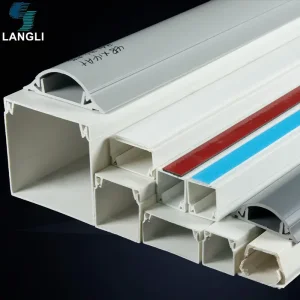
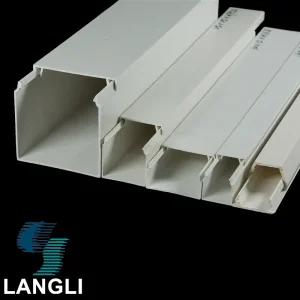
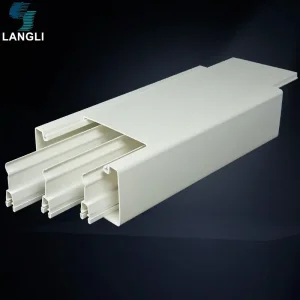
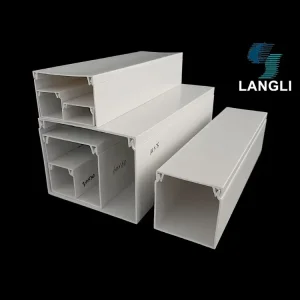
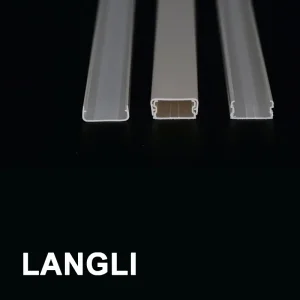
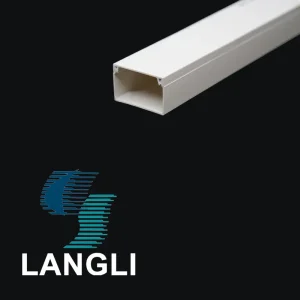
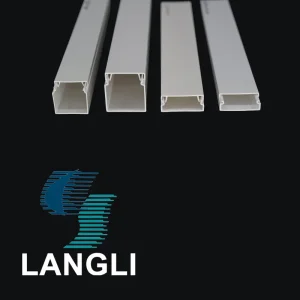
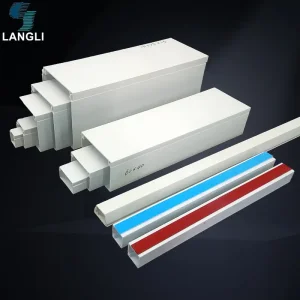
In high-density commercial towers and data centers, surface wiring trunking and rigid PVC nipples organize low-voltage control lines, optical fiber, and high-capacity electrical feeders. Flame-retardant UPVC trunking paired with custom circular junction boxes simplifies maintenance and layout restructuring without requiring wall demolition.
Industrial processing facilities utilize heavy-wall Schedule 80 PVC nipples for connecting chemical dosing equipment, water treatment manifolds, and fluid transport lines. Non-conductive, non-corrosive UPVC material prevents galvanic corrosion and chemical degradation caused by saline solutions, alkaline chemicals, and diluted acids.
Major electrical distributors and wholesale brands require specialized OEM marking, custom barcode labels, and tailored carton configurations. Factories equipped with laser-jet printing apply custom part numbers, brand logos, and batch codes directly onto pipe nipples and trunking profiles to streamline distributor retail logistics.
Ensuring frictionless international trade compliance, environmental safety, and structural integrity across diverse regional jurisdictions.
All manufactured PVC electrical trunking, conduits, and fittings adhere strictly to European Conformity (CE) directives and RoHS (Restriction of Hazardous Substances) standards. Laboratory test reports verify the total absence of harmful heavy metals such as lead (Pb), cadmium (Cd), and mercury (Hg), fulfilling stringent EU environmental compliance.
Our engineering tooling conforms directly to BS 4607 and BS EN 61386 standard series for electrical installation fittings, alongside ASTM D1785 specifications for rigid PVC pipe nipples. Wall thickness tolerances, socket socket-depth, and mechanical impact thresholds are audited for every production lot.
To eliminate customs delays at destination ports, our export desk supplies complete shipping documentation packages including detailed Certificates of Origin (Form E, Form F, CO), commercial invoices, customized packing lists detailing CBM/weight, and pre-shipment quality audit inspection certificates.
Anticipating future industry demands through sustainable formulation advancements, smart material tracking, and low-carbon manufacturing processes.
Next-generation PVC development focuses on integrating bio-attributed vinyl polymers derived from renewable feedstocks. By incorporating post-industrial clean-loop recycled PVC into non-critical outer layers while retaining virgin resin inside core conductive pathways, factories reduce carbon intensity by up to 40%.
While standard UPVC exhibits self-extinguishing traits, specialized transit and marine applications require Low-Smoke Zero-Halogen (LSZH) material matrices. Future tooling roadmaps feature modified polyolefin and thermoset compounds that yield zero toxic halogen gas emissions during high-temperature thermal events.
Industrial megaprojects increasingly require digital twin tracing for installed infrastructure. Advanced custom PVC pipe nipples and junction boxes are being tested with mold-injected passive RFID micro-tags, enabling maintenance engineers to scan concealed conduit runs for instant access to digital schematic data and batch history.
A structured operational walkthrough for procurement managers seeking tailored PVC pipe nipples, trunking dimensions, or private-label box designs.
Submit 2D/3D CAD drawings (STEP, IGES, DWG) specifying thread pitch, wall thickness, target polymer grade, and color matching (Pantone/RAL).
Our mold engineers perform Design for Manufacturability (DFM) analysis to optimize draft angles, gate positions, and cooling channels, issuing a detailed report within 48 hours.
Custom steel tooling is fabricated in 25–30 days. Initial T1 sample parts undergo dimensional checking, thread gauge verification, and burst pressure testing before dispatch.
Upon sample approval, high-speed automated injection molding commences. Goods are packaged in private-label cartons and loaded into consolidated sea containers.
In-depth responses regarding custom PVC pipe nipple manufacturing, tooling, material standards, and container logistics.
Explore our complete catalog of circular junction boxes, self-adhesive wire ducts, and customizable UPVC cable management hardware.