 LANGLI PVC Request a Catalog LANGLI PVC Request a Catalog
 Direct factory supply featuring standard-compliant wall thicknesses, self-extinguishing compounds, and modular interconnectivity.
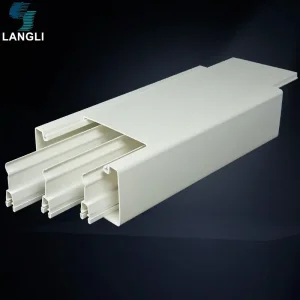
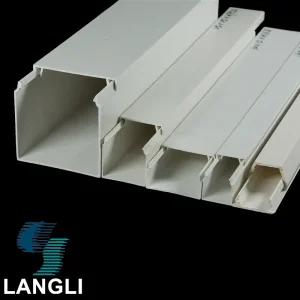
Critical insights into market drivers, international building code shifts, and regulatory imperatives reshaping wire trunking procurement globally.
The global cable management systems market is undergoing an unprecedented structural transition. Driven by rapid electrification, hyperscale data center construction, renewable energy grid integrations, and intelligent urban infrastructure projects, the demand for high-durability, flame-retardant custom wire trunking has accelerated at a compound annual growth rate (CAGR) exceeding 6.8%. Wire trunking—historically treated as a commodity passive electrical component—has emerged as a mission-critical safety layer in electrical design, directly impacting circuit longevity, fire safety compliance, and installation efficiency.
International engineering standards such as IEC 61084-2-1 (Cable Trunking Systems and Cable Ducting Systems for Electrical Installations), BS EN 50085, and North American UL 94 flammability ratings have elevated the technical threshold for global procurement teams. EPC contractors, commercial MEP engineers, and industrial panel builders no longer evaluate wire trunking solely on per-meter pricing. Instead, global intent centers around total cost of ownership (TCO), material purity (virgin UPVC resin vs recycled blends), UV aging stability, halogen-free (LSZH) environmental options, and factory flexibility regarding custom extrusion profiles and color coding.
Global building regulations increasingly mandate self-extinguishing PVC-U or Low Smoke Zero Halogen (LSZH) trunking profiles to minimize toxic fume evolution in high-occupancy commercial structures.
Pre-punched mounting holes, precision snap-on cover lids, and factory-matched internal/external elbow accessories cut electrical contractor field labor costs by up to 35%.
Modern telecommunication hubs require heavy-gauge electrical ducting with structural ribs capable of supporting high bundle weights without wall deflection or lid decoupling.
An engineering breakdown of how specialized industrial hubs in Foshan and Guangdong deliver unmatched cost-performance, rapid tooling, and compound formulation control.
When international buyers seek a reliable Custom Wire Trunking Supplier & Factory, the Pearl River Delta industrial ecosystem—particularly Foshan, Shunde—represents the global apex of plastic profile extrusion engineering. Over four decades, this region has consolidated the entire upstream and downstream supply chain: from localized PVC raw resin synthesis and calcium-zinc eco-stabilizer compounding to multi-cavity precision mold design, high-speed twin-screw extrusion, and integrated testing facilities.
Chinese direct-factory suppliers operate dedicated CNC in-house toolrooms. While Western manufacturers typically demand 10 to 16 weeks to design and commission a custom extrusion mold, tier-1 Chinese factories complete precision mold development, trial extrusions, and initial sample dispatch within 20 to 30 days.
Modern Chinese extruders employ high-speed twin-screw extruders running proprietary PVC-U recipes. Compounds incorporate high-impact acrylic modifiers and titanium dioxide for UV resistance, achieving a Vicat softening point exceeding 82°C and Charpy impact strengths capable of withstanding harsh jobsite conditions (-15°C to +60°C).
Furthermore, economies of scale allow factories in Foshan to maintain extensive inventories of specialized tooling—ranging from mini-trunking (10x10mm) up to heavy-duty floor wireways (200x100mm). This eliminates initial tooling amortization costs for international buyers purchasing standard or semi-custom sizes.
Selecting the correct polymer alloy for custom wire trunking based on thermal, dielectric, mechanical, and fire-retardant performance metrics.
Specifiers and electrical consultants must align wire ducting material selection with the targeted installation environment. Below is a comprehensive engineering comparison matrix detailing the material behavior of primary polymer candidates used in industrial wire management:
| Polymer Type | Dielectric Strength | Flammability Rating | Impact Resistance | Operating Temp | Primary Application |
|---|---|---|---|---|---|
| Rigid PVC-U (Unplasticized) | > 35 kV/mm | UL 94 V-0 (Self-extinguishing) | Medium - High (Charpy > 12 kJ/m²) | -15°C to +60°C | General Commercial & Industrial Building Wiring |
| Flame-Retardant PVC Compound | > 40 kV/mm | UL 94 V-0 / Oxygen Index > 32% | High (Modified Impact) | -25°C to +75°C | High-Rise Residential, Public Infrastructure |
| LSZH (Low Smoke Zero Halogen) | > 30 kV/mm | UL 94 V-0 (Zero Halogen Gas) | High | -30°C to +90°C | Subways, Airports, Data Centers, Tunnels |
| ABS / Polycarbonate Alloy | > 25 kV/mm | UL 94 V-1 / V-2 | Very High (Heavy Industrial) | -40°C to +105°C | Industrial Automation Control Cabinets |
Key Engineering Takeaway: Rigid UPVC remains the undisputed gold standard for cost-to-performance ratio in surface cable routing. Its inherent chemical inertness renders it immune to acids, alkalis, and inorganic salt solutions. When combined with specialized lead-free calcium-zinc heat stabilizers, standard Chinese factory PVC trunking easily passes 850°C glow-wire flammability tests required for CE and RoHS compliance.
Tailoring wire trunking profile geometry, slotting patterns, and mounting options for diverse global installation environments.
Require wide-format solid or slotted trunking (e.g., 100x50mm, 100x100mm, 200x100mm) with rigid snap-on covers. Smooth internal sidewalls prevent fiber optic jacket micro-abrasion, while internal compartment dividers maintain strict physical segregation between high-voltage power lines and low-voltage structured data cabling.
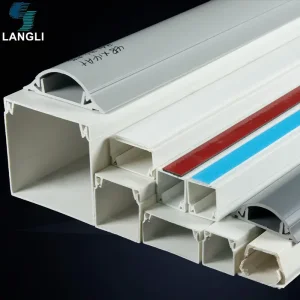
Utilize self-adhesive mini-trunking (16x16mm, 25x16mm, 40x25mm) engineered for rapid installation along baseboards or ceiling perimeters. Options include decorative color-matching (pure white, ivory, black, or wood-grain foil wrapping) to eliminate unsightly exposed television, HDMI, and ethernet wiring without surface wall chasing.
Employs open-slot / comb wire ducting featuring break-away finger designs. Electricians route individual control wiring directly from DIN-rail mounted PLCs and contactors through sidewall fingers into the trunking channel, enabling pristine wire tracing and thermal dissipation within tight switchgear enclosures.
Mandates high-impact, vibration-resistant trunking systems equipped with double-locking lid mechanisms. Extruded profiles must demonstrate resistance to continuous mechanical oscillation and withstand thermal ambient swings typical of locomotive engine bays and roadside signal junction boxes.
How professional B2B buyers optimize container CBM utilization and enforce factory quality control standards before ocean freight dispatch.
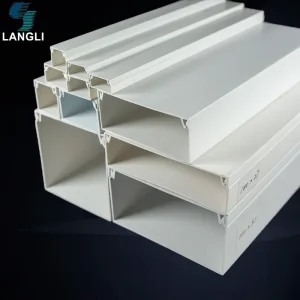
Freight costs represent a major variable in the landed cost of plastic wire trunking due to its low weight-to-volume ratio. Professional purchasing directors utilize a strategic profile nesting methodology during order consolidation.
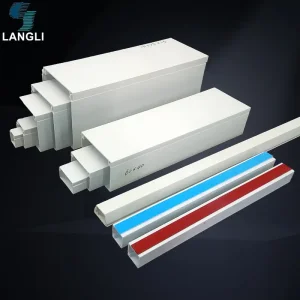
By nesting smaller trunking sizes (e.g., 16x16mm inside 40x40mm inside 100x50mm), buyers achieve up to 40% higher linear meters per 40ft HQ container, dramatically slashing freight cost per meter.
Every batch undergoes dimensional tolerance check (caliper micrometer), drop-weight impact testing at 0°C, socket engagement testing with companion conduit/fittings, and flammability ignition verification.
Full customization including laser inkjet branding along the trunking body, customized barcoded polybags, inner sleeves, and heavy-duty 5-ply corrugated export master cartons.
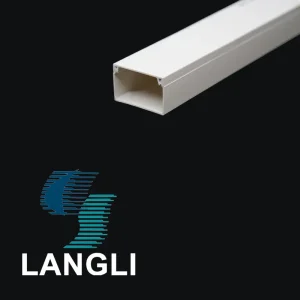
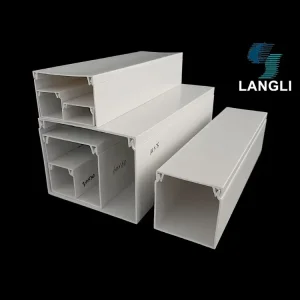
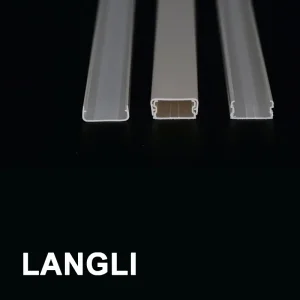
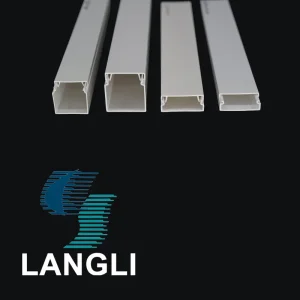
High-performance PVC cable trunking profiles certified for international electrical distribution network projects.
Information Gain: Analyzing closed-loop polymer recycling, intelligent wireways, and labor-reducing modular designs.
As the electrical industry moves toward net-zero building standards and enhanced circular economy accountability, wire trunking technology is evolving along three critical axes:
Tier-1 factories are pioneering post-industrial closed-loop recycling extrusions, blending up to 30% purified recycled PVC inner cores shielded by a virgin, color-matched outer cap layer, reducing carbon footprint while maintaining full UL 94 V-0 compliance.
For sensitive data centers and industrial automation environments, custom extruders are integrating aluminum foil or conductive carbon sub-layers directly into the PVC ducting body, protecting signal integrity from electro-magnetic interference without heavy metallic conduit.
The next generation of surface wireways incorporates push-fit coupler splices, flexible corner adaptors, and pre-applied high-tack acrylic tape strips, enabling complete office wiring runs without requiring handheld power tools.
Detailed answers to technical, commercial, and engineering questions frequently raised by global distributors and procurement managers.