 LANGLI PVC Request a Catalog LANGLI PVC Request a Catalog
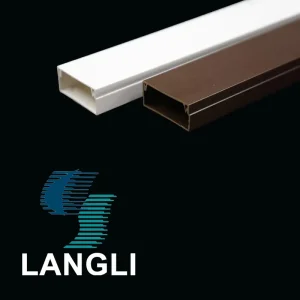
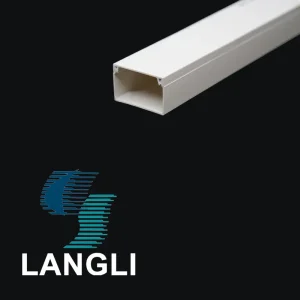
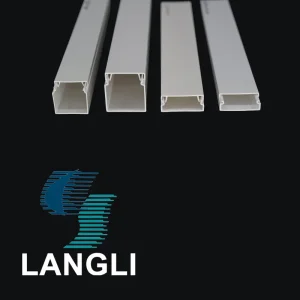
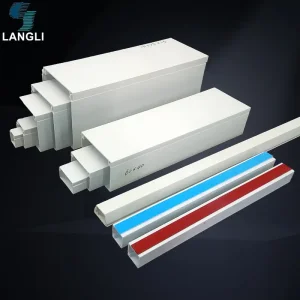
 Explore our top-tier export-grade PVC trunking, electrical body ducting, and structural wire accessories designed for industrial-scale Cu/XLPE deployment.
The global electrification landscape is undergoing a systemic paradigm shift driven by the rapid expansion of renewable energy integration, megacity infrastructure modernization, and the explosive growth of energy-intensive data center architectures. At the core of this industrial evolution lies the tri-layer architectural system comprising Copper (Cu) Conductors, Cross-Linked Polyethylene (XLPE) Insulation, and Polyvinyl Chloride (PVC) Sheathing & Protection Containment.
As high-capacity power distribution demands rise globally, electrical engineering specifiers and international EPC (Engineering, Procurement, and Construction) contractors are increasingly standardizing on Cu/XLPE/PVC material combinations. High-purity electrolytic tough-pitch (ETP) copper ensures minimal ohmic resistance and maximum volumetric ampacity, while XLPE insulation delivers elevated thermal withstand capabilities up to 90°C under continuous load and 250°C during short-circuit events. Concurrently, specialized fire-retardant PVC compounds serve as both protective cable jackets and structural cable trunking systems, safeguarding physical wiring against mechanical impact, aggressive chemical vapors, and moisture ingress.
Utility networks globally are retrofitting legacy paper-insulated or standard PE cables with Cu/XLPE designs housed within heavy-duty flame-retardant PVC ducting to mitigate grid losses and structural dielectric breakdown.
Modern building codes mandate strict fire safety protocols. Flame-retardant (FR) and Low Smoke Zero Halogen (LSZH) modified PVC containment protects critical Cu/XLPE feeder runs inside vertical risers.
Factory floors require robust mechanical protection. Flame-proof PVC cable trunking combined with multi-core XLPE insulated copper cables prevents operational downtime caused by environmental degradation.
Understanding the thermo-mechanical and electrical parameters that govern Cu/XLPE/PVC manufacturing excellence.
Achieving structural longevity in power distribution demands rigorous quality control across all three material phases. Below is a comprehensive engineering breakdown of the physical and chemical characteristics engineered into modern industrial Cu/XLPE/PVC systems:
| Component Layer | Material Grade & Formulation | Thermal / Electrical Threshold | Primary Engineering Function | Standard Compliance |
|---|---|---|---|---|
| Conductor (Cu) | Class 1 Solid or Class 2 Stranded Pure Oxygen-Free / ETP Copper | Conductivity > 100% IACS, Melting point 1085°C | Low-loss electric current transmission with optimized cross-sectional area | IEC 60228 / BS EN 60228 |
| Insulation (XLPE) | Silane Cross-linked Polyethylene / Peroxide Organic Cross-linked Polyethylene | 90°C continuous, 130°C emergency overload, 250°C short circuit | High dielectric strength, low dissipation factor, resistance to thermal aging | IEC 60502-1 / ANSI ICEA S-95-658 |
| Outer Sheath (PVC) | High-density Rigid Polyvinyl Chloride with Lead-Free / Organotin Stabilizers | Operating temp: -15°C to 70°C; Tensile Strength > 12.5 MPa | Mechanical impact protection, chemical resistance, moisture block | BS 7671 / DIN EN 50085 |
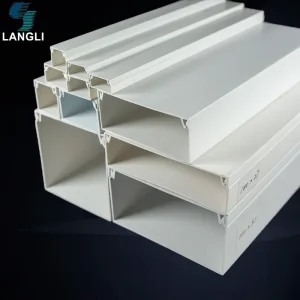
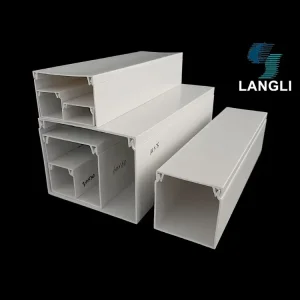
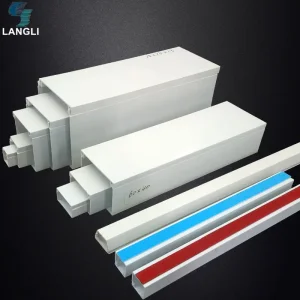
| Containment (Trunking) | Unplasticized Polyvinyl Chloride (PVC-U) with UL94 V-0 Self-Extinguishing Additives | Oxygen Index > 32%, Glow-wire test performance up to 960°C | Surface cable routing, electromagnetic shielding support, environmental isolation | BS 4607 / CE / RoHS |
Unlike standard thermoplastic polyethylene (PE), which melts under high thermal loads, XLPE undergoes chemical cross-linking during extrusion (typically via organosilane grafting or high-pressure peroxide curing). This process links individual linear polymer chains into a 3D insoluble macromolecular network. Consequently, XLPE insulation exhibits zero thermal flow at elevated temperatures, exceptional resistance to environmental stress cracking (ESCR), and a drastically reduced dielectric loss factor (tan δ < 0.0005), making it the ultimate medium for efficient energy transport.
Anticipating next-generation material innovations, eco-friendly compounding, and digital integration in power infrastructure.
Emerging environmental mandates are driving the development of bio-attributed PVC resins derived from industrial pine wood waste and recycled vinyl compounds, reducing carbon footprint by up to 45% without sacrificing tensile or fire properties.
Future cable containment trunking will feature integrated micro-sensor channels and RFID tracking systems, enabling real-time thermal monitoring, partial discharge detection, and predictive maintenance across smart factories.
Next-generation nano-composite filled XLPE formulations are expanding continuous operating temperature windows beyond 105°C, allowing increased current density in compact urban underground trenching.
From extreme desert ambient environments to sub-zero industrial cold storage facilities, Cu/XLPE/PVC systems must perform flawlessly. Below are real-world application blueprints demonstrating structural deployment across strategic industry sectors:
Direct buried and trunk-contained Cu/XLPE cabling transports DC power from solar arrays to central inverters. Heavy-wall UV-stabilized PVC ducting resists solar degradation, soil moisture, and chemical corrosion in harsh field installations.
Critical uptime mandates continuous high-density distribution. Color-coded modular PVC trunking paths organize high-ampacity XLPE copper feed lines, ensuring fire isolation, electromagnetic noise reduction, and rapid circuit tracing.
Subterranean transit networks utilize heavy-duty flame-proof rigid PVC ductwork to route XLPE power cables. In the event of an external flashover, the self-extinguishing PVC compound prevents flame spread along tunnel walls.
How our precision manufacturing processes eliminate jobsite defects and guarantee project compliance.
As a senior global manufacturer, maintaining Google E-E-A-T (Experience, Expertise, Authoritativeness, and Trustworthiness) principles means backing every production batch with verifiable laboratory testing reports. Prior to dispatch, every kilometer of conduit, cable trunking, and accessory undergoes systematic quality verification:
| Test Category | Standard Reference | Testing Methodology | Acceptance Criteria |
|---|---|---|---|
| High-Voltage Dielectric Withstand | IEC 60502-1 Section 16.4 | Application of 3.5 kV AC voltage across XLPE insulation for 5 continuous minutes | Zero electrical breakdown or flashover micro-punctures detected |
| Flame Retardancy & Flammability | UL 94 / IEC 60695-2-11 | Direct vertical burner flame application and 960°C Glow-Wire Test on PVC casing | Self-extinguishing within 10 seconds; no flaming droplets produced |
| Low-Temperature Impact Resistance | BS EN 61386-1 | Drop weight test after conditioning specimens at -15°C for 24 hours | Zero structural cracking, crazing, or wall shattering |
| Dimensional & Wall Tolerance | ISO 3126 / DIN 8061 | Ultrasonic laser gauge measuring inner diameter, wall thickness, and socket fit | Strict compliance within ±0.15mm tolerance limit |
Detailed answers to common engineering, procurement, and technical specification queries regarding Cu/XLPE/PVC systems.
Complete your installation inventory with our factory-direct PVC wiring solutions and custom trunking lines.