 LANGLI PVC Request a Catalog LANGLI PVC Request a Catalog
 Directly source precision-moulded UPVC conduits, fittings, and cable management trunking manufactured under strict ISO and CE certifications.
The global infrastructure boom, rapid urbanization, and mandatory modernizations of commercial power distribution networks have elevated rigid Unplasticized Polyvinyl Chloride (UPVC) conduit pipes from humble electrical enclosures to critical safety-engineered system components. As world markets shift toward zero-emission building frameworks, smart cities, and heavy-duty industrial automation, the demands placed upon pvc conduit pipe factories have undergone a fundamental shift.
Modern electrical installation design prioritizes non-corrosive, self-extinguishing, and high-impact physical raceways. Traditional metallic conduits, while mechanically robust, face rising material costs, labor-intensive threading protocols, and catastrophic oxidation risks in aggressive coastal or chemical environments. Consequently, modern PVC conduit pipe factories are adopting advanced twin-screw extruders, organic calcium-zinc (Ca/Zinc) thermal stabilizers, and online ultrasonic wall-thickness feedback systems to engineer conduit pipes that fulfill severe international safety benchmarks such as BS EN 61386, ASTM D1785, and DIN 49016.
In current Tier-1 MEP (Mechanical, Electrical, Plumbing) engineering projects, raw material purity defines long-term structural integrity. Premium PVC conduit pipe factories utilize 100% virgin UPVC resin with high resin K-values (K-67), eliminating recycled fillers that cause micro-fracturing during cold bending operations on job sites.
For international procurement managers, electrical wholesalers, and engineering contractors, evaluating a PVC conduit pipe factory involves far more than simply comparing unit pricing per meter. Modern procurement intent centers on risk mitigation, supply chain traceability, and regulatory compliance across diverse jurisdiction frameworks.
Global markets require precise dimensional tolerances. European and Middle Eastern markets demand metric sizing (16mm to 50mm) complying with BS 4607 and BS EN 61386, whereas Americas markets insist on Imperial Schedule 40 & Schedule 80 ASTM standards.
Top factories provide custom resin compounding. Commercial specifications often call for Low Smoke Zero Halogen (LSZH) variants, UV-stabilized outdoor formulations for solar farms, or high-impact resistance grades capable of surviving sub-zero installation conditions.
Conduits are volume-heavy export items. Advanced factories utilize nested belled-end packaging system engineering, allowing smaller diameters (e.g., 20mm) to be telescoped inside larger conduits (e.g., 32mm or 50mm), lowering shipping CBM charges by up to 30%.
From subterranean high-voltage transmission lines to high-rise commercial structures, high-quality PVC conduit systems deliver specialized protection tailored to challenging physical environments.
| Sector Solution | Technical Challenge | Material Specification | Primary Regulatory Standard |
|---|---|---|---|
| Commercial High-Rise Infrastructure | Fire risk containment, dense structural concrete embedding. | Heavy Gauge Rigid UPVC, V-0 Self-Extinguishing Grade. | BS EN 61386-21 / IEC 61386 |
| Solar Energy & Utility Farms | Continuous UV radiation, extreme thermal cycles (-15°C to +75°C). | Titanium Dioxide (TiO2) enriched UV-Stabilized Compound. | ASTM D1784 / UL 651 |
| Chemical & Water Treatment Plants | Acidic/Alkaline moisture exposure, gas corrosion. | 100% Unplasticized High-Density Polyvinyl Chloride. | NEMA TC-2 / IP68 System Rated |
| Subsurface & Direct Burial Utilities | Heavy soil compression, soil shifting, underground moisture. | Thick-wall Schedule 80 / Heavy Class Cold-Bending Conduit. | DIN 49016 / AS/NZS 2053 |
Foshan Shunde Langli Hardware Electrical PVC Co., Ltd. stands as a premier flagship manufacturer within China's industrial plastic heartland. Engineered with a specialized focus on electrical installation safety, Langli operates a massive unified production plant dedicated to compounding, injection moulding, extrusion, and export distribution.
To ensure total confidence for engineering consultants and customs authorities, reliable PVC conduit pipe factories maintain verified third-party laboratory documentation. Our production processes adhere strictly to global environmental and safety mandates.
Validates full compliance with the European Low Voltage Directive (LVD). Guarantees electrical insulation strength, thermal endurance, and mechanical crush resistance up to 1250N heavy classification.
Strict raw material monitoring ensures zero hazardous heavy metals such as Lead (Pb), Cadmium (Cd), or Mercury (Hg). Fully safe for indoor commercial installations, green building standards, and residential usage.
Self-extinguishing polymer formulation guarantees that flame propagation ceases within 10 seconds of ignition source removal. Does not drop flaming particles, mitigating electrical short-circuit fire propagation.
As smart buildings require integrated IoT sensors and reduced carbon footprints, the extrusion industry is transforming. Forward-thinking PVC conduit pipe factories are implementing three key technological breakthroughs over the coming decade:
Transitioning from traditional fossil-based ethylene to bio-attributed ethylene produced from sustainable wood pulp and agricultural byproducts. Reduces manufacturing carbon footprint by up to 40% while preserving identical tensile strength and dielectric rating.
Utilizing multi-layer extrusion technology where inner walls feature a super-smooth anti-friction slick layer (reducing wire-pulling resistance by 25%), while outer walls incorporate high-impact UV resistance layers.
Integrating surface-embossed QR codes and RFID tag tracking within conduit walls during extrusion, enabling facility managers to scan finished walls and immediately access buried cable route schematics via Augmented Reality (AR).
Expert insights directly from our engineering team regarding procurement, standards, and technical specifications.
Practical guides curated by our technical team for MEP specifiers, electrical wholesalers, and installation contractors.
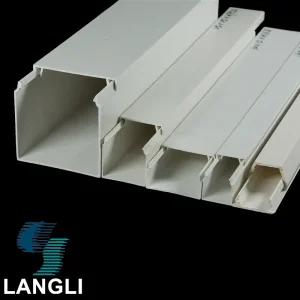
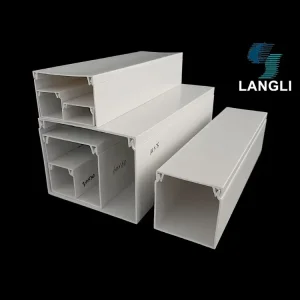
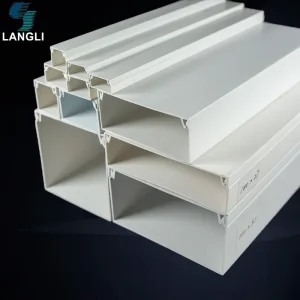
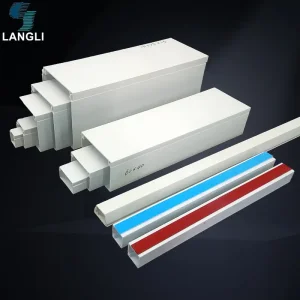
Efficient cable management starts with profile selection. Explore how trunking depth, lid snap retention, and matching internal/external angles accelerate installation speed.
Loose conduit sockets, brittle elbows, and non-uniform wall thickness waste expensive labor hours on jobsites. Learn key dimensional check points before bulk ordering.
An in-depth breakdown of self-extinguishing polymer formulations, glow-wire test benchmarks, and UL-94 flammability ratings required in commercial construction codes.
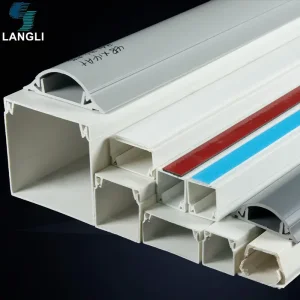
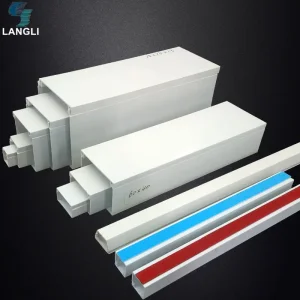
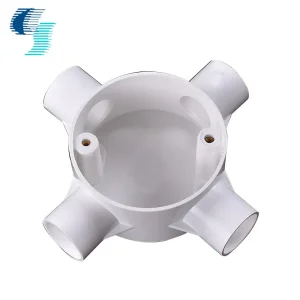
Review additional custom factory SKUs, wire duct tapes, circular junction boxes, and full-size range electrical cable trunking.