 LANGLI PVC Request a Catalog LANGLI PVC Request a Catalog
 High-impact, flame-retardant electrical cable containment and management products optimized for commercial, industrial, and residential deployments.
As global industrialization accelerates and modern architecture demands ultra-reliable electrical distribution networks, the selection of protective cable encasements and metal-clad assembly jacketing has transitioned from standard utility selection to a critical engineering decision. Polyvinyl Chloride (PVC) metal-clad (MC) cables—complemented by rigid uPVC conduits and wireways—form the backbone of high-density electrical infrastructure across commercial high-rises, industrial automation facilities, petrochemical plants, and renewable power installations.
Rigid unplasticized Polyvinyl Chloride (uPVC) and custom plasticized outer jackets leverage high-grade resin matrices enriched with heat stabilizers, titanium dioxide UV inhibitors, and specialized calcium-zinc flame retardants to resist severe dielectric breakdown.
In PVC jacketed Metal-Clad (MC) cable systems, the extruded outer PVC sheath works synergistically with the underlying interlocked aluminum or galvanized steel armor, providing an impenetrable barrier against moisture ingress, aggressive soil chemistry, and physical abrasion.
Engineered to meet rigorous international standards including National Electrical Code (NEC) Article 330, UL 1569, and BS EN 61386, modern PVC jacketing ensures low smoke generation, self-extinguishing capabilities, and zero structural degradation over multi-decade operational lifespans.
To understand why high-quality PVC MC cables and associated rigid PVC ducting represent the preferred choice for electrical consultants globally, one must examine the molecular structure and compound additives utilized in modern extrusion lines. Pure Polyvinyl Chloride is naturally rigid and susceptible to photo-thermal degradation. However, through precise molecular compounding—blending suspension-grade PVC resin (K-value 65–67) with specific plasticizer systems, thermal stabilizers, flame retardants, and processing aids—manufacturers tailor the physical properties to withstand extreme field conditions.
In wet locations, direct burial scenarios, or highly corrosive industrial atmospheres, standard uncoated metallic armor (THHN/THWN conductors wrapped in interlocked aluminum tape) is vulnerable to galvanic corrosion and chemical attack. The application of a specialized extruded PVC jacket directly over the corrugated or interlocked armor seals out moisture, alkaline soils, acid rain, and atmospheric ozone. Key chemical traits include:
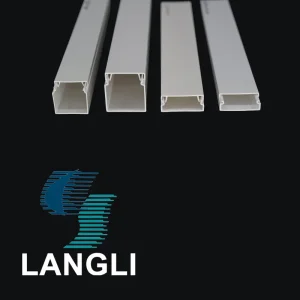
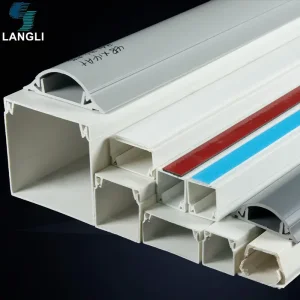
For surface-mounted distribution, branch circuit containment, and exposed raceways, rigid unplasticized PVC (uPVC) is utilized due to its superior tensile strength and thermal rigidity. Engineered via high-precision multi-screw extruders and automated injection moulding machines, uPVC raceways deliver unmatched dimensional consistency. Technical attributes include:
Modern industrial design frequently combines PVC-jacketed MC cables with surface uPVC trunking and junction boxes. While PVC MC cable offers flexible, rapid deployment around structural obstacles with integral metallic armor grounding, rigid uPVC trunking provides modular, accessible pathways for secondary branch wiring, sensor cabling, and future circuit expansion. Using both systems in tandem reduces total labor costs by up to 40% while delivering a NEMA 4X/IP66 equivalent protection tier.
A detailed technical comparison matrix for electrical engineers, EPC contractors, and master electricians selecting PVC MC cables, conduits, and accessories.
| System Category | Core Material Standard | Temperature Rating | Flammability Rating | Primary Industrial Application |
|---|---|---|---|---|
| PVC Jacketed MC Cable | UL 1569 / NEC Art. 330 | -40°C to +90°C (Dry/Wet) | IEEE 1202 / FT4 / VW-1 | Direct burial, cable trays, harsh chemical processing, washdown areas. |
| Rigid uPVC Electrical Conduit | BS EN 61386 / UL 651 | -15°C to +60°C continuous | UL 94 V-0 / BS 4607 | Exposed raceways, underground duct banks, slab embedment, commercial walls. |
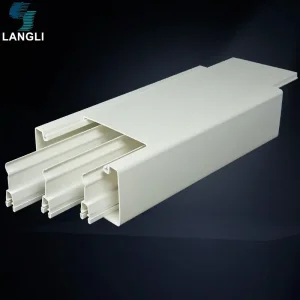
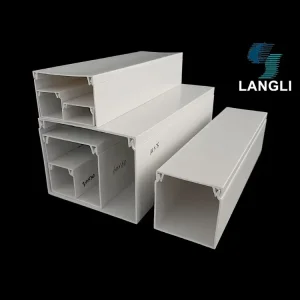
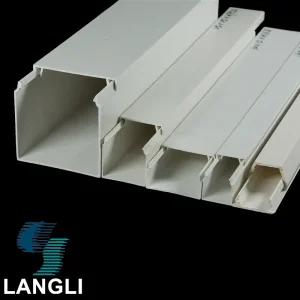
| PVC Cable Trunking / Ducting | IEC 61084 / BS 4678 | -5°C to +65°C continuous | Self-extinguishing (LOI > 32) | Surface wireway distribution, data centers, retrofit panel connections. |
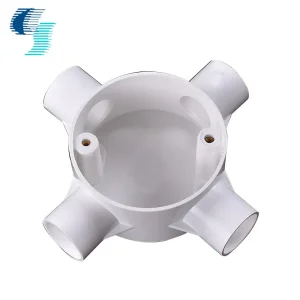
| Circular Junction Boxes | BS 4607 / CE Low Voltage | -20°C to +70°C short-term | Glow-wire test 960°C compliant | Cable termination, conduit branching, ceiling light loop-in wiring points. |
From extreme hot desert solar farms to coastal chemical processing units, see how high-grade PVC cable management solutions adapt to severe site conditions.
High-density urban towers require cable raceways that minimize smoke production during structural fire events while maintaining clean aesthetics. Flame-retardant uPVC trunking profiles with snap-on covers combined with PVC-sheathed MC power feeds streamline vertical riser shafts, drastically lowering overall weight load compared to heavy metallic steel conduits.
Solar arrays deployed in high-UV environments require superior resistance to solar radiation and ambient heat cycling. Specialized UV-stabilized PVC jacketed cables prevent cracking under persistent sunlight, while heavy-duty PVC ducting shields string inverter wiring from abrasive sandstorms and ground moisture accumulation.
Chemical washdown facilities and coastal treatment plants present highly corrosive salt-spray, acidic, and alkaline vapors that oxidize unjacketed metallic systems within months. PVC MC cables paired with IP66-rated sealed PVC circular junction boxes deliver total non-corrosive performance, extending capital infrastructure life by decades.
How advance compounding, green chemistry, and smart sensor integration are transforming traditional PVC cable management systems.
The global electrical industry is rapidly transitioning toward 100% lead-free, cadmium-free calcium-zinc (Ca-Zn) and organic thermal stabilizers. Next-generation PVC jackets integrate bio-based plasticizers derived from renewable soybean and castor oils, reducing the carbon footprint of production by up to 35% without compromising dielectric performance or flame retardancy.
Future industrial uPVC raceway designs are incorporating co-extruded micro-channels capable of housing fiber-optic thermal monitoring strips and acoustic sensor arrays. These smart trunking channels provide real-time thermal mapping along power cable runs, automatically alerting plant managers to localized overheating or partial discharge before insulation failure occurs.
Leading manufacturers are establishing closed-loop post-industrial scrap recovery systems. Through advanced micronization and re-granulation processes, off-cut PVC from production lines is re-introduced into the inner structural cores of multi-layer co-extruded conduits, maintaining strict virgin material outer layers while dramatically reducing virgin polymer consumption.
Where ultra-strict life-safety codes mandate minimal corrosive acid gas emissions—such as subways, hospitals, and offshore oil platforms—modified polymer blends combining PVC benefits with halogen-free flame retardants (HFFR) offer significantly reduced smoke opacity (ASTM E662) and non-corrosive combustion gases.
In-depth technical responses curated by senior electrical design engineers and OEM specialists.
Explore our factory-direct product catalog engineered to exact ISO, CE, and RoHS international certifications.
Leveraging 30+ years of moulding mastery, over 900 active tooling sets, 32 precision injection machines, and a dedicated export desk serving over 60 countries, we deliver full-range PVC conduit, MC cable containment, trunking, and fitting solutions built precisely to your regional standards.