 LANGLI PVC Request a Catalog LANGLI PVC Request a Catalog
 Explore high-performance electrical ducting, junction boxes, and accessories compliant with international safety standards.
Analyzing why global engineering projects are pivoting toward standardized 2-meter physical containment dimensions to minimize logistics overhead, accelerate installation cycles, and comply with strict building code regulations.
Traditional 2.9m and 3.0m rigid conduits frequently suffer from severe volumetric inefficiency inside standard 20ft and 40ft high-cube shipping containers, leaving unutilized void space or requiring specialized side-loading equipment. Standardized 2m conduits allow modular stacking vectors, optimizing container cubic meter utilization by up to 28% and substantially reducing international freight costs per meter.
Modern mega-structure construction sites face severe spatial restrictions. Long 3m conduit lengths create dangerous transit bottlenecks inside construction hoists, passenger elevators, and narrow access corridors. The 2m conduit architecture permits effortless vertical transportation in standard service lifts without requiring risky exterior crane hoisting, thereby significantly lowering labor-related accident risks on site.
Architectural ceiling grids and standardized partition wall studs in modern commercial spaces overwhelmingly operate on 600mm, 1200mm, and 2000mm dimensional spacing. Pre-cut 2m conduit sections align seamlessly with drop-ceiling suspension channels, eliminating excessive scrap material, reducing manual cutting labor hours by 35%, and enhancing site cleanliness.
In-depth technical criteria for engineering procurement managers, commercial buyers, and brand owners sourcing 2m rigid electrical conduits and cable management accessories from specialized Chinese manufacturing hubs.
Superior 2m PVC conduits depend fundamentally on high-grade Unplasticized Polyvinyl Chloride (PVC-U) formulations. Leading ODM factories utilize virgin PVC resins reinforced with calcium-zinc organic heat stabilizers, strictly eliminating lead (Pb) and heavy metals. Key performance attributes to specify include high impact resistance at sub-zero temperatures (-5°C to +60°C operating window) and high dielectric strength exceeding 25 kV/mm to prevent electrical breakdown under voltage surges.
Inconsistent wall thickness creates localized stress points, leading to structural cracking during cold-bending operations on site. Top-tier ODM suppliers employ automated continuous ultrasonic wall-thickness monitoring across multi-cavity co-extrusion lines. Tolerance control must be maintained within ±0.15mm for standard light, medium, and heavy-gauge conduits to ensure seamless inter-fitting with couplers, elbows, junction boxes, and adaptors.
| Parameter / Spec Grade | Light Gauge Class (BS EN 61386) | Medium Duty Class | Heavy Gauge Class | Testing Standard & Verification |
|---|---|---|---|---|
| Impact Resistance | 1.0 Joules (Light duty) | 2.0 Joules (Medium duty) | 6.0 Joules (Heavy duty) | BS EN 61386-21 Clause 10.3 |
| Compressive Strength | 320 N / 5cm | 750 N / 5cm | 1250 N / 5cm | BS EN 61386-21 Clause 10.2 |
| Flame Retardancy | Self-extinguishing < 30s | Self-extinguishing < 15s | UL94 V-0 Grade (Self-ext) | IEC 60695-2-11 Glow Wire 960°C |
| Thermal Endurance | -5°C to +60°C | -15°C to +75°C | -25°C to +90°C (High temp formula) | ISO 306 Vicat Softening Point |
| Dielectric Strength | > 20 kV/mm | > 25 kV/mm | > 30 kV/mm | IEC 60243-1 Electrical Proof |
How ODM 2m conduits and specialized cable trunking accessories streamline electrical distribution in hyper-scale datacenters, commercial high-rises, solar farms, and industrial automation facilities.
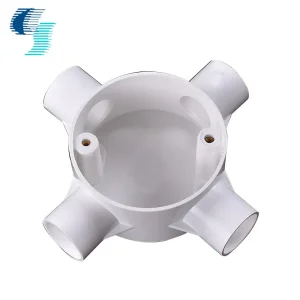
Modern cloud datacenters require rapid deployment of fiber-optic and power cabling beneath raised floors and above server racks. Low Smoke Zero Halogen (LSZH) 2m conduits equipped with pre-moulded 4-way circular junction boxes isolate high-voltage power feeds from sensitive signal channels, preventing electromagnetic interference (EMI) and containing thermal hazards during critical server load peaks.
Outdoor utility-scale photovoltaic installations demand rigid conduits capable of enduring high solar irradiance and thermal cycling without embrittlement. Specialized UV-stabilized 2m conduits incorporate titanium dioxide (TiO2) solar blockers that prevent polymer degradation, ensuring physical protection for DC string cables against UV radiation, moisture ingress, and rodent exposure.
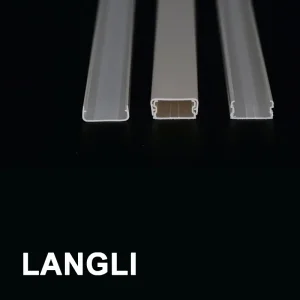
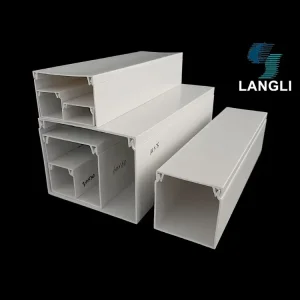
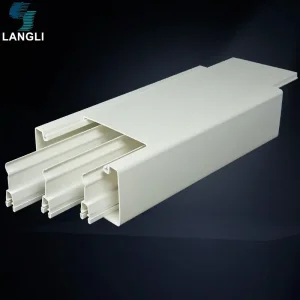
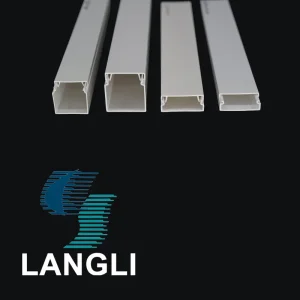
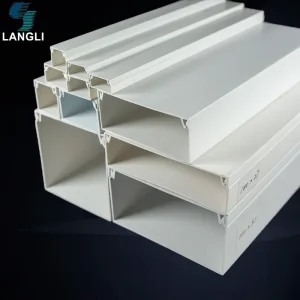
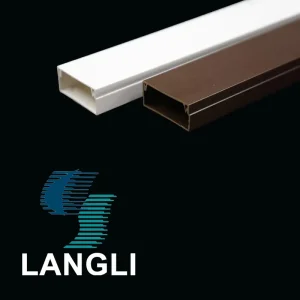
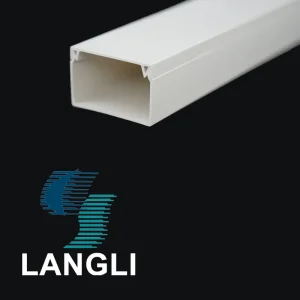
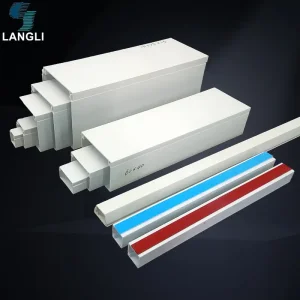
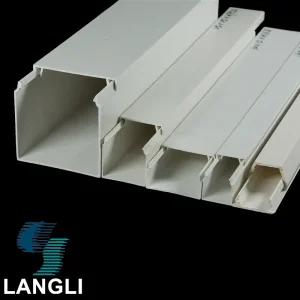
For municipal upgrades, hospitals, and educational facilities where wall-chasing is prohibited, decorative self-adhesive 2m PVC cable trunking (ranging from 10x10mm up to 200x100mm) provides a clean, surface-mounted raceway. Supplied with snap-fit internal/external angles, flat tees, and end caps, installation efficiency is accelerated while preserving structural integrity.
Ensuring frictionless international import compliance through standardized testing reports, local electrical code alignment, and factory batch tracing.
To succeed across diverse export markets, ODM 2m conduit suppliers must offer full compatibility with specific regional standards:
Professional ODM factories enforce rigorous quality control (QC) at three distinct manufacturing stages:
Emerging material technologies, smart factory automation, and sustainable manufacturing practices reshaping the rigid electrical containment industry.
With global ESG mandates expanding, forward-thinking ODM manufacturers are developing hybrid rigid conduits incorporating up to 30% post-industrial recycled PVC (PIR-PVC) without sacrificing impact strength or flame retardancy. Future production lines are adopting bio-attributed PVC resins derived from sustainable wood pulp byproducts, significantly lowering carbon footprint metrics for LEED-certified building projects.
Next-generation 2m conduit designs integrate co-extruded color-coded identification stripes and embedded RFID/NFC micro-tags along the outer wall. This enables facility engineers to scan conduits behind ceiling tiles or drywall with handheld mobile devices, instantly identifying cable routing maps, installation dates, voltage ratings, and circuit identifiers without physically opening junction boxes.
Leading Chinese conduit factories are replacing legacy manual extrusion setups with fully automated Industry 4.0 production cells. Real-time vision sensors continuously analyze surface smoothness, color consistency, and print legibility at speeds exceeding 60 meters per minute. Automated robotic packing arms handle bundle bundling, plastic film wrapping, and barcode labeling with zero manual intervention, guaranteeing pristine delivery quality.
Expert answers addressing dimensional selection, custom ODM tooling, regulatory certificates, and bulk procurement logistics.
Complete your procurement package with precision-moulded decorative ducting, heavy-duty junction boxes, and versatile cable trunking sizes.