 LANGLI PVC Request a Catalog LANGLI PVC Request a Catalog
 Engineered for global compliance, mechanical durability, and seamless installation across industrial and commercial infrastructures.
An exhaustive analysis of global cable management shifts, regulatory transitions, and polymer engineering breakthroughs.
The worldwide electrical raceway and conduit hardware market is experiencing unprecedented demand, driven by global urbanization, smart grid expansion, massive data center construction, and renewable energy integration. Valued at over USD 7.2 Billion globally, the shift toward rigid uPVC, halogen-free, and high-impact conduit systems is accelerating. Procurement professionals no longer seek simple commodities; they require engineered systemic reliability capable of withstanding extreme environmental stresses.
Compliance frameworks such as BS EN 61386, IEC 61084, RoHS, and CE are constantly updating to mandate stricter flame propagation limits, smoke toxicity thresholds, and dielectric performance. Enterprise buyers face complex regional certifications (such as SASO in the Middle East, UL in North America, and AS/NZS 2053 in Australasia). Meeting these demands requires ODM manufacturers with deep metallurgical, chemical, and precision injection moulding expertise.
Modern electrical contractors favor fully integrated ecosystems where conduit pipes, fittings, circular junction boxes, mini-trunking profiles, and switch boxes maintain perfect dimensional tolerances. Incompatible components lead to installation delays and structural failures. Original Design Manufacturing (ODM) partners provide custom mold tooling to guarantee 100% mechanical fit across disparate component lines.
Understanding the industrial clustering, supply chain depth, and cost-to-quality optimizations of the Foshan/Shunde plastics cluster.
The Pearl River Delta (specifically Foshan Shunde) represents the world's most concentrated cluster for plastic polymer formulation, mold design, tooling fabrication, and high-speed injection molding. Raw material compounding facilities for unplasticized polyvinyl chloride (uPVC), high-impact polystyrene (HIPS), and engineering additives operate within a 30-kilometer radius. This proximity drastically reduces material lead times, minimizes transport overhead, and enables rapid iteration of proprietary resin formulations tailored for specific client impact and UV requirements.
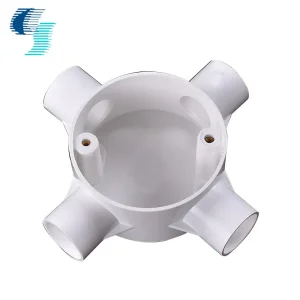
Developing custom conduit fittings (e.g., specialized 4-way circular boxes, inspection elbows, or unusual trunking transitions) in Western markets often involves exorbitant mold fabrication costs ($20,000–$50,000 per mold) and 16-to-24 week lead times. Chinese ODM facilities leverage localized CNC machining, EDM wire cutting, and 3D prototyping to produce high-precision, multi-cavity hardened steel molds in under 30 days at a fraction of the capital cost, allowing global brands to rapidly launch custom SKUs.
A comparative evaluation of material selections and physical testing criteria governing industrial cable containment.
| Material / Attribute | Rigid uPVC (Unplasticized) | Galvanized Rigid Steel (RMC) | Flexible Metallic Conduit (FMC) | Standard PVC (Plasticized) |
|---|---|---|---|---|
| Corrosion Resistance | Immune (Acid/Alkali Resistant) | Prone to rust/oxidation over time | Moderate (Requires PVC jacket) | Good, but degrades under UV |
| Flame Retardancy | UL94 V-0 Self-Extinguishing | Non-combustible | Non-combustible core | HB to V-2 dependent on additives |
| Dielectric Strength | > 40 kV/mm (Insulating) | Conductive (Requires Grounding) | Conductive (Requires Grounding) | > 25 kV/mm |
| Weight / Installation Speed | Ultra-Lightweight / Solved Solvent-Weld | Heavy / Threaded Joints Required | Flexible / Fast Routing | Lightweight / Flexible |
| Cost Efficiency | Highest (Optimal ROI) | High Capital & Labor Cost | Moderate to High | Low Initial Cost / Short Lifespan |
High-grade ODM electrical fittings utilize rigid uPVC compounds mixed with specialized stabilizers. Titanium Dioxide (TiO2) provides long-term UV protection against discoloration and polymer chain embrittlement caused by solar radiation. Calcium-Zinc (Ca/Zn) eco-stabilizers replace hazardous lead compounds, achieving full RoHS compliance without compromising heat deflection temperatures (HDT > 78°C) or Izod impact toughness.
Conduit hardware is classified according to numerical codes reflecting mechanical resistance. High-specification ODM systems comply with Code 3321 or Code 4421 thresholds: withstands medium compression loads (750N) up to heavy compression loads (1250N), resists 2.0J to 5.0J impacts at low temperatures (-15°C to -25°C), and operates reliably in continuous service up to +60°C.
How customized conduit hardware and trunking systems perform across distinct global industrial environments.
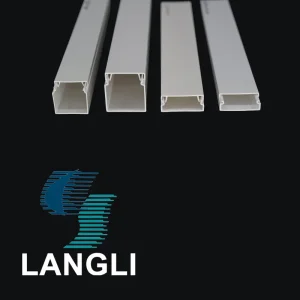
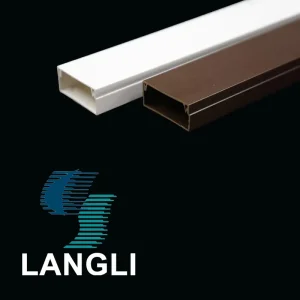
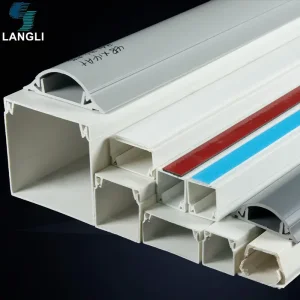
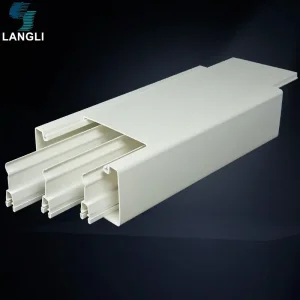
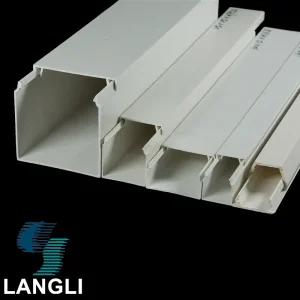
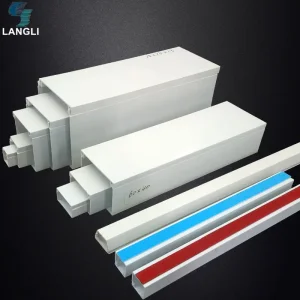
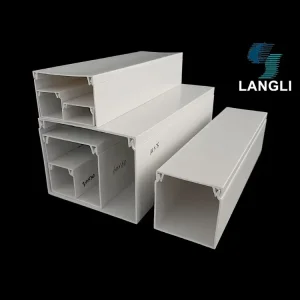
In modern commercial high-rises and mixed-use complexes, aesthetics meet stringent fire safety standards. Surface-mounted PVC cable trunking (ranging from 10x10mm mini-trunking to 200x100mm multi-compartment raceways) allows structured routing for data cables and low-voltage electrical lines. Pre-applied high-tack acrylic adhesive backing accelerates installation on smooth drywall surfaces, while snap-on cover lids ensure fast maintenance access.
Chemical processing plants, wastewater facilities, and coastal industrial plants present aggressive corrosive atmospheres where galvanized metal conduit corrodes within years. Non-metallic uPVC conduit systems, circular 1-way to 4-way junction boxes fitted with neoprene O-ring gaskets, and solvent-welded fittings deliver an IP65 or IP66 ingress protection rating, preventing moisture ingress and airborne chemical degradation.
Utility-scale solar photovoltaic (PV) plants require miles of cable protection exposed to continuous sun, rain, and wide thermal fluctuations (-20°C to +70°C). Customized, heavily UV-stabilized heavy-gauge PVC conduits and corrugated wire ducts protect string inverter cabling from abrasion, rodent damage, and UV photo-degradation, guaranteeing a 25-year service lifecycle.
Best practices for international buyers, EPC contractors, and brand distributors when managing high-volume ODM orders.
OEM (Original Equipment Manufacturing): Best when purchasing standard catalog SKUs with customized brand laser marking, customized colors (e.g., orange for telecom, dark grey for industrial), and private-label master cartons.
ODM (Original Design Manufacturing): Ideal when developing proprietary lock-mechanism trunking, unique angled junction boxes, or custom metric-to-imperial adapters requiring new mold tooling and structural engineering validation.
A rigorous Quality Assurance protocol should include four critical tests prior to shipment container loading:
1. Glow-Wire Test (IEC 60695-2-11): Ensures raw compound self-extinguishes within 30 seconds of 850°C tip contact.
2. Low-Temperature Drop Impact Test: Samples conditioned at -15°C for 2 hours must resist fracture upon impact.
3. Socket Tolerance Gauge Testing: Ensures plug-and-play fit with standard conduit pipe wall thicknesses.
4. Vicats Softening Point Verification.
Plastic conduit and trunking are volume-heavy (CBM limited) rather than weight-heavy shipments. Strategic ODM sourcing optimizes container loading by nesting smaller trunking profiles inside larger sizes (e.g., placing 16x16mm trunking inside 40x25mm profiles, which sit inside 100x50mm channels). Furthermore, packing small fittings inside hollow trunking cavities maximizes cube utilization, lowering freight cost per unit by up to 35%.
Where polymer science, intelligent tracking, and eco-friendly manufacturing are heading over the next decade.
While traditional uPVC is self-extinguishing, enclosed public spaces like subway tunnels, airports, and hospitals increasingly mandate Halogen-Free polymers (PPO or customized Polypropylene blends). When exposed to fire, LSZH materials produce zero corrosive acid gas and ultra-low toxicity smoke, dramatically improving occupant evacuation safety.
Environmental, Social, and Governance (ESG) mandates are driving ODM factories to incorporate Post-Consumer Recycled (PCR) and Post-Industrial Recycled (PIR) uPVC content into non-critical inner core layers via co-extrusion technology. This creates a green profile while maintaining a pristine, UV-stabilized virgin resin outer wall.
Labor shortages in global construction markets have intensified demand for tool-less installation hardware. Modern ODM innovations feature push-fit conduit couplings with internal locking teeth and click-lock trunking covers that eliminate screws and glue, cutting jobsite installation time by up to 50%.
Browse our core manufacturing series, available for OEM customization, bulk factory supply, and global delivery.
Expert technical responses to common engineering, procurement, and manufacturing inquiries.