 LANGLI PVC Request a Catalog LANGLI PVC Request a Catalog
 Explore our top-tier export configurations manufactured to strict BS, CE, and RoHS international specifications with custom flame-retardant parameters and tight socket tolerances.
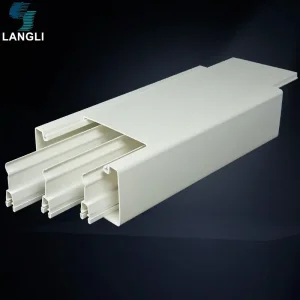
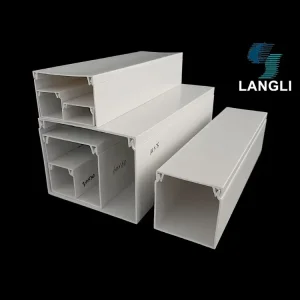
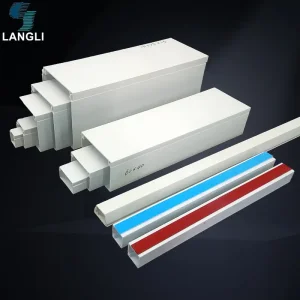
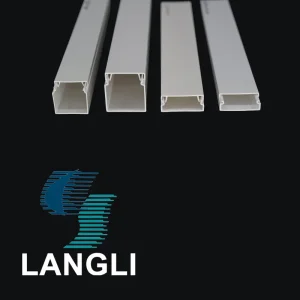
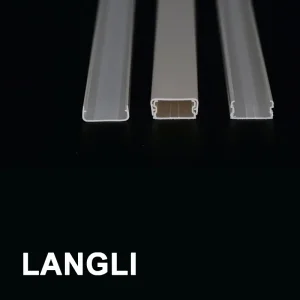
In modern industrial construction, commercial real estate, and municipal infrastructure projects, unplasticized polyvinyl chloride (uPVC) conduit systems represent the critical nervous system safeguarding electrical distribution.
The international electrical containment industry is undergoing a structural transition. Driven by rapid urbanization across the Middle East, Southeast Asia, and Latin America, alongside rigorous modernization of aging grid infrastructure in Europe and North America, demand for high-durability, non-corrosive, non-conductive cabling enclosures has surged. Modern ODM Conduit UPVC factories are no longer mere plastic extruders; they operate as advanced engineering hubs combining material chemistry, precision tooling, and automated quality verification.
Metallic conduit systems (such as galvanised rigid steel or EMT) are increasingly restricted in high-moisture, coastal, or chemically aggressive environments due to galvanic corrosion, structural weight penalties, and labor-intensive installation requirements. Modified rigid uPVC formulations offer superior dielectric strength, immune resistance to acid-alkali exposure, self-extinguishing flame propagation parameters, and up to a 60% reduction in installation time via solvent-weld or push-fit socketing technologies.
High dielectric strength (>25 kV/mm) eliminates short-circuit grounding risks. Compounded with eco-friendly flame retardants, uPVC conduits achieve self-extinguishing ratings (UL94 V-0, Limiting Oxygen Index LOI > 32%).
Formulated with advanced UV stabilizers and impact modifiers, modern uPVC withstands severe thermal cycles, buried direct-burial compression, and continuous exposure to aggressive soils and concrete matrixes.
Original Design Manufacturing (ODM) empowers international distributors to request custom wall-thickness profiles, proprietary lock-in trunking mechanics, specific Pantone colorways, and co-branded packaging.
The operational performance of an electrical conduit relies entirely on the precise molecular structure and compounding stoichiometry executed within the factory mixing department.
A tier-one ODM UPVC factory operates controlled compounding lines where virgin Suspension-Grade Polyvinyl Chloride resin (typically K-value 67 to 68) is blended with additive packages tailored for specific mechanical, thermal, and electrical metrics. Plasticizers are strictly excluded to maintain structural rigidity, high Vicat softening temperatures, and long-term creep resistance under mechanical load.
Chlorinated Polyethylene (CPE) or Acrylic Impact Modifiers (AIM) are incorporated at 4–7 phr to form an interpenetrating elastomer network. This prevents brittle fracture during cold-weather handling and high-impact mechanical strikes on construction sites.
Internal (stearic acid derivatives) and external lubricants (PE wax) ensure smooth melt flow through complex extrusion dies, minimizing wall friction, eliminating melt fracture, and producing an ultra-smooth internal bore for rapid wire pulling.
Micro-milled Rutile Titanium Dioxide is added at precise concentrations (typically 2–4%) to scatter ultraviolet radiation, preventing polymer chain scission, discoloration, and embrittlement when conduits are stored or installed outdoors.
Antimony Trioxide (Sb₂O₃) and functionalized mineral fillers work synergistically with the chlorine content inherent in the PVC polymer chain (57% Cl by weight), starving flame propagation and creating a insulating protective char layer.
World-class manufacturing requires absolute repeatability across millions of linear meters of extrusion and millions of injection-molded fittings.
A modern ODM Conduit UPVC Factory integrates automated compounding, high-torque counter-rotating conical twin-screw extruders, continuous ultrasonic wall-thickness monitors, and robotic handling systems. The transformation from raw PVC resin to finished, multi-standard conduit involves several critical engineering phases:
Raw PVC resin and micro-ingredients are pneumatically conveyed into gravimetric dosing units. High-speed hot mixers elevate compound temperature to 120°C via friction to ensure uniform additive dispersion, followed by rapid fluid-bed cooling to 45°C to prevent premature thermal degradation prior to extrusion feeding.
Counter-rotating twin-screw extruders deliver uniform plasticization at controlled melt temperatures (175°C–195°C). The molten polymer tube enters a vacuum calibration tank where sub-atmospheric pressure forces the outer wall against precision bronze sleeves while chilling water sprays set the final outer diameter (OD).
Four-axis ultrasonic sensors continuously rotate around the conduit, taking thousands of wall-thickness measurements per minute. Connected via feedback loop to the haul-off caterpillar speed controller, any concentricity deviation or wall-thinning triggers automatic speed adjustment to maintain precise tolerances.
For conduit fittings (elbows, couplers, inspection tees, junction boxes), high-tonnage servo-hydraulic injection machines utilize hardened H13 steel multi-cavity moulds. Integrated hot runner systems reduce sprue waste, while automated robotic arms perform inline de-gating and stacking.
International trade in electrical accessories requires complete compliance with multi-jurisdictional code requirements. OEM/ODM buyers must align factory tooling with local installation standards.
| Standard Framework | Primary Jurisdictions | Key Diameter Options | Impact / Compression Class | Critical Test Protocol |
|---|---|---|---|---|
| BS EN 61386-21 / BS 4607 | UK, Middle East, Singapore, Malaysia, Hong Kong | 20mm, 25mm, 32mm, 40mm, 50mm | Medium (1250N) / Heavy (4000N) | Cold impact at -15°C; Glow-wire test at 850°C; Bending & socket collapse test. |
| UL 651 / NEMA TC-2 | USA, Canada, Latin America, Philippines | ½", ¾", 1", 1½", 2" (Schedule 40 & 80) | Rigid Heavy-Wall (Sch 80) | 90°C thermal rating, sunlight resistance (UV), tensile stress cracking resistance. |
| AS/NZS 2053 | Australia, New Zealand, Pacific Islands | 20mm, 25mm, 32mm, 40mm, 50mm | Light, Medium, Heavy Duty | Resistance to drop-weight impact at 0°C; resistance to chemical corrosion; IP66 fitting seals. |
| DIN 49016 / IEC 61386 | Germany, Continental Europe, Central Asia | 16mm, 20mm, 25mm, 32mm, 40mm, 63mm | 3321 / 4421 Classification | Flame self-extinguishability within 30s; low thermal expansion coefficient (<0.08 mm/m·K). |
A qualified ODM supplier must possess ready-to-use tooling across all standard dimension ratios (SDRs). Socket dimensions are especially critical: entry taper angles, socket depths, and ring-seal grooves must adhere strictly to nominal tolerances to guarantee water-tight IP65/IP66 joints when joined with solvent cement or rubber gaskets.
Different architectural and infrastructure sectors place distinct physical stresses on electrical conduit and trunking networks. OEM customization caters directly to these specialized demands.
Requirement: Low Smoke Zero Halogen (LSZH) or strict low-acid flame retardancy.
Engineering Solution: Modified PVC-U formulations with smoke-suppressant additives (molybdenum compounds) that reduce toxic hydrogen chloride gas emission by up to 40% during localized fires, facilitating safe building evacuation.
Requirement: Exceptional chemical resistance against acids, alkalis, salt fog, and industrial solvents.
Engineering Solution: Heavy-gauge Schedule 80 / Heavy-Duty rigid uPVC conduits designed for surface mounting in plating plants, water treatment facilities, and coastal marine installations where metallic EMT completely fails.
Requirement: Fast installation, aesthetic integration, dual-compartment isolation.
Engineering Solution: Self-adhesive mini-trunking profiles (10x10mm to 50x25mm) equipped with high-tack acrylic foam tape, clip-on lid dynamics, and divider walls separating high-voltage power lines from Ethernet/Fiber cabling.
The next decade of electrical ducting manufacturing will be defined by smart factory integration, circular material streams, and advanced functional polymer additives.
Transitioning from fossil-derived ethylene to bio-attributed PVC (derived from tall oil or agricultural byproducts). Integrating clean post-industrial regrind in triple-layer co-extrusion dies (core layer regrind, outer layers virgin uPVC) to achieve 30% lower carbon footprint without structural loss.
Deploying 360-degree high-speed optical vision cameras directly on the extrusion haul-off line. Machine vision algorithms detect micro-pinholes, surface scratches, streak marks, or print errors in real-time, instantly auto-sorting non-compliant lengths.
Embedding laser-etched matrix barcodes or printable RFID tags along conduit lengths at 1-meter intervals. This enables BIM (Building Information Modeling) synchronization during construction and fast non-destructive tracing during building lifecycle upgrades.
When evaluating an ODM Conduit UPVC Factory in Foshan, China or international manufacturing clusters, procurement directors must systematically inspect four core engineering pillars:
Ensure the factory maintains strict batch-level raw material testing. Require Fourier-Transform Infrared Spectroscopy (FTIR) or Density Gradient testing to confirm 100% virgin resin utilization, absence of unauthorized heavy metals (lead/cadmium), and correct moisture levels (<0.05%) prior to extrusion.
Request destructive testing videos or third-party SGS/TÜV reports showing: (1) Falling mass impact test at 0°C without cracking, (2) Flattening test where the conduit is compressed to 50% of its original outside diameter between parallel plates without wall splitting or seam rupture.
For injection-molded fittings, inspect tooling maintenance logs and multi-cavity weight dispersion. Weight deviation across different cavities in a 16-cavity elbow mold must not exceed ±0.5 grams to prevent wall weakness or socket variance during rapid field solvent gluing.
Export packing dictates landed cost competitiveness. Professional ODM factories offer custom nested bundling (e.g., placing 20mm conduit inside 25mm/32mm lengths), moisture-proof PE wrapping, corner-protected Master Cartons, and optimized 40ft High Cube container loading plans (utilizing >95% CBM space).
Direct answers from our senior polymer engineers and export compliance desk regarding ODM manufacturing, customization options, and international standards.
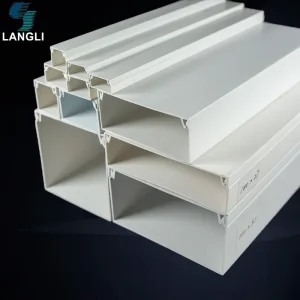
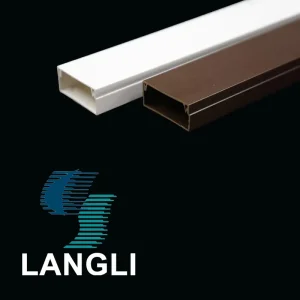
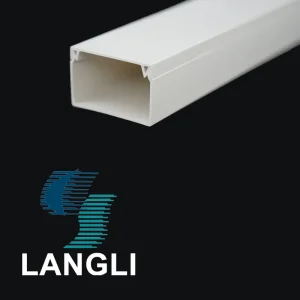
Review our comprehensive spectrum of wire trunking ducts, surface mounting boxes, self-adhesive channels, and decorative cable protection series.