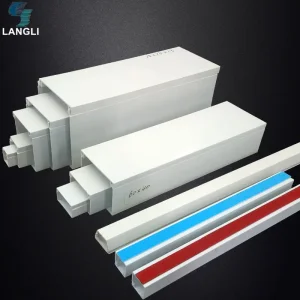
OEM China Factory Supply Electrical Wire Duct Pipe Tape PVC - Quality Products from Reliable Suppliers Manufacturers, Factories
View Product Details
 LANGLI PVC Request a Catalog
 Direct OEM/ODM factory supply engineered for rigid electrical conduits, cable routing, and high-spec structural wiring projects.
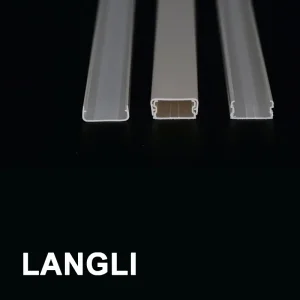
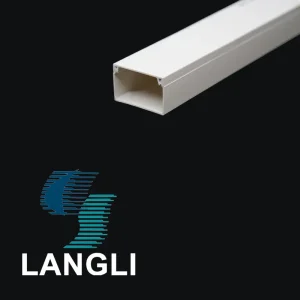
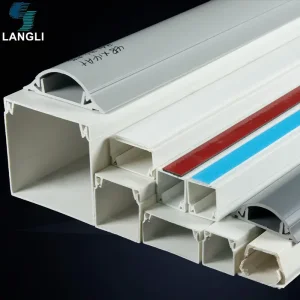
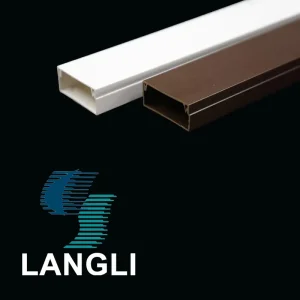
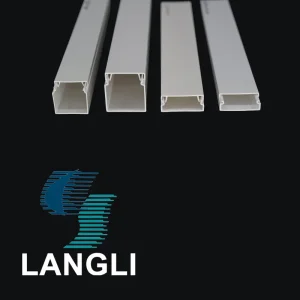
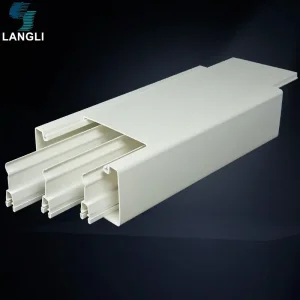
A rigorous examination of Unplasticized Polyvinyl Chloride performance metrics, resin compounding engineering, and mechanical integrity in B2B infrastructure deployment.
In modern industrial electrical architecture, civil infrastructure, and commercial containment systems, the structural reliability of conduit pathways depends heavily on the mechanical integrity of their joining interfaces. Unplasticized Polyvinyl Chloride (UPVC) couplings represent a fundamental advancement over traditional metallic and plasticized polymeric joining components. By removing plasticizers from the vinyl polymer matrix, UPVC achieves an exceptionally high elastic modulus, supreme chemical inertness, and superior dimensional stability under thermal strain.
UPVC exhibits a dielectric strength exceeding 25-35 kV/mm, rendering it completely non-conductive. This eliminates ground fault hazards, galvanic corrosion, and stray current risks present in metallic conduit installations.
Formulated with advanced calcium-zinc (Ca/Zn) eco-stabilizers, our proprietary UPVC compound achieves a Vicat Softening Temperature (VST) above 82°C (ISO 306), maintaining structural form during high-amp wire heating.
Impervious to mineral acids, alkalis, salts, paraffinic hydrocarbons, and atmospheric oxidation. Resists aggressive soil conditions when buried directly underground without additional coatings.
Unlike standard solvent-weld PVC connectors that suffer from wall thinning during socket insertion, our custom ODM UPVC couplings utilize an engineered tapered socket geometry (BS EN 61386 compliant). This design exerts controlled radial compression during assembly, achieving a pull-out force resistance exceeding 850 N and ensuring an IP65 or IP68 ingress protection rating when paired with solvent cement or heavy-duty EPDM gasket seals.
Selecting the optimal conduit joining system requires evaluating material behavior under stress, flame, and corrosive environments. The technical table below outlines performance benchmarks across standard market alternatives:
| Performance Characteristic | Langli ODM UPVC Couplings | Standard Rigid PVC | CPVC Industrial Couplings | Galvanized Steel Couplings |
|---|---|---|---|---|
| Tensile Strength (MPa) | ≥ 52 MPa | 35–42 MPa | ≥ 55 MPa | 310–450 MPa |
| Dielectric Resistance | Non-conductive (>30 kV/mm) | Non-conductive (>20 kV/mm) | Non-conductive (>30 kV/mm) | Conductive (Requires Grounding) |
| Flame Retardancy (UL 94) | V-0 Grade (Self-Extinguishing) | V-1 / V-2 Grade | V-0 Grade | Incombustible |
| Corrosion & Acid Resistance | Exceptional (pH 1–14) | Moderate | Exceptional (High Temp) | Prone to Oxidation / Rust |
| Installed Total Cost | Lowest (Fast Solvent Weld) | Low | Moderate to High | High (Threading / Heavy Labor) |
| Service Life Expectancy | 50+ Years | 20–30 Years | 50+ Years | 15–25 Years (Environment-dependent) |
How our Foshan manufacturing facility transforms raw technical drawings into high-volume, defect-free UPVC coupling components.
Every ODM request initiates with 3D CAD modeling (SolidWorks/Unigraphics). We execute full Moldflow rheology simulations to predict gate pressure, shear rates, weld line positions, and cooling shrinkage, eliminating sink marks and internal stress concentrations before tooling cutting begins.
Molds are fabricated using hardened S136 or NAK80 stainless steel cores operating at tolerances under ±0.005 mm. Multi-cavity mold layouts (up to 32 cavities per frame) maximize production throughput while guaranteeing identical dimensional repeat-accuracy across millions of units.
Utilizing 32 high-precision injection machines (ranging from 120 to 650 tons), plasticization temperature profiles are continuously regulated within ±1°C across 5 independent heating zones, preventing degradation of flame-retardant additives.
Inline optical camera systems inspect 100% of outgoing couplings for flash, short shots, socket inner-diameter variance, and surface defects before automated robotic arm handling stacks and packages components into moisture-proof export cartons.
Aligning custom UPVC coupling manufacturing with rigorous regional building codes, electrical safety frameworks, and import mandates across key trade hubs.
As international infrastructure investments shift toward longer-lasting non-corrosive materials, demand for engineered UPVC conduit fittings has expanded exponentially across Europe, the Middle East, the Americas, and Southeast Asia. However, successful cross-border distribution demands strict adherence to localized standard dimensions and certification frameworks.
BS 4607 / BS EN 61386-21
Dominant across the UK, Middle East (GCC), and East Africa. Specifies metric conduit socket sizes (20mm, 25mm, 32mm, 40mm, 50mm) with tight socket entry tolerances ensuring flame-tight solvent jointing and heavy mechanical load capacity.
DIN 8061 / 8062 & EN IEC 61386
Prevalent throughout Central/Eastern Europe and Latin America. Emphasizes strict wall thickness uniformity, halogen-free compound configurations, high impact testing at lower temperatures (-15°C), and low smoke emission profiles.
ASTM D2466 / D1785 & UL 651
Applies to Schedule 40 & Schedule 80 IPS (Imperial Pipe Size) conduit systems (1/2" to 2" diameter). Requires high burst pressure resilience, UV oxidation resistance for exterior sunlight exposure, and UL 94 V-0 flame rating.
How engineering contractors utilize our ODM UPVC couplings to solve complex installation challenges across varied environments.
In multi-story vertical wire shafts, electrical conduits undergo substantial thermal expansion. Our expansion couplings feature engineered internal O-ring seal grooves that absorb up to 15mm of axial motion per joint without compromising IP66 seals.
Exposed to aggressive chemical vapors, chlorine, and acidic sludge, metallic couplings rapidly corrode. Our high-density UPVC couplings offer 100% rustproof service, ensuring uninterrupted power and sensor telemetry feeds.
Substation-to-inverter underground runs require robust protection against ground shear and soil moisture. Our UV-stabilized heavy-gauge couplings handle extreme diurnal solar radiation and underground moisture immersion.
Capitalizing on Shunde’s world-class plastics engineering ecosystem for unparalleled production agility, raw material cost stability, and rapid global logistics execution.
Situated in Leliu Town, Shunde District, Foshan City—the epicenter of China's high-performance polymer industry—Foshan Shunde Langli Hardware Electrical PVC Co., Ltd. benefits from an integrated supply chain nexus. This localized ecosystem grants immediate proximity to premium raw PVC resin suppliers, specialized additive formulators, and advanced toolmakers, enabling us to offer significant operational advantages to B2B importers worldwide:
We negotiate resin contracts directly with major chemical producers, guaranteeing consistent SG1000/S65 resin grades. Our automated, dust-free compounding house formulates eco-friendly lead-free compounds with optimized impact modifiers and titanium dioxide for permanent color fastness.
Located within 2 hours of major deep-water shipping terminals—including Guangzhou Nansha, Shenzhen Yantian, and Shekou ports—we streamline export clearance. Mixed-container shipments containing conduit pipes, couplings, elbows, and trunking ship smoothly on tight project schedules.
Pioneering smart infrastructure integrations, sustainable bio-based polymer blends, and high-efficiency installation geometries.
Engineering embedded passive RFID tags inside UPVC coupling bodies during molding. This enables maintenance crews to map underground cable junction pathways and trace concealed circuit schematics using handheld digital scanners without invasive wall cutting.
Developing Low-Smoke Zero-Halogen (LSZH) rigid UPVC compounds that maintain V-0 fire resistance while eliminating acidic halogen gas releases during high-temperature combustion, fulfilling stringent modern public mass-transit requirements.
Integrating up to 30% bio-attributed resin compounds derived from post-industrial circular feedstocks, drastically reducing the net carbon footprint per coupling without degrading mechanical tensile strength or dielectric ratings.
Complete documentation packages and batch-level quality verification ensuring zero customs friction and total project compliance.
Exporting to over 60 countries requires rigid quality documentation and seamless certificate handling. Every production run at our Foshan plant is subjected to standardized batch testing, including drop impact testing at 0°C, beam collapse deformation testing, glow-wire fire testing (850°C), and chemical immersion checks. We supply full import documentation, including Certificate of Origin (Form E, Form F), CE Conformity Declaration, RoHS 2.0 Heavy Metal Test Reports, and SASO/SABER certification for Middle Eastern destinations.
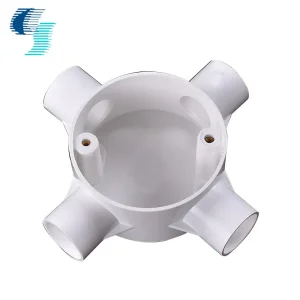
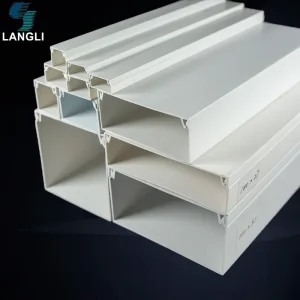
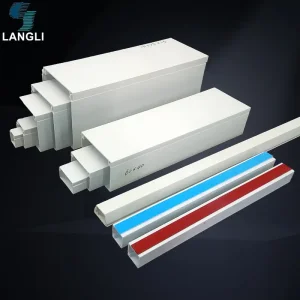
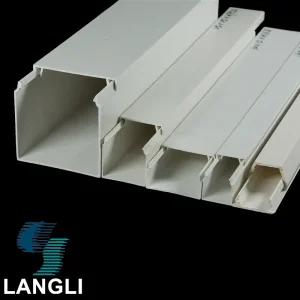
Complete your container shipment with high-demand junction fittings, circular boxes, and specialized wiring ducts.
Expert answers from our engineering desk regarding UPVC coupling specs, custom molding, MOQ, and certification compliance.