 LANGLI PVC Request a Catalog LANGLI PVC Request a Catalog
 Engineered for flawless field integration, optical concentricity, and structural longevity across demanding commercial and industrial environments.
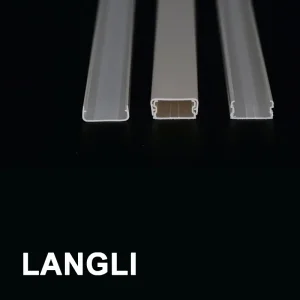
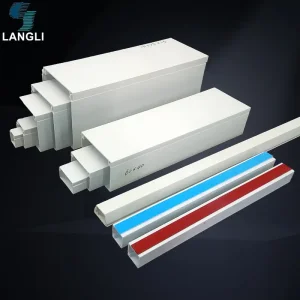
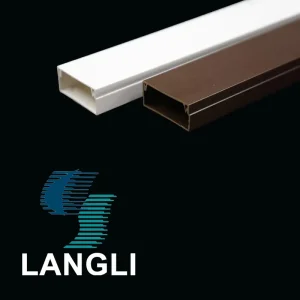
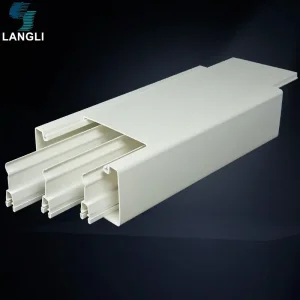
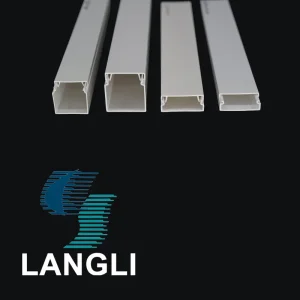
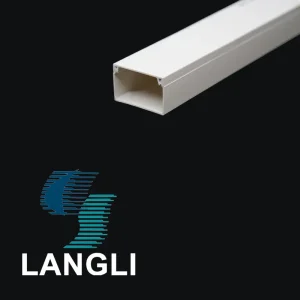
In modern industrial, commercial, and enterprise infrastructure deployments, electrical conduit systems are no longer merely passive mechanical sheaths. They serve as the critical first line of defense for signal integrity, power transmission, and environmental isolation. As global infrastructure becomes increasingly complex—spanning hyperscale data centers, high-speed rail transit networks, deep-sea marine installations, and automated manufacturing facilities—the demand for high-precision OEM Bent Conduit Solutions has grown exponentially.
Historically, electrical contractors relied heavily on field-formed bends created via manual thermal blankets, mechanical shoes, or field-inserted bending springs. However, manual jobsite bending introduces substantial engineering liabilities: erratic wall-thinning ratios, micro-fracturing along the extrados (outer bend radius), excessive cross-sectional ovality, and unpredictable internal friction coefficients that hinder high-density cable pulling operations. Contemporary global procurement strategies have shifted decisively toward factory-engineered, pre-formed bent conduit systems manufactured under strict ISO 9001 quality controls.
As a premier OEM/ODM manufacturer headquartered in Foshan, China—the epicenter of advanced polymer processing and industrial manufacturing—our facility integrates state-of-the-art continuous extrusion, automated thermal induction bending, and high-tonnage precision injection moulding. By controlling compound formulation, molecular orientation, and cold-impact modifiers at the raw material stage, we produce pre-bent conduit profiles, sweep elbows, circular junction systems, and cable trunking accessories that guarantee absolute dimensional consistency and structural integrity.
Analyzing macro-level market shifts, regulatory compliance pressure, and Total Cost of Ownership (TCO) optimization for tier-1 EPC contractors and global distributors.
On-site labor shortages and rising hourly rates across North America, Europe, and Australia have made field-bending cost-prohibitive. Installing pre-formed OEM factory bent sweeps reduces jobsite labor hours by up to 65%, eliminating contractor rework caused by kinked conduits and failed wire pulls.
International building codes (NFPA 70 / NEC, BS EN 61386) increasingly enforce strict Low Smoke Zero Halogen (LSZH) and self-extinguishing flame retardancy standards. Modern commercial projects require rigid unplasticized PVC (UPVC) compounds that extinguish within 3 seconds of ignition source removal.
Standard off-the-shelf 90-degree elbows often fail to meet complex architectural curves, underground vault transitions, or tight mechanical plenum spaces. OEM factories capable of delivering custom bend angles (e.g., 15°, 30°, 45°, 60°, 11.25°) and extended radii (up to 60 inches) command high market preference.
The performance of a pre-bent conduit system relies intrinsically on polymer physics and thermal processing thresholds. Standard raw Polyvinyl Chloride resin is naturally rigid and brittle under low-temperature mechanical stress. To achieve high flexural strength, optimal tensile modulus, and zero springback memory during bending operations, our chemical engineers employ proprietary compound formulations utilizing virgin Unplasticized Polyvinyl Chloride (UPVC) resin stabilized with acrylic impact modifiers, calcium-zinc organic heat stabilizers, and micronized titanium dioxide (TiO2) for extended UV endurance.
Our OEM manufacturing process ensures that every lot of extruded conduit and injection-moulded fitting complies with global electrotechnical mandates. Below is an engineering specification breakdown of our structural UPVC material performance:
| Performance Indicator | Technical Value / Metric | Governing Test Method | Engineering Benefit |
|---|---|---|---|
| Specific Gravity / Density | 1.40 - 1.45 g/cm³ | ISO 1183 / ASTM D792 | Optimized structural rigidity to weight ratio for bulk freight loading. |
| Tensile Strength at Yield | ≥ 48.0 MPa | ISO 527 / ASTM D638 | Prevents wall elongation or bursting during heavy cable pulling forces. |
| Flexural Modulus | ≥ 2,800 MPa | ISO 178 / ASTM D790 | Ensures dimensional stability under high concrete-encasement compression. |
| Charpy Notched Impact (23°C) | ≥ 12.0 kJ/m² | ISO 179 / ASTM D256 | Resists field impacts, dropped tooling, and rugged jobsite handling. |
| Vicat Softening Temperature | ≥ 82°C (180°F) | ISO 306 / ASTM D1525 | Maintains mechanical shape under thermal load in elevated plenum environments. |
| Flammability Rating | UL94 V-0 / Self-Extinguishing | UL 94 / IEC 60695-2-11 | Stops flame propagation immediately when exposed to electrical arc faults. |
| Dielectric Strength | ≥ 35 kV/mm | IEC 60243-1 / ASTM D149 | Provides superior electrical insulation, eliminating risk of stray current leaks. |
When a straight conduit section undergoes bending, the outer wall (extrados) experiences tensile stretching and wall thinning, while the inner wall (intrados) undergoes compressive stress. Uncontrolled bending leads to flattened cross-sections (ovality) that block wire passage. Our factory utilizes multi-axis CNC mandrel-assisted hot bending units. By maintaining internal pneumatically-pressurized mandrel support during thermal forming, we keep outer wall thinning below 5.0% and cross-sectional ovality under 3.5%, vastly exceeding standard BS EN 61386 tolerances.
Tailored OEM conduit profiles engineered to overcome environmental stress, chemical exposure, and physical constraints across critical infrastructure sectors.
In high-density data centers, pulling delicate multi-strand optical fibers through sharp corners risks micro-bending signal loss or cable jacket tearing. Our OEM wide-radius sweep bent conduits provide a smooth internal friction coefficient (μ ≤ 0.22), ensuring frictionless cable gliding over long-distance tray runs.
Modern off-site construction relies on pre-assembled modular wall panels and concrete slabs. We supply OEM pre-bent conduit assemblies with integrated circular junction boxes, allow zero-effort snap-fit embedding into precast concrete forms, cutting structural electrical installation schedules significantly.
Metals corrode rapidly when exposed to acidic washdowns, chlorine fumes, or saline coastal air. Our heavy-gauge rigid UPVC bent conduits offer 100% chemical immunity, completely eliminating oxidation issues found in traditional Rigid Metal Conduit (RMC) or intermediate steel options.
A critical pillar of our reputation as a trusted tier-1 OEM partner is our uncompromising Quality Management System (QMS). Every batch of raw resin undergoes Melt Flow Index (MFI) verification and moisture content analysis before entering extrusion hoppers. During production, continuous ultrasonic wall-thickness monitors track 360-degree concentricity in real time.
Our quality control laboratory conducts four primary destructive and non-destructive evaluations on every manufacturing batch:
Navigating global customs clearance and local building inspection requirements demands precise paperwork. We provide complete certification packages including CE conformity reports, RoHS 2.0 chemical analysis, REACH SVHC declarations, and country-of-origin documentation. Furthermore, our private-label OEM capabilities allow high-speed laser marking of your brand name, part numbers, metric/imperial sizing, and regulatory certifications directly onto the conduit body at 1.0-meter intervals.
Driving smart manufacturing, AI-assisted quality control, and eco-sustainable polymer formulations for tomorrow's infrastructure.
We are integrating inline 3D laser scanners across all thermal bending channels. Real-time machine learning models detect micro-surface ripples and radius variances as small as 0.05mm, automatically adjusting heater zone temperatures dynamically.
Aligning with global ESG goals, our research team is developing bio-attributed UPVC resins derived from circular tall-oil byproducts, reducing product carbon footprint by up to 40% while preserving identical tensile impact metrics.
Next-generation OEM bent conduits will feature optional ultra-thin RFID tags embedded directly within the polymer wall. This allows digital site mapping, enabling maintenance crews to scan concrete slabs and identify cable routing instantly via handheld mobile devices.
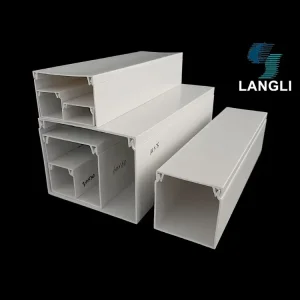
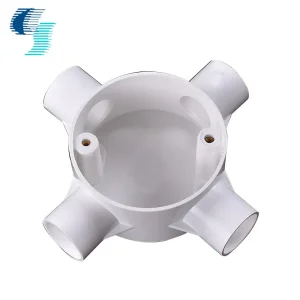
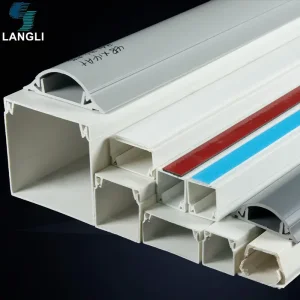
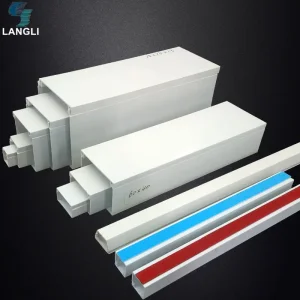
Explore our full line of matched circular boxes, ducting channels, adaptors, and private-label trunking configurations.
Direct answers from our engineering desk covering tolerances, standards compliance, custom tooling, and bulk shipping logistics.