 LANGLI PVC Request a Catalog LANGLI PVC Request a Catalog
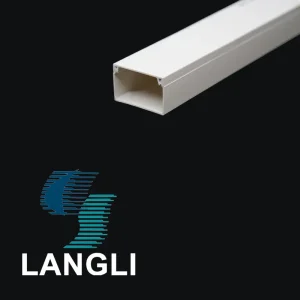
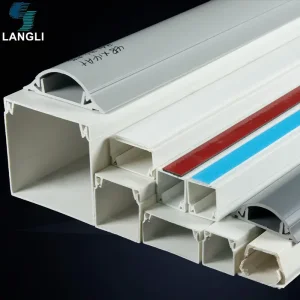
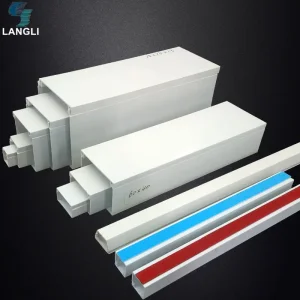
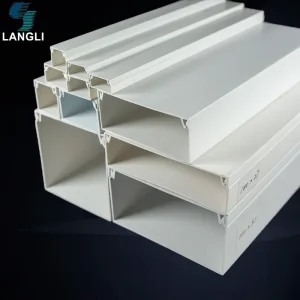
 Explore our primary range of rigid uPVC pull boxes, junction enclosures, trunking profiles, and high-impact electrical conduit fittings precision-molded for international infrastructure projects.
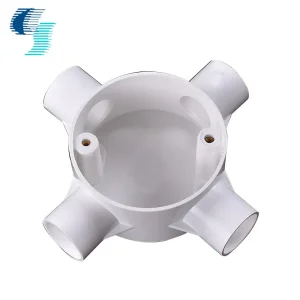
In industrial, commercial, and residential electrical distribution networks, the PVC pull box (unplasticized polyvinyl chloride junction/pull enclosure) serves as a critical structural component. Designed to facilitate the pulling, splicing, and branching of electrical conductors through conduit systems, these enclosures shield electrical wiring against mechanical stress, environmental moisture, chemical exposure, and electrical surges. As global building codes transition toward stricter fire safety, environmental sustainability, and long-term asset lifecycle management, engineering buyers must evaluate OEM manufacturers on precise material science criteria, structural integrity, and manufacturing scalable options.
Since 1989, specialized extrusion and injection molding hubs in Foshan, China—such as Foshan Shunde Langli Hardware Electrical PVC Co., Ltd.—have evolved from basic component producers into advanced original equipment engineering partners. Operating dozens of modern injection machines and utilizing over 900 sets of precision tooling, contemporary OEM factories deliver custom uPVC pull boxes, circular 4-way boxes, and cable trunking systems tailored to strict global benchmarks such as BS 4607, BS EN 61386, UL 514C, and DIN standards.
Unplasticized Polyvinyl Chloride (uPVC/PVC-U) is selected for pull boxes due to its exceptional dielectric strength, inherent flame resistance, and resistance to chemical oxidation. Unlike flexible PVC, uPVC contains no added plasticizers, resulting in a rigid polymer matrix capable of supporting high mechanical pull forces during cable installation.
Electrical pull boxes act as primary containment zones in the event of internal arc faults or electrical fires. High-grade OEM PVC pull boxes are formulated with self-extinguishing additives that achieve UL 94 V-0 flame ratings. When subjected to an open flame, the chlorine atoms within the polymer backbone liberate hydrogen chloride gas, which acts as a radical scavenger to snuff out flames within seconds of source removal. Furthermore, glow-wire test compliance (IEC 60695-2-11) at 850°C to 960°C guarantees that the enclosure will not ignite or drip molten polymer onto underlying structures.
Electrical safety mandates high insulation resistance across temperature fluctuations. Premium uPVC formulations deliver dielectric strength exceeding 25-35 kV/mm, mitigating fault currents and preventing tracking paths. This non-conductive property eliminates the risk of shock during surface installation or maintenance, removing the necessity for supplementary grounding wires inside the pull box—a distinct labor-saving advantage over traditional galvanized steel boxes.
| Physical / Electrical Property | Standard Test Method | Engineering Value Range | Project Impact |
|---|---|---|---|
| Density / Specific Gravity | ASTM D792 / ISO 1183 | 1.38 - 1.45 g/cm³ | Optimal mechanical strength without structural mass overhead. |
| Tensile Strength at Yield | ASTM D638 / ISO 527 | ≥ 45 - 55 MPa | Resists deformation when pulling thick copper transmission conductors. |
| Vicat Softening Temperature (VST) | ASTM D1525 / ISO 306 | ≥ 82°C - 88°C | Maintains dimensional stability in high ambient tropical heat. |
| Dielectric Strength | ASTM D149 / IEC 60243 | 30 - 40 kV/mm | Eliminates electrical shorting to exterior surfaces and ground lines. |
| Flame Retardance Class | UL 94 / IEC 60695 | V-0 / Glow Wire 960°C | Self-extinguishing; suppresses internal arc fire spread. |
The concentration of industrial plastics engineering in Foshan, Guangdong Province, provides unprecedented supply chain integration. OEM pull box manufacturers leverage a dense localized network of raw resin compounders, precision mold makers, automated injection machinery producers, and international shipping channels. This cluster infrastructure directly translates into measurable competitive advantages for enterprise procurement teams:
In-house CNC machining and EDM mold fabrication allow complete tooling development for custom pull box dimensions, knockouts, or proprietary mounting tabs in 30 to 45 days, compared to 12+ weeks in Western facilities.
Factories can directly mix UV-inhibited weatherable compounds (using titanium dioxide stabilization), custom color-matched resins (RAL/Pantone), and low-smoke halogen-free (LSZH) variants directly at the feeding throat.
High-density nesting of electrical trunking, circular conduit boxes, and rectangular pull boxes within single mixed containers reduces volumetric ocean freight overhead by up to 35% per shipment.
B2B buyers, EPC contractors, and electrical wholesale distributors face dynamic market risks including fluctuating raw material costs, changing import regulations, and non-compliance penalties. Evaluating an OEM pull box supplier requires a holistic total-cost-of-ownership (TCO) perspective rather than a simple unit-price comparison.
Electrical installation regulations differ substantially across geographical markets. A versatile OEM factory provides modular designs adjusted to regional technical norms:
Installations following BS 4607 and BS EN 61386 demand rigid conduit systems with standard metric 20mm, 25mm, 32mm, and 50mm knockouts. In GCC regions (Saudi Arabia, UAE, Oman), thermal stability is paramount: pull boxes must withstand extreme surface temperatures exceeding 55°C without warping or degrading under direct UV exposure.
European markets emphasize RoHS 2.0 (Restriction of Hazardous Substances) and REACH compliance, mandating strict heavy-metal-free compounds (lead-free, cadmium-free calcium-zinc stabilizers). Flush-mount and surface-mount circular 4-way boxes are widely integrated into commercial architectural walls.
Imperial sizing (1/2", 3/4", 1", 1-1/2", 2") dominates ASTM/NEMA systems. Pull boxes require heavy-gauge wall thickness (NEMA 4X equivalent) with solvent-weld female socket hubs for watertight connections in industrial environments.
In wastewater treatment plants, coastal solar installations, and underground subway networks, metal pull boxes suffer rapid galvanic and chemical corrosion. Heavy-duty uPVC pull boxes offer complete immunity to acid-alkali soils, salt spray, and atmospheric moisture.
As global sustainability imperatives accelerate, the manufacturing of uPVC pull boxes and cable trunking systems is undergoing significant technological advancement:
Pioneering OEM factories are integrating bio-attributed PVC resins derived from pine-wood tall oil residues, alongside post-industrial closed-loop recycling systems. Scraps from sprues and runners are micronized, reground, and blended into internal cores of multi-layer co-extruded trunking and non-structural box bases, reducing carbon footprint while maintaining virgin polymer performance on outer surfaces.
In enclosed public spaces such as hospital ICUs, airport terminals, and underground railways, toxic halogen gases liberated during fires pose a major life safety hazard. Next-generation pull box lines utilize halogen-free engineering polymers (such as PC/ABS or PP compounds) engineered to yield low-smoke opacity and zero corrosive gas generation.
To reduce field labor installation costs, modern pull box designs replace traditional screw-down lids with tool-less snap-latch mechanisms, tool-free push-fit conduit adaptors, and pre-mounted din-rail mounts for rapid housing of terminal blocks and small control gear.
Detailed technical and commercial guidance compiled by our export desk to assist procurement managers and project engineers.
Comprehensive factory-direct supply lines designed to integrate seamlessly into complete electrical conduit systems.