 LANGLI PVC Request a Catalog LANGLI PVC Request a Catalog
 Factory-direct custom sizing, fireproof compounds, and heavy-duty PVC ducting solutions engineered for international commercial distribution.
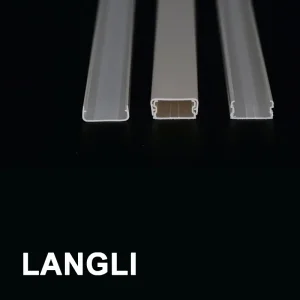
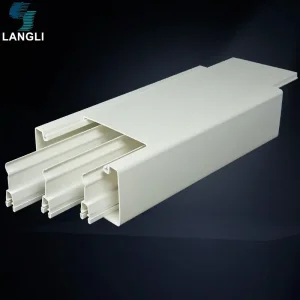
In modern industrial engineering and building infrastructure, electrical cable protection systems demand absolute physical integrity, chemical inertia, and rapid joint alignment. At the core of every unplasticized polyvinyl chloride (uPVC) conduit setup lies the PVC coupling—a critical injection-molded component responsible for continuous mechanical coupling, dielectric separation, and environmental sealing across long conduit runs and modular cable trunking channels.
As global construction standards tighten under frameworks such as BS EN 61386, IEC 61386, and ASTM D1784, electrical engineering teams can no longer treat couplings as commodity plastic fittings. Today's commercial, residential, and industrial projects demand high-precision OEM PVC couplings crafted with optimized wall thickness tolerances, strict dimensional stability under thermal shock, and zero-halogen or UL94 V-0 flame-retardant formulation capabilities.
E-E-A-T Technical Insight: Unplasticized PVC (uPVC) possesses a naturally rigid molecular matrix featuring high chlorine content (approx. 57% by weight). This structural property provides inherent flame resistance, self-extinguishing behavior upon flame removal, and high dielectric strength exceeding 30 kV/mm, making it superior to standard polyolefin connectors in enclosed electrical containment systems.
Analyzing key structural shifts in polymer manufacturing, international compliance demands, and localized regional consumption patterns.
Driven by NEMA TC-2 and UL 651 specifications, demand centers around Schedule 40 and Schedule 80 heavy-wall solvent-weld PVC couplings. Expansion in data centers and utility modernization requires rapid OEM customization with high impact resistance and UV stabilization (ASTM G154).
Regulated by BS EN 61386 and IEC standards, European markets prioritize precision metric sizes (16mm to 50mm). Strong emphasis on low-smoke, zero-halogen (LSZH) rigid compounds and REACH/RoHS toxicity compliance for public transportation and high-occupancy commercial complexes.
Rapid urban developments in UAE, Saudi Arabia, and Qatar require high heat deflection temperatures (HDT > 80°C) to withstand aggressive ambient thermal ranges. Heavy use of circular junction couplings, adapters, and trunking fittings engineered for solar field wiring and desert installations.
Technical benchmarks for contract manufacturing, tooling tolerances, and resin formulations.
A high-performance OEM PVC coupling relies on two core variables: exact compound stoichiometry and mold design accuracy. Minor deviations in raw material blending (such as improper ratios of calcium-zinc stabilizers or acrylic impact modifiers) can cause brittleness during cold-weather handling or wall warping under solvent bonding.
| Material Metric / Parameter | Standard Test Method | uPVC Coupling Benchmark | Engineering Value for Buyer |
|---|---|---|---|
| Specific Gravity / Density | ASTM D792 / ISO 1183 | 1.38 – 1.45 g/cm³ | Ensures high structural density without excess resin degradation or air voiding. |
| Tensile Strength at Yield | ISO 527 / ASTM D638 | ≥ 45 MPa | Guarantees resistance to mechanical pullout and conduit expansion stress. |
| Vicat Softening Temperature | ISO 306 (B50) | ≥ 82°C | Prevents structural sagging and joint deformation in heated ceiling voids. |
| Flammability Rating | UL 94 / IEC 60695-11-10 | UL94 V-0 / Self-Extinguishing | Flame extinguishes within 10 seconds; no flaming drips created. |
| Glow Wire Test Resistance | IEC 60695-2-11 | 960°C Rating | Essential clearance standard for high-risk electrical junction installations. |
| Dielectric Breakdown Strength | ASTM D149 | > 32 kV/mm | Prevents electrical arc-through and flashover in short-circuit scenarios. |
From underground cable ducting to high-rise surface trunking, tailored OEM couplings deliver site-specific mechanical benefits.
In vertical riser shafts, rigid uPVC conduit lines rely on straight expansion couplings and circular 4-way inspection junction boxes. Smooth internal chamfering on socket entries prevents wire insulation abrasion during high-tension cable pulling.
Exposed to corrosive fumes, high moisture, and harsh cleansers, standard metallic conduit rapidly oxidizes. OEM rigid PVC couplings provide complete chemical inertness to acids, alkalis, and saline splash, ensuring 30+ years of maintenance-free service.
Outdoor utility-scale solar installations subject cable pathways to severe UV radiation and wide ambient thermal swings (-15°C to +60°C). Custom UV-inhibited titanium dioxide (TiO2) compounded couplings prevent discoloration and embrittlement.
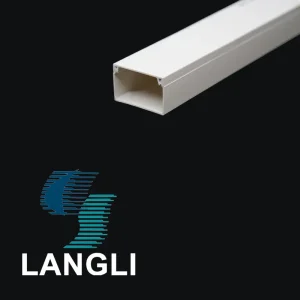
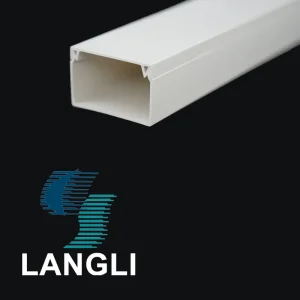
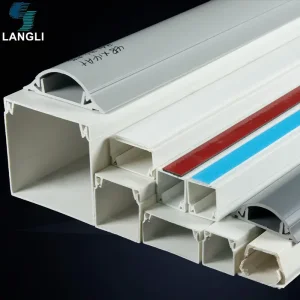
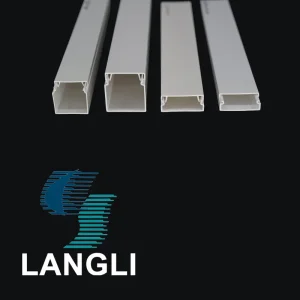
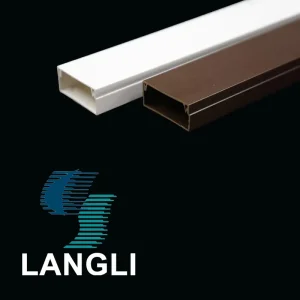
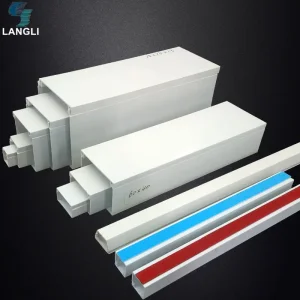
For modern commercial interiors, self-adhesive PVC wire ducts and surface-mount trunking flat tees, internal angles, and end caps provide rapid wire isolation for power, high-speed data, and AV cables without invasive wall chasing.
From initial CAD modeling and custom compound formulation to private-label carton packaging and export shipping.
3D mold flow modeling optimizes wall thickness uniformities and eliminates shrinkage sink marks. Tool room produces high-precision hardened steel molds within 30–45 days.
Resin compounding tailored to client specifications: pure virgin uPVC, customized RAL/Pantone colors, UV-stabilized blends, or fire-retardant V-0 additives.
High-tonnage injection machines with robotic arm extraction ensure consistent socket inner diameters, zero flash, and uniform wall thickness batch after batch.
High-speed laser or inkjet marking prints custom part numbers, certifications (CE, RoHS, BS EN), size markings, and customer logos directly onto each coupling.
Key technological advancements reshaping the future of polymer conduit fittings and sustainable cable containment.
Integration of bio-attributed PVC resins made from tall oil and agricultural residues, reducing carbon footprint by up to 60% while maintaining identical physical, thermal, and dielectric properties required by international building codes.
Development of next-generation PVC couplings featuring integrated elastomeric internal seals and lock-ring mechanisms, eliminating solvent-weld chemical fumes on installation sites and reducing labor assembly time by up to 50%.
A comprehensive trade-off matrix evaluating material performance, installed costs, and electrical safety.
| Performance Feature | Rigid uPVC Couplings | Galvanized Steel Couplings | HDPE Duct Connectors |
|---|---|---|---|
| Corrosion Resistance | Immune to chemical rust, acidic soil, & salt air | Prone to oxidation over time; requires coating | High chemical resistance |
| Dielectric Isolation | Complete non-conductive insulation protection | Electrically conductive; requires grounding bonds | Non-conductive |
| Material & Shipping Weight | Lightweight (approx. 1.4 g/cm³) | Heavy (approx. 7.85 g/cm³) | Very lightweight (approx. 0.95 g/cm³) |
| Installed Labor Efficiency | Fast push-fit or solvent-weld connection | Requires slow pipe threading or clamp assembly | Requires specialized heat fusion or mechanical clamps |
| Fire Safety Performance | Self-extinguishing (UL94 V-0 options) | Non-combustible | Combustible; drips hot liquid resin |
| Total Installed System Cost | Lowest landed cost & minimal labor | Highest material & installation expense | Moderate material cost; higher tooling setup |
Clear, direct technical answers regarding minimum order quantities, compliance certifications, tooling capabilities, and logistics.
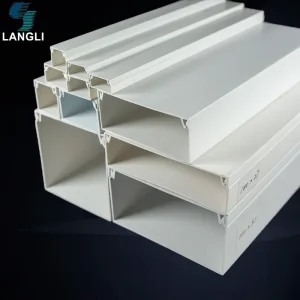
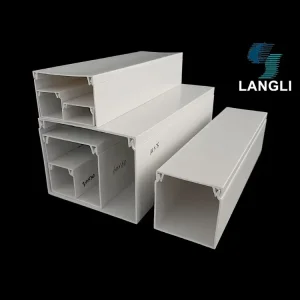
Complete product range for large-scale procurement—engineered for rapid installation, robust dielectric isolation, and clean cable organization.