 LANGLI PVC Request a Catalog LANGLI PVC Request a Catalog
 Precision-engineered PVC conduit circular junction boxes, cable trunking systems, and wiring ducts manufactured to international ISO, CE, and RoHS standards.
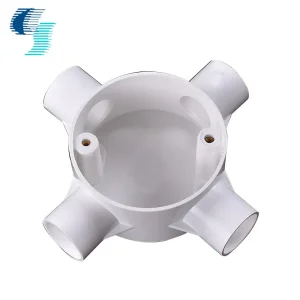
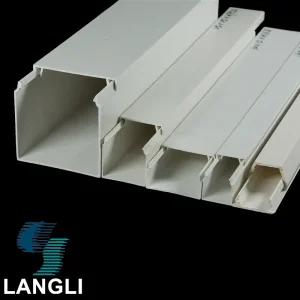
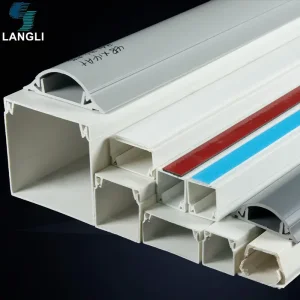
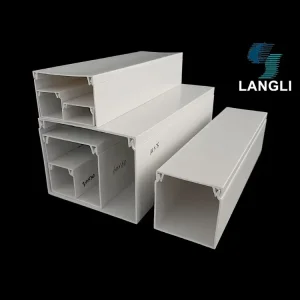
In modern industrial and commercial construction, the demand for modularization, structural integrity, and ultra-fast site assembly has elevated wire loop boxes (connecting loop boxes) and specialized electrical wiring containment systems into critical structural components. As global civil engineering shifts toward Off-Site Manufacturing (OSM) and Precast Concrete Construction, the reliance on high-tensile wire rope loops enclosed within galvanized steel casing boxes has grown exponentially.
This whitepaper provides a comprehensive technical overview for structural engineers, project procurement directors, and master electrical contractors. It covers key topics including the metallurgical characteristics of flexible steel loops, micro/macro connection dynamics, shear wall joint load transfer, and how OEM manufacturing integration optimizes both structural tie-ins and electrical conduit/trunking raceways.
Technical Insight for Buyers: High-performance connecting loop boxes rely on cold-formed steel casings housing flexible, high-tensile galvanized wire ropes. Upon stripping the protective seal tape on-site, the flexible wire loop pops out, overlapping with the adjacent panel loop to receive a locking rebar pin before concrete grouting. Understanding both structural anchorage and integrated electrical raceway routing is key to zero-defect structural performance.
The global structural connection and precast anchoring market is experiencing a profound transformation. Driven by severe labor shortages in primary markets across North America, Europe, and Asia-Pacific, structural engineers are replacing traditional cast-in-place wet joints with standardized precast concrete shear wall connections utilizing wire loop boxes.
Strict structural compliance mandates under Eurocode 2 (EN 1992) and British Standards (BS 8110 / BS EN 61386) drive the engineering criteria for shear transfer in precast wall-to-wall and wall-to-column joints. Pre-engineered connecting loop boxes ensure predictable shear capacities under seismic and lateral wind loads.
Industrial logistics centers, high-density residential towers, and commercial data infrastructure increasingly rely on off-site wall panel casting. Cast-in wire loop boxes eliminate protruding rebar during transport, drastically minimizing panel damage and transport logistics costs.
Modern precast manufacturing integrates structural tie-in points alongside electrical junction boxes, circular conduit entries, and PVC trunking networks directly inside structural wall elements, speeding up secondary MEP installation times.
An OEM wire loop box serves as an engineered mechanical anchorage unit designed to transmit shear forces parallel and perpendicular to the concrete joint. The unit consists of a high-strength cold-formed steel casing, a flexible high-tensile wire rope loop, and a protective sealing tape that prevents concrete paste ingress during the casting process.
| Component Name | Material Specification | Tensile / Yield Rating | Primary Technical Function |
|---|---|---|---|
| Flexible Wire Rope Loop | Galvanized High-Tensile Carbon Steel Wire (6x19 + IWRC) | 1,770 N/mm² / 1,960 N/mm² | Transmits multi-directional shear forces across the grouted concrete keyway joint. |
| Casing Box Container | Cold-Formed Hot-Dip Galvanized Structural Steel Strip | Yield Point ≥ 235 MPa | Creates a profiled mortar channel (shear key) inside the edge of the precast panel. |
| Wire Ferrule / Sleeve | Seamless Precision Steel / Copper Compression Sleeve | Crimped per EN 13411-3 | Locks the wire loop tail firmly to guarantee 100% load retention without slippage. |
| Protective Sealing Tape | Heavy-Duty Adhesive Coated Strip / Rubber Seal | Waterproof / Moisture Proof | Protects the interior cavity from cement slurry intrusion during precast compaction. |
When two opposing wall panels fitted with OEM wire loop boxes are erected on-site, the protective covers are peeled back. The flexible wire loops spring outwards into the joint channel formed by the box profiles. A locking vertical reinforcement bar (typically Ø12mm to Ø16mm Grade 500 rebar) is threaded vertically through all overlapping loops along the wall height.
Subsequent filling with non-shrink high-strength grout (compressive strength ≥ 50 MPa) transforms the discrete wire loops into a continuous shear wall diaphragm. Under wind or seismic excitation, the joint acts as a mechanical shear key where compressive force is carried through the concrete strut, and tension force is carried through the high-tensile wire loop.
Wire loop boxes and companion electrical raceways (PVC conduit, 4-way circular junction boxes, cable trunking) are utilized across diverse construction topologies:
In high-rise residential buildings, structural shear wall vertical joints experience high shear forces. Overlapping double-loop configurations provide dynamic shear resistance while accommodating panel installation tolerances up to ±20mm.
Single-loop boxes cast directly into structural concrete column faces provide immediate tie-in locations for interior non-load-bearing or load-bearing partition walls, avoiding post-drilling and chemical anchoring.
Modern intelligent buildings embed electrical conduit circular junction boxes (16mm, 20mm, 25mm) and UPVC wiring trunking alongside structural loop boxes directly into precast wall forms before pouring, avoiding field chasing and drilling.
As smart manufacturing and green building standards advance, OEM manufacturers are implementing digital quality controls and material innovations across structural connection loops and electrical conduit systems.
Replacing manual crimping with robotic high-precision hydraulic pressing lines ensures absolute consistency in ferrule crimp diameter, loop length protrusion, and wire pull-out strength compliance across high-volume production batches.
OEM factories now supply parametric 3D BIM objects (Autodesk Revit, Tekla Structures) containing structural load parameters and tolerance envelopes, enabling clash detection before concrete is poured in the precast factory.
The transition toward zero-heavy-metal zinc plating and eco-friendly flame-retardant (V-0 rating) self-extinguishing PVC compounds lowers the embedded carbon footprint of building supply chains while maintaining strict fire safety performance.
As a leading factory director in electrical and structural accessory tooling, custom OEM manufacturing demands rigid adherence to engineering drawings, testing protocols, and international quality management frameworks (ISO 9001:2015).
Utilizing over 900+ existing precision injection moulds and automated metal stamping dies, custom profile dimensions, knock-out entry diameters, and mounting hole patterns can be prototyped within 15–20 business days.
PVC trunking and conduit fittings undergo UL94 V-0 glow-wire testing and low-temperature impact tests. Wire loops undergo destructive tensile testing to guarantee 100% loop sleeve integrity under maximum tensile forces.
Cartons, protective tapes, branding, and color-coded box covers can be customized with client logos, QR barcodes, and multilingual compliance data for seamless customs entry and jobsite delivery.
Expert answers regarding structural wire loop boxes, PVC conduit standards, quality certifications, and OEM manufacturing services.
Explore our export-grade electrical conduit pipes, fireproof UPVC trunking profiles, and junction boxes produced in Foshan, China.