 LANGLI PVC Request a Catalog LANGLI PVC Request a Catalog
 Precision-engineered electrical management profiles for industrial, commercial, and high-density residential installations.
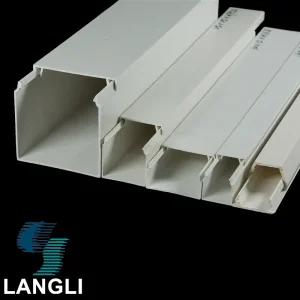
An authoritative engineering whitepaper on the structural shifts, standards adoption, and economic importance of 25mm rigid unplasticized PVC raceways in global MEP construction.
In modern commercial architecture, industrial complex construction, and infrastructure development, electrical containment systems form the foundational nervous system of modern facility infrastructure. Among the extensive portfolio of rigid conduit dimensions—spanning from nominal 16mm up to 50mm outer diameter profiles—the 25mm PVC conduit has unequivocally established itself as the global metric benchmark. It strikes an optimal equilibrium between structural cross-sectional volume, wire-fill capacity, and mechanical versatility.
From a mechanical and electrical engineering perspective, the 25mm nominal outside diameter profile compliant with international standards such as BS EN 61386-21 and IEC 61386 offers significant cross-sectional cable capacity. This size allows electrical contractors to pull multiple 2.5mm² and 4.0mm² insulated copper conductors simultaneously while maintaining the strict 40% maximum fill factor dictated by international wiring regulations (such as BS 7671 and NEC mandates). As global building codes increasingly prioritize flame retardancy, low toxicity, corrosion resistance, and electromagnetic neutrality, rigid unplasticized polyvinyl chloride (uPVC) has progressively replaced traditional galvanized rigid steel (GRS) and intermediate metal conduits (IMC) in low-to-medium voltage surface and flush-mounted branch circuits.
The international demand for wholesale 25mm PVC conduit is experiencing unprecedented growth driven by three macro-economic catalysts:
How advanced Foshan/Shunde industrial manufacturing hubs achieve unmatched cost-to-performance metrics through automated compounding and high-speed extrusion engineering.
China’s dominance in high-grade PVC electrical conduit production—specifically within industrial manufacturing clusters like Foshan and Shunde in Guangdong Province—is built on technological integration, continuous material innovation, and massive supply chain efficiency. Modern enterprise factories, such as Foshan Shunde Langli Hardware Electrical PVC Co., Ltd. (operating since 1989), leverage decades of specialized tooling expertise to produce export-grade conduits that consistently exceed international quality standards.
Chinese OEM/ODM manufacturing facilities deploy advanced extrusion technology to deliver consistent wall thickness, high impact resistance, and flawless socket geometry.
Furthermore, the economies of scale achieved by tier-1 Chinese factories translate into immense sourcing benefits for international buyers. Raw PVC resin compounding, precision mold design (often exceeding 900+ mold sets in dedicated fitting plants), injection molding of accessories (elbows, couplers, junction boxes), and high-speed pipe extrusion occur within unified industrial zones. This vertical integration drastically reduces transport overhead, standardizes color matching across pipes and fittings, and facilitates rapid containerized shipments (20GP / 40HQ) directly from ports like Shenzhen and Guangzhou.
Tailored technical specifications for diverse regional environments—from high-ambient temperature Middle Eastern deserts to high-salinity coastal areas.
Core Standard: BS 4607 / BS EN 61386 Heavy Gauge Class 4421.
Environment: Extreme ambient temperatures (+50°C solar radiation) and intense UV exposure.
Technical Requirement: High thermal stability compound enriched with rutile titanium dioxide (TiO2) UV-inhibitors to prevent thermal degradation, discoloration, and embrittlement during outdoor slab pouring and exposed masonry runs.
Core Standard: BS 4607 / BS EN 61386-21.
Environment: High-density commercial buildings, institutional hospitals, and residential complexes.
Technical Requirement: Strict dimensional adherence to 25mm outer diameter with dedicated solvent weld sockets. High emphasis on cold-bending capabilities using internal bending springs without wall collapsing or surface cracking.
Core Standard: IEC 61386 / JIS C 8430.
Environment: Constant 90%+ relative humidity, high moisture levels, and coastal soil salinity.
Technical Requirement: Excellent dielectric breakdown strength (>35 kV/mm) to prevent electrical leakage in damp concrete slabs. Non-corrosive properties eliminate systemic oxide decay seen in traditional galvanized conduits.
Core Standard: DIN EN 61386 / ASTM D1785 / NEMA TC-2 cross-compliance.
Environment: Strict green building codes, LEED certification mandates.
Technical Requirement: Low-smoke, halogen-free (LSZH) compound variants for public transit projects, along with high flammability safety ratings (UL94 V-0 self-extinguishing within 10 seconds without flaming drops).
Comprehensive physical, mechanical, and electrical parameters verified through rigorous laboratory testing (CE, RoHS, BS EN standards).
| Performance Metric | Test Standard / Method | Light Duty (Medium Class 2221) | Heavy Duty (Heavy Class 4421) |
|---|---|---|---|
| Nominal Outer Diameter (OD) | BS EN 61386 / IEC 61386 | 25.0 mm (+0.0 / -0.4 mm) | 25.0 mm (+0.0 / -0.4 mm) |
| Wall Thickness (Nominal) | ISO 3126 Micrometer Check | 1.45 mm ± 0.10 mm | 1.90 mm ± 0.12 mm |
| Compression Resistance | BS EN 61386-21 Clause 10.2 | 320 N (Medium Duty) | 1250 N (Heavy Duty) |
| Impact Strength Rating | BS EN 61386-21 Drop Mass Test | 1.0 Joules at -5°C | 2.0 Joules at -15°C / +60°C |
| Dielectric Breakdown Voltage | IEC 60243-1 High Voltage Test | > 2.0 kV for 15 minutes | > 2.5 kV for 15 minutes |
| Insulation Resistance | Megohmmeter @ 500V DC | > 100 MΩ at 20°C | > 100 MΩ at 20°C |
| Fire Behavior & Flammability | UL94 / Glow Wire Test 960°C | Self-extinguishing (V-0) | Self-extinguishing (V-0, LOI > 32%) |
| Cold Bending Capability | Internal Bending Spring (180°) | Flex Radius 4x OD (No fracture) | Flex Radius 3x OD (No fracture) |
| Temperature Rating Range | Thermal Cycling Chamber | -15°C to +60°C continuous | -25°C to +75°C continuous |
Note: The technical values outlined above represent typical production parameters for high-grade unplasticized rigid polyvinyl chloride (uPVC). Factory custom compounding can tailor specific parameter profiles (such as anti-static properties or custom masterbatch tinting) to suit exact tender demands.
Key innovation vectors shaping the future of global electrical containment: circular economy recycling, Smart Factory IoT monitoring, and advanced fire safety polymer formulations.
Environmental health regulations worldwide are accelerating the transition away from heavy-metal organotin and lead-stabilized rigid plastics. modern factories utilize high-purity Calcium-Zinc (Ca-Zn) stabilizer systems and eco-friendly organic co-stabilizers. Furthermore, Low Smoke Zero Halogen (LSZH) thermoplastic materials are increasingly specified for underground rail systems, healthcare facilities, and high-rise commercial towers to reduce toxic smoke emission during structural fire emergencies.
Leading manufacturers in Foshan are embedding AI vision recognition system modules directly into continuous extrusion production lines. High-speed digital cameras monitor exterior wall smoothness, detect micro-pitting, check color consistency against Pantone reference standards, and automatically reject off-spec sections without interrupting line speed. This process guarantees 99.8%+ yield rates for international wholesale distribution.
With global solar photovoltaic (PV) farm expansion, exposed DC string wiring requires conduits capable of enduring decades of intense solar irradiation without embrittlement. Modern 25mm outdoor-grade PVC conduits incorporate nano-scale carbon black dispersants and localized UV absorbers, extending field service longevity beyond 25-30 years in arid, high-radiation regions.
Essential verification parameters for EPC contractors, electrical stockists, and procurement directors when evaluating factory OEMs.
Procuring wholesale 25mm PVC conduits at container volume requires careful consideration beyond basic price per meter. To ensure smooth customs clearance, jobsite compliance, and long-term contractor satisfaction, global purchasing teams should evaluate prospective manufacturing partners using the following technical verification checklist:
Ensure the manufacturer’s injection-molded fittings (couplers, elbows, 4-way circular junction boxes) match the extruded conduit's outside diameter with tight tolerances (±0.1mm). Poor socket fit leads to excess solvent cement consumption or site assembly failure under tension.
Request video proof or physical samples of cold-bending performance. High-quality 25mm medium/heavy gauge conduit must bend up to 180 degrees over a bending spring at room temperature without requiring localized heat guns, and without wall buckling or longitudinal fracturing.
Verify valid CE conformity certificates, RoHS heavy metal testing reports, and ISO 9001 quality system credentials. Ensure third-party testing has been performed by internationally recognized laboratories such as SGS, TÜV Rheinland, Intertek, or Bureau Veritas.
Work with suppliers who utilize automated bundle-nesting methods (nesting smaller 16mm/20mm pipes inside 25mm/32mm conduits or utilizing custom bundle master cartons) to maximize 40HQ container cube utilization, effectively lowering ocean freight cost per unit.
Direct technical guidance addressing common buyer questions regarding 25mm PVC conduit manufacturing, specifications, and logistics.
Explore our extended lineup of rigid PVC body trunking, surface wireways, and heavy-duty fittings available for direct wholesale ordering.