 LANGLI PVC Request a Catalog LANGLI PVC Request a Catalog
Engineered to BS EN 61386, DIN, and ASTM specifications for immediate international deployment.
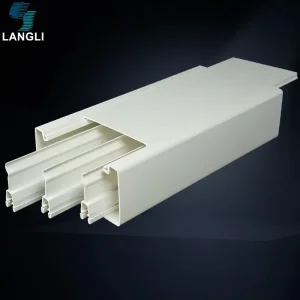
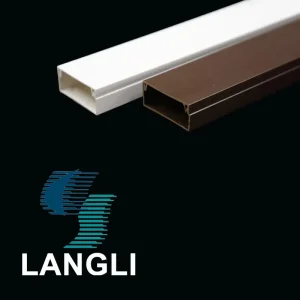
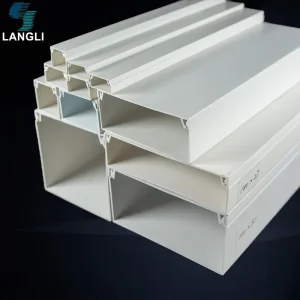
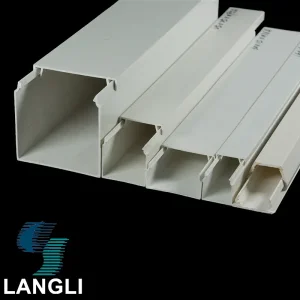
Analyzing global procurement shifts, polymer integrity, and critical joint reliability across multi-megawatt electrification projects.
Key Takeaway: Modern electrical and fluid-conveyance infrastructure relies heavily on unplasticized polyvinyl chloride (uPVC) pipe sockets. Socket geometry precision, chemical inertness, and fire-retardant performance directly determine the 50+ year operational lifespan of subterranean power networks, high-density data hubs, and commercial complexes.
In the contemporary industrial landscape, global procurement managers, EPC contractors, and master distributors are re-evaluating their supply chains for critical electrical containment. **Wholesale Pipe Socket PVC Manufacturers & Factories** form the structural backbone of modern power distribution, signal isolation, and HVAC/condensate management systems. Rigid uPVC (unplasticized polyvinyl chloride) socketing technology has evolved beyond elementary plastic extrusion into a science of high-molecular-weight formulation, high-precision injection tooling, and rigorous mechanical compliance.
The socket—whether formed through continuous downstream belling during pipe extrusion or manufactured via high-pressure injection molding for standalone couplers, tees, and elbows—represents the single most vital stress point in an entire conduit infrastructure. Faulty joint tolerances lead to moisture ingress, wire insulation degradation, arc flash containment failures, and structural collapse during concrete pour-ins. Leading manufacturing hubs, such as Foshan Shunde Langli Hardware Electrical PVC Co., Ltd. (operating since 1989), employ automated multi-cavity tooling and specialized resin stabilization to guarantee joint concentricity and interference-fit reliability.
Utilizing 100% virgin uPVC matrix blended with non-toxic organotin or calcium-zinc heat stabilizers. Formulated to withstand intense UV radiation, soil acidity, and aggressive industrial chemicals without suffering environmental stress cracking (ESC).
Rigid pipe socket profiles are micro-engineered for dual joining methodologies: controlled capillary gap solvent welding for permanent hermetic seals, or elastomeric rubber ring (R-R) socketing for thermal expansion movement in long subterranean runs.
Engineered to achieve UL94 V-0 flame ratings and compliance with BS EN 61386-1 glow-wire test standard at 960°C. Materials extinguish within seconds of flame removal, preventing oxygen flame propagation in concealed wall cavities.
Comprehensive physical, thermal, electrical, and dimensional parameters for project tender documentation.
| Performance Characteristic | Standard Test Method | Technical Benchmark Value | Engineering Significance |
|---|---|---|---|
| Raw Material Composition | ISO 1183-1 / ASTM D792 | Unplasticized PVC (uPVC) Density: 1.38 – 1.45 g/cm³ | High density ensures structural rigidity and high impact resistance under load. |
| Compression Resistance | BS EN 61386-21 Clause 10.2 | Very Heavy Duty Class 5 (>1250 N / 50mm) | Prevents pipe collapse when cast directly into structural concrete floor slabs. |
| Impact Strength (Toughness) | ISO 179 / BS EN 61386-1 | Medium / Heavy Duty (2.0kg drop at -15°C to +60°C) | Eliminates cracking during low-temperature winter handling and transport. |
| Dielectric Strength | IEC 60243-1 / ASTM D149 | > 40 kV/mm Insulation Resistance | Superior electrical insulation prevents flashovers and protects maintenance personnel. |
| Vicat Softening Temperature | ISO 306 (Method A50) | ≥ 82 °C (180 °F) | Maintains dimensional stability in high ambient temperature industrial environments. |
| Flame Retardancy & Flammability | UL 94 / BS 4607 Part 1 | UL94 V-0 Grade / Self-Extinguishing (<30s) | Will not support combustion; minimizes toxic smoke release in enclosed spaces. |
| Socket Taper & Wall Tolerance | DIN 8061 / BS 4607 Standard | Concentric Taper 0.5° to 1.5°, ±0.1mm Wall Precision | Ensures uniform adhesive distribution during solvent cementing for leak-proof joints. |
When selecting a **Pipe Socket PVC Manufacturer**, electrical contractors and municipal engineers must evaluate the jointing geometry. In solvent weld socket systems, the interference-fit zone (the internal taper of the socket fitting) is designed to dissolve top layers of uPVC polymer chains when solvent cement is applied. As the solvent evaporates, the fused polymer chains re-crystallize into a single, homogeneous monolithic structure. Factory precision in wall thickness and socket internal diameter (ID) tolerance is non-negotiable; an offset of merely 0.2mm can reduce joint shear strength by up to 60%.
Navigating raw material supply, automation, regional standards, and carbon footprint reduction in uPVC manufacturing.
Rapid urban migration across Southeast Asia, the Middle East (GCC region), Latin America, and Africa has escalated demand for standardized electrical conduit systems. B2B buyers increasingly source directly from China-based factories capable of high-volume container shipments and mixed-SKU logistics.
Leading factories have transitioned from manual single-cavity presses to fully automated, robotized injection molding cells. This automation maintains sub-millimeter tolerances on conduit couplers, circular junction boxes, and mini-trunking adapters while dramatically reducing unit labor overhead.
Modern ESG mandates require uPVC manufacturing plants to minimize carbon intensities. Industrial-grade scrap, runners, and off-spec extrusions are pulverized in-house and reintroduced into non-critical layers or specialized utility-grade ducts without compromising tensile strength.
How versatile uPVC socketing solutions adapt to diverse geographical climates and strict architectural codes.
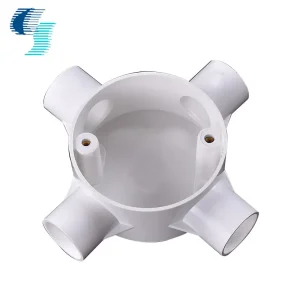
In vertical residential towers across East Asia and the Middle East, rigid uPVC conduit lines and 4-way circular junction boxes are tied directly to steel rebar frameworks prior to pouring concrete. The pipe sockets must endure extreme mechanical impact from concrete vibrators and continuous hydrostatic pressure without cracking or dislodging.
Civil infrastructure projects require heavy-wall uPVC conduit lines connected via deep-socket solvent weld joints. These underground systems protect high-speed optical fiber cables against rodent attack, soil movement, moisture seepage, and stray ground currents in wet coastal zones.
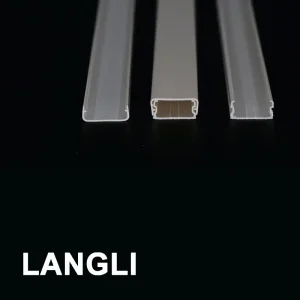
In chemical manufacturing plants and food processing facilities, exposed metallic conduits are prone to rapid oxidation and acid fume corrosion. uPVC surface wireway ducting and clip-on trunking fittings provide total chemical immunity and IP65-rated splash protection for sensitive controls.
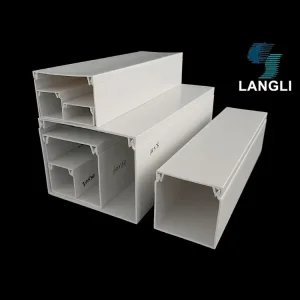
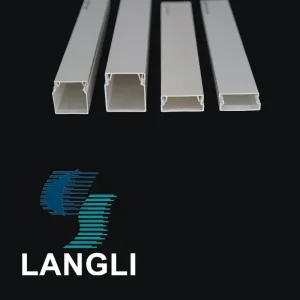
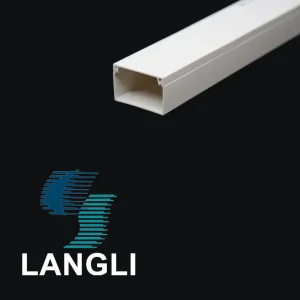
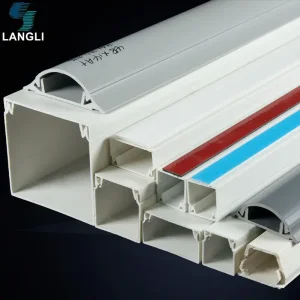
Explore our specialized range of trunking bodies, air ducts, junction boxes, and self-adhesive wireways.
How Industry 4.0, smart polymers, and environmental legislation are reshaping factory production lines.
Implementation of downstream 360-degree inline laser scanners during extrusion to measure socket inner wall diameter, ovality, and wall thickness in real time, automatically adjusting haul-off speed to achieve zero-defect tolerances.
Phase-out of traditional heavy metal thermal stabilizers in favor of plant-derived organic calcium-zinc systems, aligning with stricter EU REACH and RoHS regulations for indoor air quality and worker safety.
Incorporation of core-shell acrylic nano-particles into the PVC resin blend, providing unprecedented crack resistance under heavy mechanical impact at temperatures as low as -25°C without compromising tensile rigidity.
In-depth answers from our engineering desk regarding compliance, customization, MOQs, and quality assurance.