 LANGLI PVC Request a Catalog LANGLI PVC Request a Catalog
 Explore our export-grade uPVC wall conduits, trunking profiles, and custom fittings engineered for commercial, industrial, and residential electrical installations.
An exhaustive analysis of high-impact uPVC compounds, thermal behavior, dielectric isolation, and structural integrity for industrial and commercial electrical infrastructure.
Polyvinyl Chloride (PVC) utilized in wall conduit manufacturing is formulated as unplasticized PVC (uPVC), removing volatile plasticizers to maximize rigid structural performance, flexural modulus, and thermal stability. High-grade electrical wall conduits require precise resin purity combined with tailored stabilizer packages.
Fire safety compliance is paramount for surface wall conduits and flush-mounted electrical trunking. High-density uPVC features inherent flame-retardant properties due to its elevated chlorine content (~57% by weight).
When exposed to flame source, our premium conduit formulations form a carbonaceous char layer that starves the underlying material of oxygen, resulting in self-extinguishing performance within 30 seconds (UL 94 V-0 classified).
Furthermore, limited oxygen index (LOI) values exceeding 32% ensure that the conduit will not support continuous combustion in ambient atmospheric air, fulfilling non-flame propagation requirements specified under BS EN 61386-1.
Leveraging four decades of industrial compounding, precision tooling, and automated extrusion infrastructure in Foshan, China.
Founded in 1989 as Foshan Shunde Langli Hardware Electrical PVC Co., Ltd., our facility maintains direct raw material synthesis and batch mixing. By directly managing virgin PVC resin, thermal stabilizers, and organic pigments, we ensure consistent color matching, eliminate embrittlement risk, and strictly control chemical purities to pass international RoHS and REACH screening.
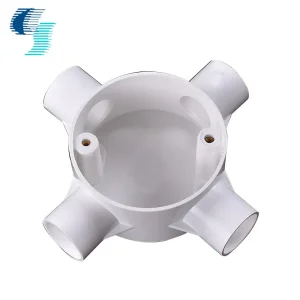
Our in-house toolroom houses over 900 specialized mould sets for circular junction boxes, bend elbows, adaptors, and mini-trunking fittings. Operating 32 state-of-the-art injection moulding machines alongside twin-screw extruders allows rapid tooling modification, custom wall thickness production, and OEM/ODM profile turnarounds within 30 to 45 days.
Shipping 97% of total production across 60+ global markets, our export engineering department optimizes freight density through mixed-item container consolidation. We combine high-cube rigid conduits with dense, nested fitting cartons, reducing total landed shipping costs per cubic meter by up to 18% for overseas distributors.
Comprehensive alignment with international building standards ensures seamless import clearance, project tender validation, and installation acceptance across global target markets.
| Standard Ref. | Target Region | Dimensional Range | Key Testing & Technical Criteria | Certification / Report |
|---|---|---|---|---|
| BS EN 61386-21 | UK, Middle East, Africa, SE Asia | 20mm, 25mm, 32mm, 40mm, 50mm | Heavy/Medium mechanical conduit stress, cold impact testing (-5°C), high compression resistance (1250N). | CE, Third-Party Laboratory Test Reports |
| DIN 49016 / IEC 61386 | Continental Europe, CIS Region | 16mm to 63mm metric series | Glow-wire flammability index (850°C), strict socket coupling inner diameter tolerances for smooth cable pull. | CE Declaration of Conformity |
| ASTM D1784 / NEMA | Americas, Latin America | ½" to 2" Imperial schedule sizes | Tensile strength (>48 MPa), Izod impact notched resistance, cell class 12454 rigid compound verification. | RoHS Compliant, Factory Quality Cert. |
| AS/NZS 2053 | Australia, New Zealand, Pacific | 20mm to 50mm heavy duty | High solar ultraviolet radiation resistance (ASTM G154 accelerated weathering), non-flame propagating. | Batch Mill Test Certificates |
| RoHS Directive 2011/65/EU | Global Environment Standard | All Conduit & Fitting Profiles | Strict restriction of Lead (Pb), Cadmium (Cd), Mercury (Hg), Hexavalent Chromium, and PBB/PBDE flame retardants. | SGS / Intertek Test Reports |
Mitigating supply chain volatility through transparent pricing, OEM private-label packaging, and batch-to-batch structural uniformity.
For high-volume distributors, brand equity and private-label consistency are essential. Our factory offers fully integrated OEM production capabilities:
To prevent field failures, loose socket couplings, or brittle fracturing, every manufacturing run undergoes strict automated and manual quality checks before staging:
Versatile deployment across surface raceway installations, flush-mounted wall chasing, high-humidity environments, and commercial cabling retrofit.
In flush wall masonry construction, rigid PVC conduits are chased directly into brickwork or cast inside reinforced concrete slabs. Their elevated compression resistance prevents structural crushing during concrete pouring, while smooth interior walls ensure friction-free wire pulling across extended electrical runs.
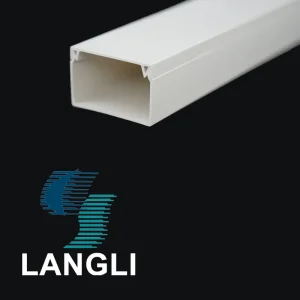
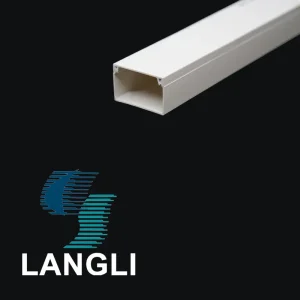
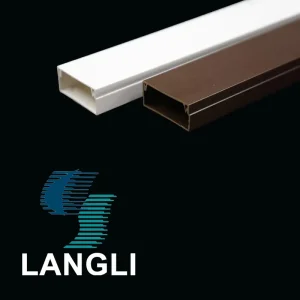
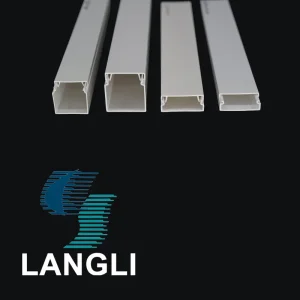
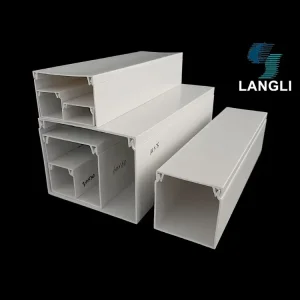
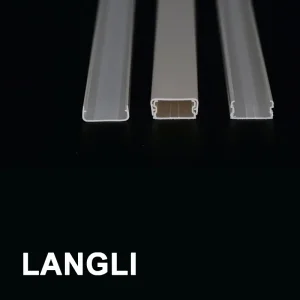
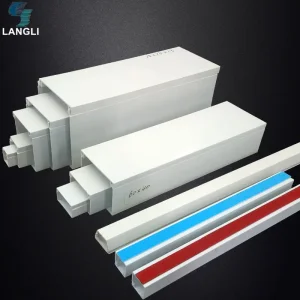
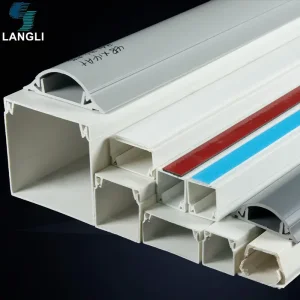
When wall chasing is impractical or prohibited, self-adhesive PVC mini-trunking and decorative TV/data raceways offer clean surface routing. Equipped with snap-on lids and matching elbows, internal/external angles, and tees, surface raceways streamline cabling upgrades in commercial spaces.
Unlike galvanized steel conduits that are susceptible to rust, or non-rigid tubing prone to sagging, heavy-gauge uPVC wall conduit systems provide long-term corrosion resistance in chemical processing plants, food processing units, and high-humidity coastal construction environments.
Key technological shifts driving global procurement specifications in modern electrical raceway engineering.
Environmental and life-safety codes in public transport hubs, healthcare facilities, and modern high-rise buildings increasingly mandate Low Smoke Zero Halogen (LSZH) materials. Future conduit evolution focuses on replacing halogenated compounds with advanced phosphorus-nitrogen flame retardants, drastically reducing toxic smoke density and corrosive acid gas emission during fires.
The global transition toward renewable energy and electric vehicles requires outdoor-grade conduit systems capable of withstanding intense solar UV exposure, temperature fluctuations (-20°C to +90°C), and chemical runoff. Specialty UV-stabilized uPVC compounds with reinforced wall profiles represent one of the fastest-growing categories in electrical supply distribution.
Detailed engineering answers to critical sourcing, compliance, and material selection questions.
Unplasticized PVC (uPVC) contains no plasticizer additives, making it rigid, structurally self-supporting, and immune to sagging or accidental collapse under masonry loads. Standard flexible PVC contains plasticizers that reduce heat resistance and mechanical strength, making uPVC the mandatory choice for structural wall conduit and code-compliant building wiring.
uPVC has a coefficient of linear thermal expansion of approximately 0.06mm/m°C. For long continuous runs subject to ambient temperature variation (e.g., 20°C swing), expanding couplers or expansion joints must be installed every 6 meters to absorb linear dimensional changes without causing surface buckling or joint separation.
Yes. With over 900 active mould sets and an in-house tooling workshop, we rapidly tool custom cross-sections, wall thicknesses, and special socket dimensions for BS EN, DIN, ASTM, or AS/NZS specifications. Tooling completion typically ranges between 30 and 45 days.
For standard stock items, MOQ starts from one mixed 20ft container (allowing flexible SKU combination across conduits, trunking, and junction boxes). Trial single-SKU orders can start from 20 master cartons. Standard factory production lead time is 15–25 days following deposit confirmation.
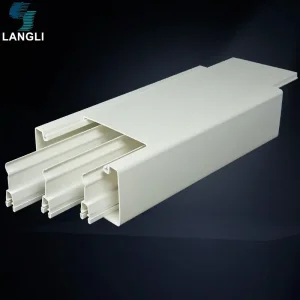
Explore complete wiring duct SKUs, circular box connections, adhesive tape ducts, and heavy-duty wireways.
Connect directly with Foshan Shunde Langli's export engineering team. Receive itemized quotations, full dimensional charts, CBM container plans, and compliance test reports within 24 hours.
Contact Export Desk For Quote