 LANGLI PVC Request a Catalog LANGLI PVC Request a Catalog
 Pre-inspected electrical conduit fittings, junction boxes, and cable trunking systems optimized for immediate transpacific deployment to the Port of Los Angeles and Long Beach hubs.
Analyzing the intersection of rigorous local building codes, rapid logistics hub expansions, and seismic resilience demands in Southern California.
The Greater Los Angeles metropolitan area—encompassing LA County, Orange County, and the Inland Empire—represents one of the most demanding electrical construction markets in North America. Driven by massive logistics infrastructure investments surrounding the Port of Los Angeles (POLA) and Port of Long Beach (POLB), alongside mega-developments in commercial real estate, data centers in Silicon Beach, and transit retrofits like the LAX Automated People Mover, electrical contractors face unprecedented timelines and compliance hurdles.
Procuring high-grade Unplasticized Polyvinyl Chloride (UPVC) conduit pipe fittings and wire containment trunking from established OEM Chinese factories provides Los Angeles electrical distributors and MEP (Mechanical, Electrical, Plumbing) contractors with a strategic price-to-performance advantage. However, succeeding in the Southern California market requires strict adherence to local structural, seismic, and environmental mandates.
Key California Compliance Benchmark: Conduit and fitting assemblies deployed in LA must comply with California Code of Regulations (CCR) Title 24, California Green Building Standards (CALGreen), and National Electrical Code (NEC/NFPA 70) specifications regarding non-metallic raceways (Article 352 for Rigid Polyvinyl Chloride Conduit: Type PVC).
Los Angeles sits atop active fault lines (San Andreas, Newport-Inglewood). Rigorous seismic shear force protection requires PVC fittings to display high tensile flexibility and high impact absorption without cracking under high-frequency ground vibrations.
Southern California experiences extreme thermal swings between coastal humidity and Inland Empire summer heat (exceeding 105°F / 40°C). UV-stabilized UPVC formulas prevent micro-fracturing and color degradation under relentless solar exposure.
Information Gain analysis: Why engineering specifiers in Santa Monica, Long Beach, and San Pedro are shifting from Galvanized Rigid Conduit (GRC) to heavy-duty UPVC systems.
| Performance Metrics | Rigid UPVC Fittings & Conduit (Langli Standard) | Galvanized Rigid Steel (GRC) | Electrical Metallic Tubing (EMT) |
|---|---|---|---|
| Corrosion Resistance (Salt Spray / Coastal Marine) | Immune (100% Non-Corrosive) | Corrodes over time; requires field coating | High corrosion risk in coastal exposure |
| Dielectric Strength & Insulation | High Insulation Voltage Protection | Conductive; requires continuous grounding | Conductive; ground fault risk |
| Weight & Freight Cost Efficiency | Ultra-Lightweight (1/5th weight of steel) | Very Heavy (High ocean & land drayage fees) | Moderate weight |
| Flame Retardancy Rating | UL 94 V-0 Self-Extinguishing | Non-combustible | Non-combustible |
| Total Installed Cost (LA Labor Rates) | Lowest (Fast solvent weld jointing) | Highest (Requires mechanical threading & bending) | Moderate (Set-screw / compression couplings) |
| Lifecycle Expectancy (SoCal Environment) | 50+ Years (Zero maintenance) | 15–25 Years in coastal atmospheres | 10–15 Years outdoors |
Engineering Recommendation: For wet, damp, and corrosive environments detailed in NEC Article 300.6—specifically commercial laundries, coastal warehouses near POLA, wastewater facilities, and underground duct banks in Los Angeles—heavy-wall UPVC conduit fittings eliminate electrochemical degradation while significantly lowering installation hours for union labor crews.
Mitigating lead-time risk, Section 301 tariffs, and warehouse staging bottlenecks across Southern California's supply corridors.
Direct express shipping lanes from Yantian/Nansha ports directly to Los Angeles ocean terminals.
Eliminating tooling delays for standard imperial (NPT/ANSI) and metric (BS/DIN) conduit fittings.
Scalable daily manufacturing capacity capable of fulfilling full container loads (20GP/40HQ) rapidly.
Navigating imports into Southern California requires active trade management. With Section 301 tariffs under HTS Subheading 3917.40 (fittings for tubes, pipes, and hoses of plastics), leading procurement teams in Los Angeles utilize tailored OEM packaging strategies. By consolidating mixed containers—combining high-volume PVC cable trunking profiles with high-density circular junction boxes and elbows—importers maximize cube utilization (CBM efficiency), driving down freight costs per unit.
Our manufacturing facility in Foshan provides complete custom barcoding, Amazon FBA / California warehouse palletization compliance, and pre-cleared customs documentation (Bill of Lading, ISF 10+2 filings, Commercial Invoice, Certificate of Origin, Mill Test Reports) ensuring frictionless clearance through U.S. Customs and Border Protection (CBP) at the Los Angeles/Long Beach seaport complex.
Inside our Foshan production center: Advanced virgin UPVC compounding, automated injection parameters, and stringent mechanical testing.
100% heavy-metal-free compounding. We utilize Calcium-Zinc non-toxic heat stabilizers that meet California Proposition 65 and international RoHS environmental limits without sacrificing polymer rigidity.
Formulated to achieve UL 94 V-0 flame spread standards. Self-extinguishes within 10 seconds of source removal. Passes 960°C glow-wire thermal safety testing for enclosed structural electrical raceways.
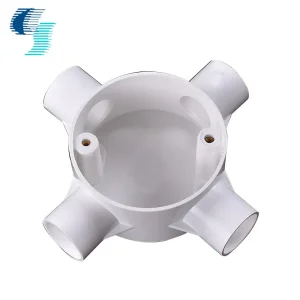
CNC machined mold cavities guarantee zero-wall-variance socket fitment. Compatible with solvent welding or rubber ring push-fit connections, preventing moisture ingress and wire snagging during pulling.
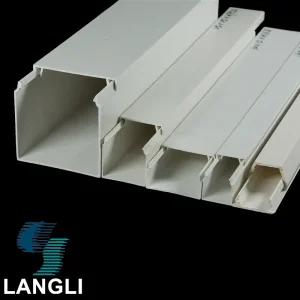
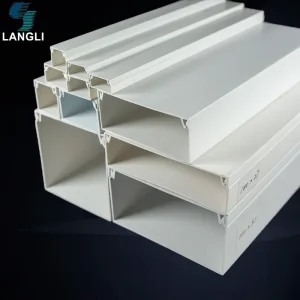
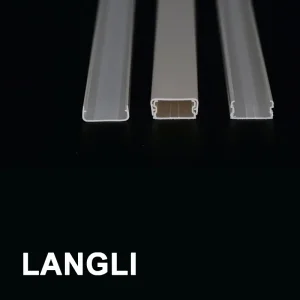
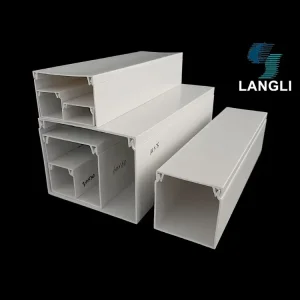
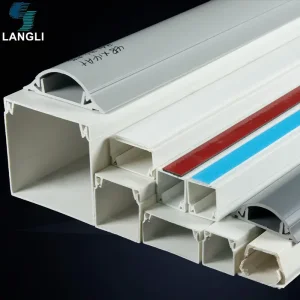
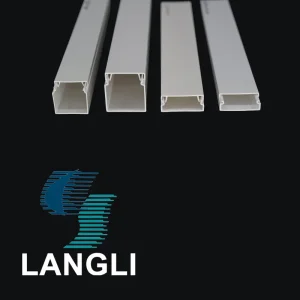
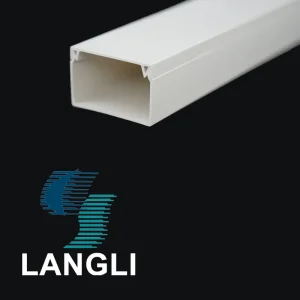
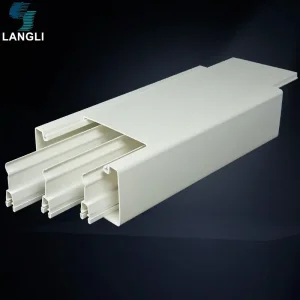
Explore our export-grade trunking profiles, wireway ducts, and customized conduit accessories designed for high-density electrical installations.
Aligning Chinese manufacturing efficiency with California’s stringent ESG and circular economy benchmarks.
Responding to California’s climate mandates, our R&D department is testing bio-attributed PVC resins and post-industrial closed-loop recycling loops that maintain structural yield strength while lowering carbon emissions per unit by up to 28%.
Pioneering integrated RFID tagging within junction boxes and primary fittings. This enables BIM (Building Information Modeling) asset tracking during mega-project assembly at LA airports, stadium venues, and municipal facilities.
Addressing compliance, tooling customization, freight logistics, and bulk container pricing.
Contact our export engineering desk today for direct factory quotes, full technical specification sheets, container loading plans, and sample kits delivered directly to your LA office or jobsite.
Send Inquiry Now