+86-13534590764 [email protected] Foshan, Guangdong, China

China PVC Ductwork Suppliers & Factories

Comprehensive Technical White Paper: Manufacturing Benchmarks, Material Science, Industrial Applications & Strategic Global Supply Chain Management for Rigid PVC Ducting Systems

Global B2B Landscape: China's PVC Ductwork Manufacturing Dominance

An empirical evaluation of global market demand, supply chain dynamics, and technological advancements driving Chinese rigid PVC conduit and ducting export ecosystems.

7.8%
Global CAGR Growth
65%+
Global Production Share
UL 94 V-0
Flame Retardant Standard
BS EN 61386
International Compliance

The global demand for non-metallic raceway systems—specifically Polyvinyl Chloride (PVC) ductwork, electrical cable trunking, and UPVC conduit systems—has experienced unparalleled growth over the past decade. Driven by rapid urbanization, massive data center expansions, industrial automation, and renewable energy integration, rigid PVC has firmly established itself as the material of choice over traditional metallic alternatives. Within this global macro-environment, China PVC ductwork suppliers and factories serve as the central hub of production, accounting for over 65% of the total global export volume.

China's manufacturing prowess in PVC extrusion and injection moulding is heavily concentrated in strategic industrial clusters such as Foshan and Shunde in Guangdong Province. These industrial ecosystems integrate the entire value chain—ranging from raw resin compounding, plasticizer stabilization, high-speed multi-strand extrusion, to automated precision mold tooling. As a result, Chinese OEM/ODM factories offer global EPC contractors, electrical wholesalers, and engineering procurement professionals an unmatched combination of structural durability, custom mold flexibility, and cost-efficient scalability.

Key Information Gain Insight: Dual Classification of PVC Ductwork
In international procurement specifications, "PVC Ductwork" encompasses two distinct engineering categories: HVAC/Industrial Chemical Exhaust Air Ducts (large diameter, heavy-wall rigid UPVC sheets or extruded pipes) and Electrical Cable Management Ducts & Trunking (enclosed wireways, mini-trunking, slotted ducting, and conduit systems). Chinese top-tier manufacturers excel in dual-capability production, utilizing precise compounding formulations tailored specifically for either mechanical air transport or electrical flame-retardant cable insulation.

Material Science & Technical Specifications

Understanding resin compounding, molecular stability, impact modification, and fire safety ratings in modern UPVC electrical ductwork engineering.

Unplasticized Polyvinyl Chloride (UPVC)

Eliminating plasticizers enhances mechanical rigidity, tensile strength (≥ 45 MPa), and dimensional stability. UPVC ductwork exhibits outstanding chemical inertia against strong acids, alkalis, and atmospheric oxidation, preventing degradation in corrosive environments.

UL 94 V-0 & Self-Extinguishing Dynamics

Safety-critical installations demand self-extinguishing properties. High-grade Chinese formulations incorporate chlorinated additives and organic antimony trioxide synergists, ensuring flame propagation ceases within 10 seconds without flaming drips.

Dielectric Strength & Thermal Thresholds

With a dielectric strength exceeding 25 kV/mm, UPVC prevents arc flash-over and electrical short circuits. Operating safely across temperatures from -15°C to +60°C, it maintains structural integrity under rigorous thermal stress.

Technical Performance Benchmarks: Material Comparison Matrix

To assist specifiers and electrical consultants in selecting optimal raceway materials, the following engineering table contrasts UPVC ductwork against alternative industrial materials:

Performance Parameter Rigid UPVC Ductwork Galvanized Rigid Steel (RMC) HDPE Ducting Systems
Corrosion Resistance Excellent (Immune to oxidation/acid corrosion) Poor to Moderate (Prone to rust at joints) High (Good chemical stability)
Flame Retardancy Rating UL 94 V-0 / Self-Extinguishing Incombustible (Class A1) Combustible (Requires flame retardants)
Weight Ratio (Density) Lightweight (~1.4 g/cm³) Very Heavy (~7.8 g/cm³) Lightweight (~0.95 g/cm³)
Dielectric Strength > 25 kV/mm (Electrical Insulator) Conductive (Requires continuous grounding) > 20 kV/mm (Electrical Insulator)
Installation Cost Index Low (Fast snap-on/solvent weld fit) High (Requires field threading & bending) Moderate (Heat fusion equipment required)
Thermal Expansion Coeff. 0.08 mm/m·°C 0.012 mm/m·°C 0.20 mm/m·°C

Industry Trends & Technological Innovation Roadmap

Pioneering advancements in low-smoke halogen-free formulations, UV stabilization, intelligent extrusion, and sustainable recycling paradigms.

Phase 1: Advanced Additive Chemistry
Transitioning completely from heavy metal lead stabilizers to environmentally friendly Calcium-Zinc (Ca-Zn) and Organotin systems to meet strict EU RoHS and REACH mandates.
Phase 2: LSZH Modification
Developing Low Smoke Zero Halogen (LSZH) thermoplastic modified PVC compounds designed specifically for enclosed public transit, tunnels, and high-density skyscraper infrastructure.
Phase 3: Automated Precision Injection
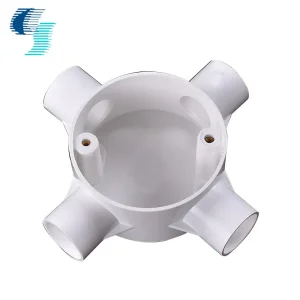
Implementing multi-cavity hot runner injection molds with optical vision inspection systems to achieve sub-millimeter socket tolerances on 4-way boxes, elbows, and couplers.
Phase 4: Circular & Green Manufacturing
Integrating closed-loop edge-scrap regrind systems into outer co-extruded layers, reducing virgin carbon footprint while maintaining strict structural load capabilities.

Macro Drivers Accelerating Modern Ductwork Engineering

The global PVC raceway manufacturing industry is undergoing a structural technological evolution. Leading Chinese factories are no longer merely low-cost producers; they are engineering partners delivering high-specification products designed for harsh environmental exposure. Key industry developments include:

  • Extended Weatherability & UV Stabilization: Enhanced titanium dioxide (TiO2) and hindered amine light stabilizer (HALS) loadings enable exterior PVC mini-trunking and conduit to resist severe solar ultraviolet degradation, preventing embrittlement in tropical and desert climates (e.g., Middle Eastern and Southeast Asian project deployments).
  • Co-Extruded Dual-Layer Systems: Advanced co-extrusion technology allows Chinese factories to manufacture ducting with an ultra-smooth low-friction interior wall (reducing cable pulling tension by up to 35%) combined with a high-impact, flame-retardant outer shell.
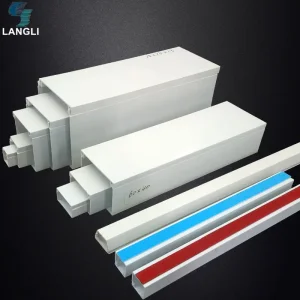
  • Smart Locking Mechanisms & Pre-Taped Backings: Modern surface trunking designs incorporate dual-locking snap lids that resist high-vibration dislodgement, accompanied by high-tack acrylic foam adhesive backing for expedited residential wire concealment.

Localized Application Scenarios & Sector Solutions

Tailored raceway configurations engineered to resolve operational challenges across diverse industrial and commercial environments.

Scenario A: Data Centers & Telecommunication Hubs

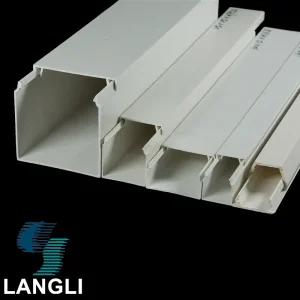
High-density server farms require meticulous cable separation and high heat dissipation. Slotted PVC wiring ducts (comb ducts) provide flexible side-finger breakout points, allowing continuous fiber optic routing while isolating sensitive low-voltage signaling lines from power distribution conductors.

Scenario B: Chemical & Food Processing Facilities

Frequent washdowns using aggressive alkaline detergents quickly degrade metallic conduits. Rigid UPVC round conduit networks paired with IP65-rated solvent-welded circular junction boxes eliminate moisture ingress, rust formation, and chemical deterioration.

Scenario C: Commercial Skyscraper & Residential Retrofits

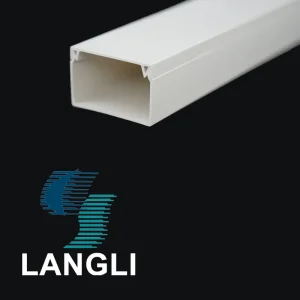
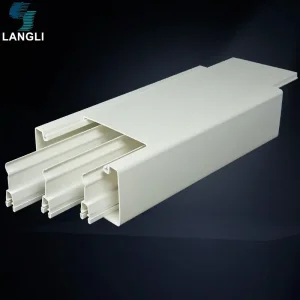
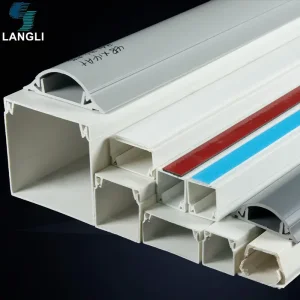
Surface wiring retrofits demand architectural aesthetics and quick deployment. Decorative PVC cable trunking (GA006 series and arc-shaped floor trunking) seamlessly conceals electrical wiring along baseboards and walls without expensive concrete chasing work.

Scenario D: Solar PV Farms & Renewable Infrastructure

Outdoor photovoltaic array cabling is vulnerable to high ambient temperatures and wind-driven debris. UV-stabilized heavy-duty UPVC conduit runs protect DC string cabling, preventing insulation chafing and grounding faults across multi-megawatt solar installations.

Global Sourcing Guide: How to Audit China PVC Ductwork Factories

A systematic procurement playbook for B2B buyers, quality assurance managers, and global supply chain directors.

Procuring PVC ducting, cable trunking, and electrical boxes directly from Chinese factories requires rigorous vendor evaluation beyond superficial price-per-meter comparisons. Substandard suppliers often compromise product longevity by incorporating excessive calcium carbonate (CaCO3) filler content, resulting in brittle conduit that cracks during field bending or cold-weather installation.

Critical Quality Audit Checkpoints for Overseas Procurement

  • Filler-to-Resin Ratio Verification: Insist on a maximum Calcium Carbonate ratio (typically ≤ 15-20% depending on the specific application). High-grade UPVC maintains a balance between flexibility and compression resistance without chalking under stress.
  • Wall Thickness Uniformity & Concentricity: Extrusion die alignment must be strictly controlled. Request wall thickness tolerances within ±0.1mm to guarantee seamless coupling fitting engagement and compliance with BS 4607 / BS EN 61386 standards.
  • Low-Temperature Drop-Weight Impact Resistance: Qualified factory samples should withstand drop-weight impact testing at -5°C without shattering, proving adequate impact modifier dispersion throughout the PVC matrix.
  • Flame Retardancy & Glow-Wire Test Proof: Request verified third-party laboratory test reports (SGS, Intertek, TÜV) confirming compliance with Glow-Wire Ignition (GWT) at 850°C and UL 94 V-0 flame extinction times.
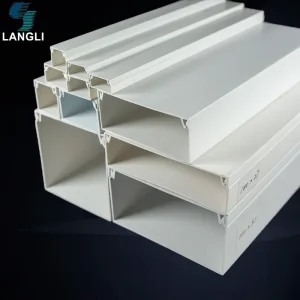
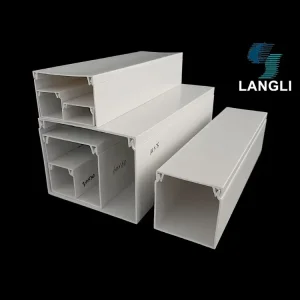
  • Container Loading Density & Packaging Optimization: Professional suppliers utilize nested packaging strategies (inserting smaller trunking profiles inside larger ducting sizes) to maximize 40ft High Cube container CBM utilization, drastically lowering international freight cost per unit.

Frequently Asked Questions (FAQ) & Procurement Insights

Direct technical answers from industry engineers regarding international standards, custom tooling, shipping logistics, and material performance.
What international electrical and safety standards do Chinese PVC ductwork manufacturers comply with?
Tier-1 Chinese PVC ductwork manufacturers produce strictly according to international standards including BS EN 61386 (Conduit systems for cable management), BS 4607, IEC 61084 (Cable trunking and ducting systems), UL 94 (Standard for Safety of Flammability of Plastic Materials), CE directives, and RoHS/REACH environmental safety standards. Factory test reports are provided per production lot.
What is the typical Minimum Order Quantity (MOQ) and production lead time for OEM orders?
For standard catalogue sizes (e.g., 16mm to 50mm conduit, 10x10mm to 200x100mm trunking), the standard MOQ is typically one mixed 20ft container, allowing buyers to consolidate multiple profile sizes and connection fittings. Lead times range between 15 to 25 days after deposit confirmation. Custom colors (Pantone matching) or specialized private-label carton printing may require 25 to 35 days.
Can Chinese factories support custom mold development for bespoke PVC ductwork profiles?
Yes. Established factories maintain in-house CNC toolmaking shops and CAD/CAM engineering departments. Custom profile extrusion dies can be engineered and sample-tested within 20 to 30 days, while complex injection molds for non-standard fittings (junction boxes, custom reducers) take approximately 35 to 45 days.
How does PVC ductwork perform in terms of fire resistance and toxic smoke emission?
Rigid UPVC inherently possesses high flame resistance due to its 57% chlorine chemical composition. When formulated with flame-retardant synergistic agents, UPVC achieves a UL 94 V-0 rating, meaning it self-extinguishes within 10 seconds without producing flaming droplets. For high-occupancy public transit projects, factories offer specialized Low Smoke Zero Halogen (LSZH) polyolefin-modified compounds that eliminate toxic hydrogen chloride gas emissions during combustion.
How can buyers prevent freight damage during ocean transit?
Damage prevention relies on proper export packaging. Ductwork lengths should be strapped into heavy-duty plastic sleeves or wrapped in protective woven polypropylene bags. Rigid injection fittings (elbows, tees, circular boxes) are packed in reinforced 5-ply double-corrugated export cartons. Furthermore, factory loading crews employ inter-nested bundle packing to prevent crushing and maximize container space efficiency.