 LANGLI PVC Request a Catalog LANGLI PVC Request a Catalog
 Featured rigid PVC conduit, cable wireway ducts, and electrical accessories manufactured in Foshan, China.
A comprehensive technical analysis of material compounding, dimensional standards, and global procurement strategies for electrical contractors and commercial importers.
In modern commercial, industrial, and residential construction, electrical wire containment systems—commonly designated as wire piping, rigid PVC conduit, cable wireways, and trunking ducts—serve as the foundational defense mechanism for critical electrical networks. The technical responsibility of these systems extends beyond basic mechanical protection; they are calculated thermal barriers, dielectric insulators, and fire-retardant enclosures designed to eliminate arc-flash propagation, prevent toxic smoke dissemination, and survive harsh environmental exposures over a 50+ year operational lifespan.
As the global market transitions toward higher density smart buildings, industrial automation hubs, and massive solar PV infrastructure, the demand for high-specification polymer wire piping manufactured in China has experienced a paradigm shift. China's manufacturing ecosystem, centered in world-class industrial hubs like Foshan Shunde, has transformed from simple cost-oriented extrusion lines into advanced polymer technology clusters utilizing automated closed-loop compounding, laser-monitored extrusion tolerances, and integrated CAD/CAM precision mold building.
The superior mechanical strength and thermal stability of industrial-grade China wire piping stem directly from unplasticized polyvinyl chloride (UPVC) resin formulations. Unlike standard flexible PVC, UPVC contains no plasticizer additives, rendering the final extrusion rigid, dimensionally stable, and chemically inert against acids, alkalis, and atmospheric oxidizers.
Foshan Shunde's localized polymer cluster combines raw resin compounding, custom tooling shops, and packaging suppliers within a 15km radius, drastically shortening lead times.
Direct compliance with international benchmarks including BS 4607, BS EN 61386, DIN 49016, and ASTM D1784 ensure seamless customs clearance worldwide.
Extensive in-house mold inventories allow flexible wall thickness adjustments (0.6mm to 1.7mm) and customized socket geometries without initial tooling setup fees.
Precision nested packaging for trunking and conduits maximizes 40ft HQ container cubic meter loading capacity, lowering per-unit freight tariffs for overseas buyers.
A rigorous engineering comparison between rigid circular wire piping and surface-mounted cable wireway trunking for project design optimization.
| Performance Parameter | Rigid UPVC Wire Piping (Conduit) | Polyvinyl Chloride Cable Wireway Trunking | Engineering Testing Standard |
|---|---|---|---|
| Primary Application | Concealed in-slab, under-floor & wall-chased runs | Surface wire management, retrofit, control panels | IEC 61386-1 / BS 4607 |
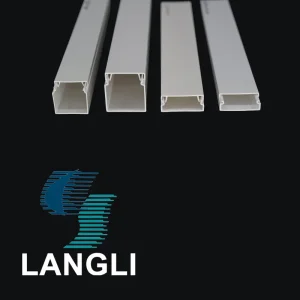
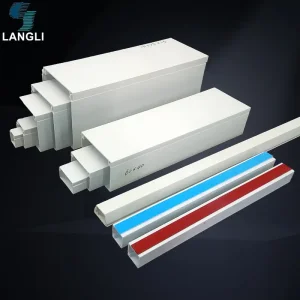
| Dimensional Range | Outer Diameter: 16mm, 20mm, 25mm, 32mm, 40mm, 50mm | Width x Depth: 10x10mm up to 200x100mm | EN 50085-2-1 |
| Mechanical Impact Class | Medium (2.0 Joules) to Heavy (5.0 Joules) | 1.0 Joule to 2.0 Joules depending on wall thickness | BS EN 61386 Impact Test |
| Dielectric Strength | > 25 kV/mm non-conductive property | > 20 kV/mm surface insulation rating | IEC 60243-1 |
| Fire Retardancy Rating | UL94 V-0 / Self-extinguishing within 3s | UL94 V-0 / Flame retardant, non-drip compound | UL 94 & GB/T 2408 |
| Ingress Protection (IP) | Up to IP65 with solvent cement socket joints | IP40 (Standard Lid snap) to IP42 (with clip seal) | IEC 60529 |
| Operating Temperature | -15°C to +60°C continuous thermal ceiling | -15°C to +65°C continuous thermal ceiling | ISO 75 (HDT test) |
Customized containment architecture engineered for high-spec global infrastructure and industrial projects.
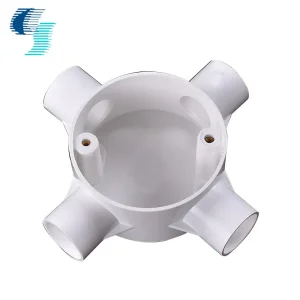
Concealed concrete slab pourings demand high-yield compression conduit that will not collapse under heavy steel rebar tie-downs. China wire piping manufacturers produce heavy-gauge UPVC pipes capable of withstanding 1250N compression loads, coupled with 4-way circular junction boxes and flush-mounted switch boxes for seamless light and power distribution.
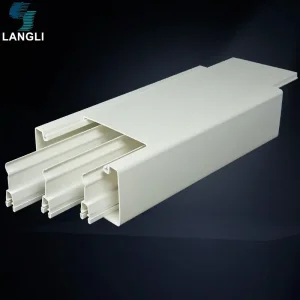
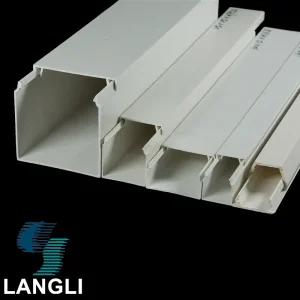
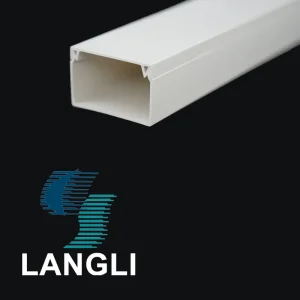
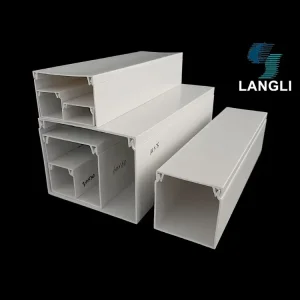
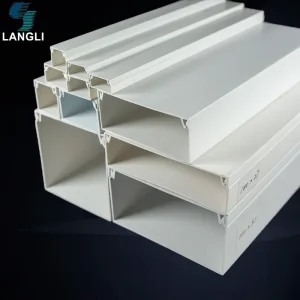
High-density fiber optic and ethernet wiring require surface trunking with smooth inner channel walls to prevent cable sheath abrasion during installation. Large-capacity wireway ducts (e.g., 100x50mm, 150x100mm, 200x100mm) fitted with internal separators isolate high-voltage power cables from sensitive gigabit data streams.
Automated manufacturing environments expose containment systems to aggressive cutting oils, industrial solvents, and continuous floor vibration. High-impact UPVC wire piping combined with IP65 inspection elbows, couplers, and heavy-duty saddle clips maintain structural integrity despite ambient mechanical stresses.
Key quality control criteria that international procurement officers must evaluate when sourcing wire piping from Chinese suppliers.
Non-uniform wall thickness is a major failure point in low-grade extrusions. Thin spots along the profile wall lead to stress fractures during cold-bending or mechanical impacts on site. Reputable China suppliers utilize online ultrasonic wall-thickness gauges during extrusion, maintaining tolerances within ±0.05mm across the entire 3-meter length.
Furthermore, socket concentricity ensures that solvent cement welds achieve 100% surface contact. Improperly bell-ended conduits create air gaps in the joint, compromising water-tightness and pull-out resistance.
Electricians on job sites frequently cold-bend conduits up to 90 degrees using internal bending springs without heating equipment. Inferior PVC compounds infused with excessive calcium carbonate filler (used as a cheap filler) will snap or whitening under tension.
High-grade wire piping formulated with impact modifiers withstands drop-hammer tests at 0°C (1.0kg falling from a 2000mm height) without micro-cracking, allowing smooth 90° cold bends without collapse or internal kinking.
For surface trunking, the lid clip mechanism must strike a balance between easy installation access and secure retention under heavy cable loads. A loose lid will dislodge when maximum wire fill ratios (40-50% cross-sectional area) are reached, exposing live wiring.
Advanced double-locking edge designs engineered by leading factories ensure that the trunking cover withstands thermal expansion forces and lateral cable pressure without buckling off the base channel.
Professional importers require clear laser-marking on pipes every 1 meter displaying the brand logo, standard number (e.g., BS EN 61386), size, and fire classification. Outer master cartons must feature moisture-resistant corrugated board with customized barcodes and batch numbers to enable rapid warehouse distribution upon container arrival.
In-depth responses covering international standards, MOQ, custom molding capabilities, and shipping logistics.
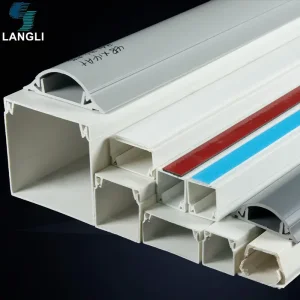
Explore our complete catalog of customizable cable management ducting, decorative trunking, and high-quality factory direct products.