 LANGLI PVC Request a Catalog LANGLI PVC Request a Catalog
 Precision injection-moulded components engineered to strict international tolerances for flawless fitment and structural longevity.
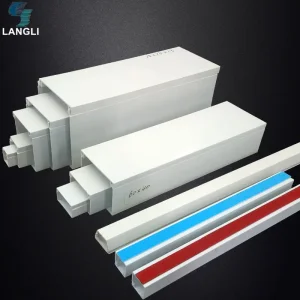
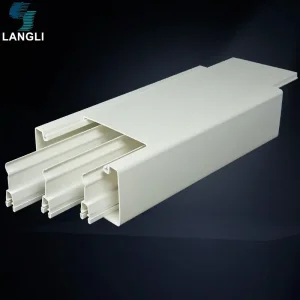
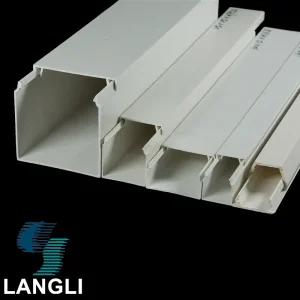
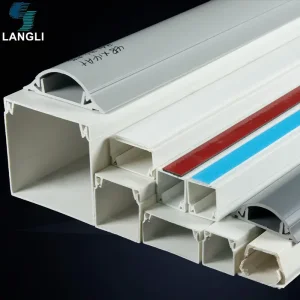
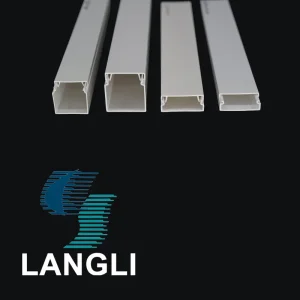
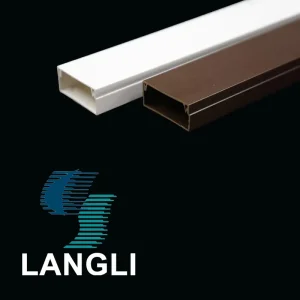
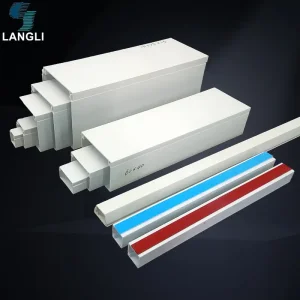
An executive analysis of market dynamics, resin compounding innovations, and infrastructure deployment trends driving the modern thermoplastic fitting market.
The global industrial thermoplastic pipe fitting market is undergoing a structural transition. Traditionally dominated by metallic alloys such as ductile iron, bronze, and carbon steel, modern civil engineering, MEP (Mechanical, Electrical, and Plumbing) design, and industrial process plants are rapidly adopting rigid Unplasticized Polyvinyl Chloride (PVC-U) and Chlorinated Polyvinyl Chloride (CPVC) pipe tees. As a critical directional component in fluid handling and electrical conduit branching, the PVC pipe tee serves as the primary structural junction for diverting, combining, or reducing flow media across civil water works, chemical transport, cable enclosure systems, and HVAC loops.
The acceleration in global market adoption is anchored in fundamental material economics and lifecycle durability. Metallic fitting assemblies suffer from electrochemical oxidation, galvanic corrosion, scale accretion, and heavy installation shear requirements. In contrast, precision-moulded custom PVC pipe tees deliver total immunity to soil and fluid corrosion, smooth hydraulic inner walls minimizing friction head loss ($\text{H}_f$), and an exceptional strength-to-weight ratio that slashes field installation hours by up to 60%.
From an international procurement perspective, regional standards dictate distinct technical requirements. North American markets demand compliance with ASTM D1784, ASTM D2466 (Schedule 40), and ASTM D2467 (Schedule 80) geometries, whereas European, Middle Eastern, and Asian infrastructure developments align with ISO 1452, BS EN 1452, and DIN 8063 metric schedules. As an established custom manufacturer, bridging these regional dimensional standards through multi-cavity modular tooling represents a key competitive differentiator for OEM/ODM buyers.
Comparative physical, thermal, and mechanical evaluation of PVC-U, CPVC, and alternative fitting materials under operational stress.
| Performance Metric | Rigid PVC-U (Standard) | High-Impact CPVC | Ductile Iron (DI) | Stainless Steel (316L) |
|---|---|---|---|---|
| Specific Gravity (g/cm³) | 1.38 – 1.42 | 1.50 – 1.55 | 7.15 | 8.00 |
| Tensile Strength (MPa at 23°C) | $\ge 50 \text{ MPa}$ | $\ge 55 \text{ MPa}$ | 420 MPa | 580 MPa |
| Vicat Softening Temp (°C) | $\ge 80^\circ \text{C}$ | $\ge 103^\circ \text{C}$ | N/A (>1000°C) | N/A (>1300°C) |
| Chemical Resistance | Excellent (Acids/Alkalis/Salts) | Superior (Corrosive Chemicals) | Poor (Requires Coating) | Moderate (Pitting in Chlorides) |
| Hazen-Williams C-Factor | 150 (Smooth, No Scale) | 150 (Smooth, No Scale) | 100 - 120 (Degrades) | 130 - 140 |
| Design Service Life | 50+ Years | 50+ Years | 20 - 30 Years | 30 - 40 Years |
| Total Installed Cost Index | 1.0 (Baseline Minimal) | 1.35 (Moderate) | 2.80 (High Labor) | 4.50 (Very High Material) |
Moulded with virgin PVC resin (K-value 65-67), our PVC tees withstand prolonged circumferential hoop stress. Pressure ratings consistently conform to PN10, PN16, and Schedule 80 operational limits without fatigue creep.
Formulated with a Limiting Oxygen Index (LOI) $> 45\%$, our electrical and fluid PVC fittings comply with UL94 V-0 flame ratings. Material will not sustain combustion once external heat sources are removed.
Smooth internal curvature reduces local head loss coefficients ($K$-factor) at 90-degree branch splits. This minimizes turbulence, prevents cavitation, and reduces pumping power expenditure over operational lifespans.
From deep-buried municipal water mains to highly regulated electrical conduit infrastructure, custom PVC tees adapt to diverse operational stressors.
In municipal clean water networks, zero-leach, non-toxic PVC reducing and equal tees ensure lead-free conveyance. Heavy-gauge bell sockets guarantee solvent-weld or rubber-gasketed joint integrity under dynamic water hammer surge pressure.
Utilized alongside electrical conduit, trunking, and junction boxes. Smooth inner radii protect high-voltage wiring and fiber optic cables from sheath abrasion during wire pulling. Dielectric insulation prevents short circuits.
Resistant to aggressive chemical waste streams, inorganic acids, alkaline solutions, and industrial salts. CPVC and specialized PVC formulations maintain tensile stability in electroplating, mining, and chemical process plants.
High UV-stabilized formulations enriched with titanium dioxide ($\text{TiO}_2$) prevent photodegradation in exposed agricultural mainline tees. Designed for rapid push-fit or solvent jointing across rural drip and sprinkler arrays.
Low thermal conductivity ($\approx 0.15 \text{ W/m}\cdot\text{K}$) minimizes surface sweating and thermal gain in HVAC chilled water systems and residential drain-waste-vent (DWV) branch lines.
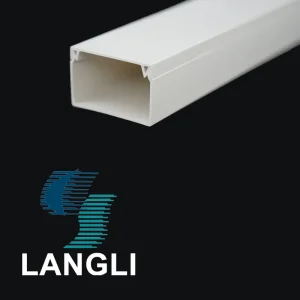
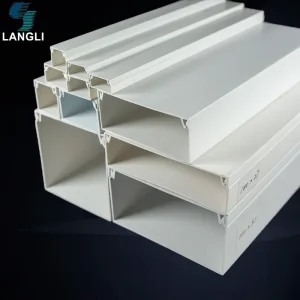
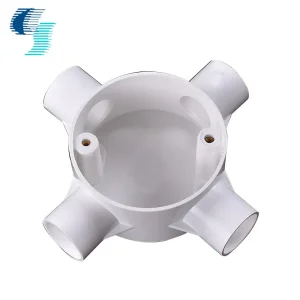
Seamlessly integrates with surface-mounted PVC cable trunking, circular junction boxes, and switch boxes. Custom colored tees (white, grey, ivory, black) maintain aesthetic alignment in modern interior architecture.
Pioneering polymer processing technologies, automated quality assurance, and sustainable raw material formulations through 2030.
Integration of real-time cavity pressure sensors and automated optical inspection (AOI) to eliminate wall thickness variation and micro-void defects during high-speed injection moulding.
Commercialization of ISCC PLUS-certified bio-attributed PVC resin, reducing supply chain embodied carbon footprint by up to 40% while preserving identical mechanical burst ratings.
Embedding passive RFID and ultrasonic structural integrity tags directly into the fitting wall to enable non-destructive field inspection and automated pipeline asset tracking.
Development of ultra-fast eco-solvent welding compounds and laser-assisted local induction fusion jointing to completely eliminate volatile organic compound emissions on job sites.
Our 32 high-tonnage injection machines and in-house toolroom deliver tight tolerance fittings engineered for zero-defect installation.
A superior custom PVC tee begins with high-precision tooling. Utilizing grade P20 and S136 German tool steel, our tooling shop manufactures multi-cavity injection moulds engineered for balanced hot or cold runner polymer flow. Advanced Moldflow® simulation analysis is conducted prior to steel cutting to identify weld line positions, prevent air traps, and equalize cooling rates across the branch junction. This ensures dimensional stability within $\pm 0.1\text{mm}$ socket tolerance.
Operating under ISO 9001:2015 certified quality systems, every batch of manufactured fittings undergoes strict laboratory validation before warehouse dispatch:
In-depth answers to engineering, procurement, OEM customization, and installation queries.
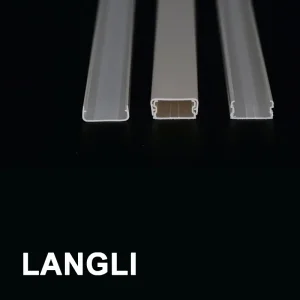
Explore our complete range of fireproof cable trunking, PVC wireways, electrical conduit fittings, and custom plastic ducting accessories.