 LANGLI PVC Request a Catalog LANGLI PVC Request a Catalog
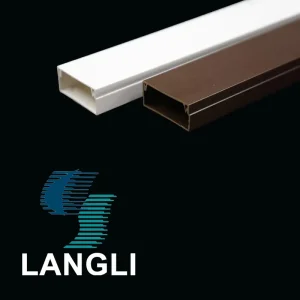
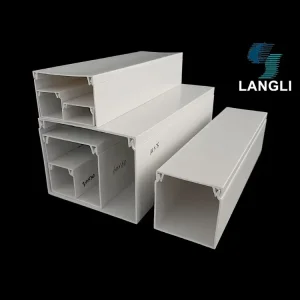
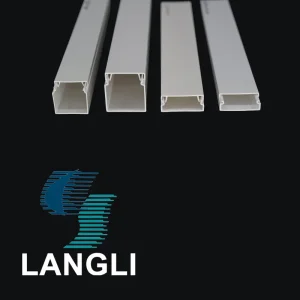
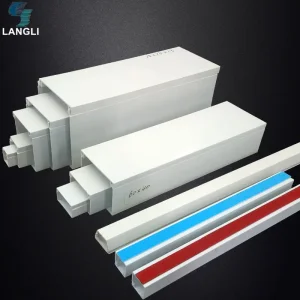
 Explore our flagship precision-extruded PVC body trunking, fireproof electrical cable ducting, and custom accessories built to international quality standards.
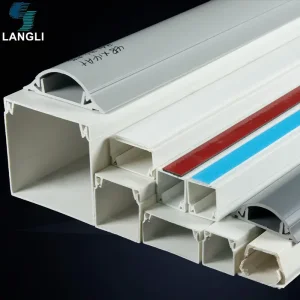
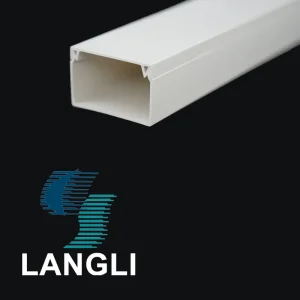
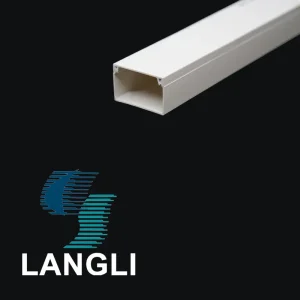
An authoritative analysis of the global electrical raceway infrastructure, high-gain material advancements, and supply chain dynamics driving the 2025–2030 industrial expansion.
Electrical conduit elbows serve as the cornerstone of structural raceway installations across commercial, industrial, and civil infrastructure. Designed to modify the direction of conduit runs—typically at standard angles of 90 degrees, 45 degrees, 30 degrees, or 22.5 degrees—conduit elbows protect high-voltage power cables and sensitive fiber-optic telemetry from mechanical abrasion, structural flexure, chemical exposure, and environmental stress. In high-density industrial facilities, data centers, and grid substations, the structural integrity and precision tolerances of conduit elbows directly dictate installation efficiency and long-term operating safety.
As global infrastructure accelerates toward electrification, renewable integration, and smart grid automation, the demand for precision-engineered conduit elbows has transitioned from commodity purchasing to high-spec engineering requirements. Procurement authorities now prioritize zero-halogen resin formulations, high dielectric strength, low inner-wall friction coefficients, and exact radius curvature tolerances to prevent wire-pulling friction and conductor sheath degradation.
Historically, hot-dipped galvanized rigid steel conduit (RSC) and intermediate metal conduit (IMC) dominated industrial wiring pathways. However, modern polymer chemistry has sparked a major transition toward unplasticized polyvinyl chloride (PVC-U) and high-impact engineering polymers. PVC-U conduit elbows deliver superior resistance to soil acids, alkalis, atmospheric corrosion, and galvanic oxidation, making them the preferred choice for underground duct banks (direct burial and concrete encasement) as well as highly corrosive chemical processing plants.
Furthermore, precision injection-molded PVC elbows eliminate the weight penalties and threading friction associated with heavy metallic bends. The inclusion of specialized impact modifiers and thermal stabilizers enables high-quality PVC elbows to withstand extreme ambient fluctuations—ranging from sub-zero arctic climates to scorching Middle Eastern environments—without suffering structural embrittlement or micro-cracking.
Unlike steel or aluminum elbows, high-grade PVC-U fittings are completely immune to chemical oxidation, soil salinity, moisture degradation, and atmospheric chemical attack, providing over 50 years of continuous service life.
With inherent non-conductive electrical insulation properties, rigid plastic conduit elbows eliminate stray voltage hazards and grounding faults, ensuring maximum safety for maintenance crews and high-density installations.
Ultra-smooth inner wall bore geometry reduces wire-pulling tension by up to 35%, preventing conductor insulation burning and reducing labor costs during complex multi-directional cable pulls.
Comprehensive engineering matrix detailing dimensional tolerances, mechanical properties, and safety certifications for enterprise B2B procurement.
| Parameter / Property | Rigid PVC (UL651 / BS EN 61386) | Flame-Retardant UPVC | Galvanized Rigid Steel (RSC) | Testing Protocol |
|---|---|---|---|---|
| Nominal Size Range | 16mm to 200mm (1/2" to 8") | 16mm to 110mm | 1/2" to 6" Standard NPS | ISO 3126 / ASTM F441 |
| Bending Angles Available | 90°, 45°, 30°, 22.5° | 90°, 45° Custom Plain End | 90°, 45° Threaded Ends | ASME B16.9 / Factory Tooling |
| Flame Retardancy / Rating | UL94 V-0 Self-Extinguishing | UL94 V-0 / Glow-Wire 960°C | Non-Combustible Class A1 | IEC 60695-2-11 / UL 94 |
| Dielectric Strength | > 25 kV / mm | > 30 kV / mm | Conductive (Requires Grounding) | ASTM D149 |
| Impact Resistance Class | Heavy duty (6 Joules at -15°C) | Extra Heavy Duty (9 Joules) | Extreme Mechanical Impact | BS EN 61386-21 Clause 10.3 |
| Temperature Operating Range | -25°C to +60°C continuous | -40°C to +85°C structural | -80°C to +400°C | IEC 61386 Thermal Cycle Test |
| Corrosion Resistance | 100% Acid/Alkali Proof | 100% Chemical Immune | Requires Galvanized/Epoxy Coating | ASTM B117 Salt Spray Test |
Adapting physical specifications and testing standards to fulfill strict regional building codes and extreme ambient environments around the world.
In high-ambient desert environments like Saudi Arabia, the UAE, and Qatar, exterior conduit sweeps and elbows face direct UV radiation and temperatures topping 50°C. Standard PVC degrades under severe solar radiation, resulting in surface chalking, discoloration, and polymer embrittlement. Factory-customized conduit elbows engineered for GCC deployment feature titanium dioxide ($TiO_2$) UV stabilization systems, enabling raceways to preserve 95%+ impact strength even after 5,000 hours of accelerated weatherometer testing.
European municipal infrastructure, underground metro tunnels, and public high-density buildings strictly enforce the BS EN 61386-21 standard alongside Low-Smoke Zero-Halogen (LSZH) mandates. In a fire event, conventional halogenated PVC releases toxic hydrogen chloride (HCl) gas. Precision manufacturing facilities supply specialized Polyolefin and PC/ABS halogen-free polymer elbows that produce minimal smoke density and zero corrosive toxic gases, complying fully with EN 45545-2 railway and structural fire safety standards.
North American electrical contractors operate under the National Electrical Code (NEC) and ANSI/UL 651 standards, which dictate rigid PVC conduit wall thicknesses across Schedule 40 (standard structural) and Schedule 80 (heavy mechanical impact). In underground utility sweeps, Schedule 80 90-degree elbows are required where conduit emerges above ground to prevent lawnmower damage or vehicle impact. High-precision belled-end fittings allow instant solvent-weld connection on job sites without external couplers.
High-humidity coastal zones across Southeast Asia, Australia, and coastal China require electrical fittings that resist salt spray corrosion, severe humidity penetration, and mold growth. Injection-molded UPVC elbows with IP68 gasketed bell sockets ensure completely watertight connections across sub-surface duct runs, offshore wind turbine bases, and port container terminal lighting grids.
Custom-engineered raceway systems optimized for high-reliability data centers, electrical substations, commercial towers, and renewable energy farms.
High-density fiber optic pathways demand long-radius sweeps (large radius bends up to 36 inches or 48 inches) to prevent micro-bending signal loss in fiber lines. Custom injection-molded elbows ensure precise turn radii for smooth cable deployment.
DC string cable runs in utility-scale solar installations require UV-resistant, wide-temperature conduit sweeps from inverter stations to transformer pads. Heavy-wall PVC elbows protect against thermal expansion and soil settling stress.
Surface trunking and concealed conduit systems in high-rise towers integrate flame-retardant wall elbows, inspection tees, and circular junction boxes to build unbroken fire-rated utility shafts compliant with national building codes.
Examining next-generation polymer innovations, AI-driven precision injection tooling, and sustainable manufacturing processes shaping electrical raceway production.
Integration of real-time cavity pressure sensors and automated AI cooling systems within injection molds to achieve dimensional socket tolerances within ±0.05mm, eliminating socket loose fits completely.
Transitioning toward bio-attributed PVC resins derived from pine-wood waste and post-industrial circular polymers, achieving up to 45% reduction in carbon footprint while preserving structural impact standards.
Deployment of intelligent conduit sweeps containing embedded passive RFID tags and micro-strain gauges to monitor structural ground shifts and cable thermal loads in critical power grids remotely.
Full implementation of solar-powered closed-loop cooling systems and fully automated robotic packing systems across all 32+ injection lines, achieving 100% net-zero carbon certified production.
In-depth answers from our engineering export managers regarding specifications, international compliance, custom molding, and order processing.
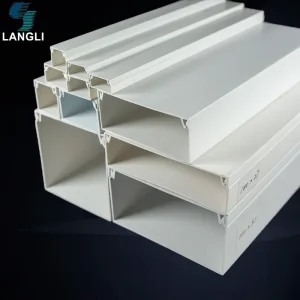
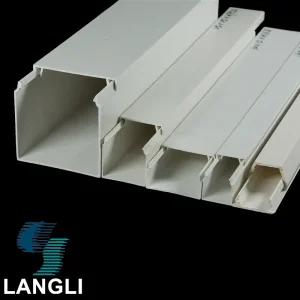
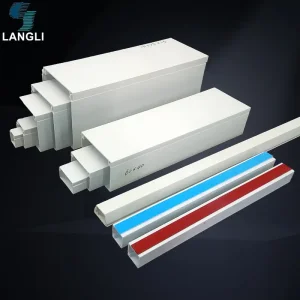
Browse our extended range of specialized electrical wire ducts, decorative TV trunking, and high-thickness CE-certified PVC solutions.
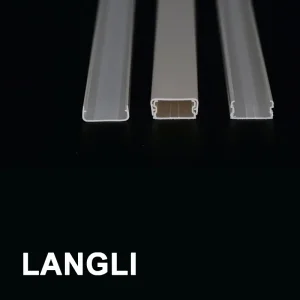
Connect directly with our engineering sales team to request comprehensive engineering drawings, factory price lists, sample kits, and container loading projections.
Request Direct Factory Quote & Catalog