 LANGLI PVC Request a Catalog LANGLI PVC Request a Catalog
 Explore our top-tier export range engineered for global electrical infrastructure compliance.
Understanding dimensional precision, material composition, and international installation compliance for modern electrical enclosure systems.
The standard 86 Type electrical box—defined by its iconic 86mm x 86mm front face dimension and standard 60.3mm mounting screw center-line distance—is the architectural foundation for electrical distribution, smart home nodes, and low-voltage signal termination across major global markets. Originally codified under British and Chinese industrial specifications (including BS 4607, BS 5733, and GB 17466), the 86 Type enclosure has evolved from simple back-boxes into sophisticated thermoplastic housing systems engineered for smart switchboards, dimmers, climate controls, and fiber-to-the-home (FTTH) wall plates.
When procuring 86 Type junction boxes from OEM manufacturers, procurement heads and engineering consultants must evaluate dimensional tolerance, mechanical strength under thermal stress, wire retention capability, and flame retardancy grade. Standard factory offerings encompass both surface-mounted back boxes (often ranging from 33mm to 45mm in depth) and flush-mounted (concealed) wall boxes engineered for masonry, concrete pour, or drywall partitioning systems.
Modern electrical installations increasingly require hybrid functional capabilities. The integration of high-density cabling, smart relays, Zigbee/Wi-Fi micro-controllers, and heat-generating dimmers inside the 86 box cavity has pushed factory precision standards to new heights. OEM factories must accommodate custom knockout sizes (ranging from 16mm to 25mm conduit entry points), adjustable brass screw lugs for alignment tolerance, and dynamic internal volumes designed to prevent wire pinching and insulation abrasion.
How regional electrical codes and construction trends shape the procurement of 86 Type switch and junction enclosures.
High demand for heavy-duty, UV-stabilized, and extreme temperature resistant PVC-U surface and flush boxes matching British Standards (BS EN 60670). Infrastructure expansion in commercial towers and hospitality sectors requires deep 47mm boxes for smart HVAC terminals.
Rapid urban development and mass adoption of IoT smart home switches drive high-volume sourcing of modular 86 Type gang boxes. Multi-box gang linkers (interlocking 86 boxes) are increasingly specified to ensure pristine horizontal leveling across luxury residential builds.
Widespread reliance on classical 86mm square back-boxes for power sockets and light switches. Strict enforcement of halogen-free flame retardancy (LSZH) in public transportation hubs, hospitals, and high-occupancy commercial structures.
The transition toward smart building architecture has drastically altered the volume and thermal clearance requirements within 86 Type box enclosures. Conventional mechanical toggle switches required minimal depth (often 25mm to 35mm). However, modern smart actuators, touch-panel Wi-Fi switches, and step-down power transformers emit heat during operation and occupy significant structural volume. Consequently, global procurement has shifted toward 45mm, 50mm, and modular extra-deep 60mm back boxes designed with enhanced convection paths and heat-dissipating thermoplastic polymers.
Analyzing the operational efficiencies, tooling capabilities, and raw material compounding advantages of Chinese manufacturing leaders like Langli PVC.
Foshan OEM plants operate multi-cavity hot-runner injection molds (ranging from 8 to 32 cavities per frame) equipped with mirror-polished core steel (H13/S136). This yields ultra-short cycle times (18-25 seconds per box) with zero flash, consistent wall thickness, and perfectly formed knockout grooves.
Manual brass nut insertion is prone to cross-threading and angle misalignment. Premier Shunde factories feature high-speed robotic brass nut feeding systems that place knurled brass inserts into the core mold prior to plastic injection, creating an unbreakable mechanical bond with zero spin-out failure.
By controlling in-house resin blending, factories like Langli compound high-impact modified rigid PVC with specialized calcium-zinc stabilizers, tin catalysts, and flame-retardant additives. This eliminates plastic embrittlement in sub-zero climates and prevents color fading under ambient UV exposure.
| Performance Metric | Standard Tier OEM Box | Premium Foshan OEM Box (e.g., Langli) | Field Benefit for Specifiers |
|---|---|---|---|
| Material Base | Recycled / Regrind PVC Mix | 100% Virgin High-Impact PVC-U / PC-ABS | Zero cracking during conduit knock-out or power tool installation. |
| Glow Wire Flammability | 650°C - 750°C Basic Rating | 850°C - 960°C (IEC 60695-2-11 Compliant) | Self-extinguishes within < 5 seconds; fully compliant with building fire codes. |
| Screw Boss Pull-Out Force | < 1.5 N·m Torque Limit | > 2.8 N·m Solid Brass Insert Retention | Prevents stripped threads when electrician over-tightens switch plates. |
| Conduit Entry Knockouts | Rigid / Prone to Structural Fractures | Precision Micro-Grooved Clean Snap Knockouts | Enables rapid 16mm/20mm/25mm conduit connection without wall box failure. |
| Dimension Stability | ± 0.5 mm Variance | ± 0.15 mm Ultra-Tight Tolerance | Ensures seamless modular gang connections and flush alignment on wall panels. |
From high-rise commercial complexes to wet industrial installations, matching the right 86 box design to jobsite challenges.
When embedded directly inside wet concrete pours or brickwork mortar, standard light boxes deform under hydrostatic concrete pressure. Heavy-duty 86 Type flush boxes feature structural exterior ribbing, concrete-anchoring lugs, and temporary protective dust caps to prevent slurry ingress during wet construction phases.
Drywall installation requires specialized 86 Type boxes fitted with expanding yellow/blue side clamp wings (lug claws). As the faceplate screw is tightened, the side claws expand behind the plasterboard sheet (12.5mm or 15mm thickness), locking the box solidly against the wall without requiring rear backing studs.
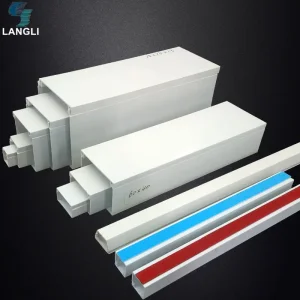
In retrofits, historic buildings, or industrial offices where wall chasing is prohibited, surface-mounted 86 Type boxes connect directly to PVC wire ducting. Designed with smooth, multi-directional side entry cutouts, these boxes match seamlessly with 16x16mm, 25x16mm, and 40x25mm cable trunking lines.
Facilities such as food processing plants, pharmaceutical cleanrooms, and outdoor covered walkways require IP54 or IP66 weatherproof 86 Type enclosures. Fitted with soft silicone perimeter gaskets, stainless steel assembly screws, and spring-loaded transparent covers, these boxes safeguard terminals against humidity and dust.
How tier-1 manufacturers verify flame retardancy, impact resistance, dielectric insulation, and thermal degradation resistance.
Electrical enclosure safety rests entirely on raw material chemistry. Lower-grade manufacturers rely on heavily loaded calcium carbonate fillers or post-consumer plastic waste to drop unit costs. However, this severely compromises mechanical toughness, resulting in cracked screw pillars, brittle conduit knockouts, and elevated fire propagation risks. OEM leadership requires rigid adherence to international material testing standards:
A structured framework for evaluating OEM factory proposals, custom mold development, and container shipping optimization.
Verify faceplate mounting pitch (60.3mm), internal depth (35mm/45mm/50mm), and conduit knockout diameters (20mm/25mm). Request official CE, RoHS, and REACH test documentation for local customs clearance.
Inquire if the OEM supplier provides in-house mold toolmaking. Premium factories offer custom brand logo laser engraving on the box interior or private-label master carton printing with custom UPC/EAN barcodes.
Optimize landed costs by combining lightweight 86 Type boxes with heavy rigid PVC conduits and trunking in single 20ft/40HQ containers, maximizing volumetric cube utilization without exceeding weight limits.
Where the 86 Type enclosure industry is heading over the next decade.
The electrical back-box is no longer a passive plastic receptacle; it is morphing into a active component of intelligent building automation. Industry leaders are focusing R&D on three key structural innovations:
1. Tool-Less Fast-Fix Mechanism Integration: Electricians spend considerable labor time driving long steel screws into back box brass nuts. Next-generation 86 boxes integrate quick-locking ratchet clips and spring-tensioned clamp nuts that reduce switch plate installation time by up to 60% per terminal point.
2. RF-Transparent Engineering Plastics: Metal back boxes act as Faraday cages, severely dampening 2.4GHz Wi-Fi, Zigbee, and Z-Wave signals generated by smart switches. Modern non-metallic PVC/ABS 86 boxes are engineered for optimal electromagnetic wave permeability, ensuring stable wireless connectivity across smart residential complexes.
3. Low-Carbon Bio-Based Polymer Compounds: In alignment with global decarbonization goals, export-focused factories are pioneering bio-attributed PVC formulations and eco-friendly lead-free stabilizer systems, reducing embedded carbon footprints while maintaining industrial flame retardancy ratings.
High-precision manufactured products matching worldwide installation requirements.
Detailed technical answers to common procurement, compliance, and custom tooling questions.