 LANGLI PVC Request a Catalog LANGLI PVC Request a Catalog
 Precision-engineered flame-retardant UPVC body trunk profiles and conduit fittings engineered for international contracting projects.
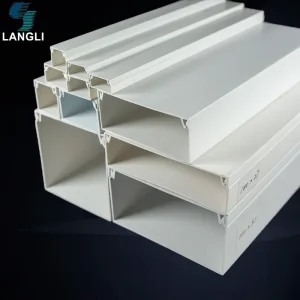
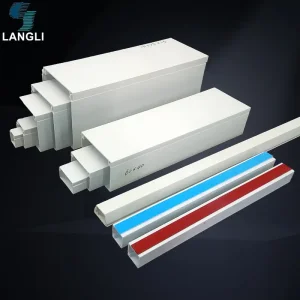
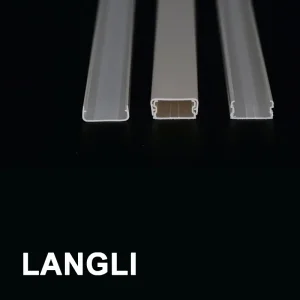
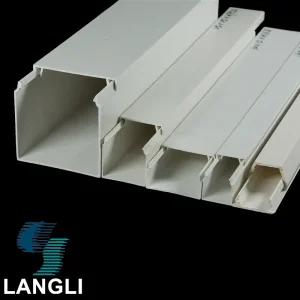
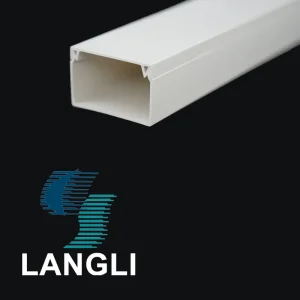
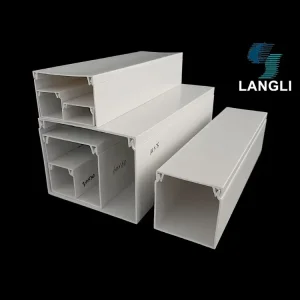
In modern electrical infrastructure engineering, the choice of containment systems determines operational safety, thermal performance, and compliance with rigid international fire safety standards. **Body Trunking** (often referred to as rigid PVC trunking bodies, electrical ducting, or wiring raceways) represents the foundational protective core for low-voltage, data, and power distribution networks across commercial, industrial, and residential sectors.
The global market for electrical cable containment is undergoing a rapid evolution driven by smart building initiatives, rapid datacenter deployment, and strict fire mitigation mandates (such as UL94 V-0 flame ratings and low-smoke halogen-free requirements). As global sourcing managers seek reliable **wholesale body trunk suppliers and factories**, procurement evaluation has transitioned from simple unit-cost comparison to technical risk mitigation, chemical stability analysis, and long-term dimensional consistency.
At the factory level, the structural integrity of an electrical trunking body depends heavily on the polymer formulation. Unplasticized Polyvinyl Chloride (UPVC) is preferred in heavy industrial and architectural environments due to its inherent dielectric strength, chemical resistance to acids and alkalis, and self-extinguishing flame properties.
Our custom-formulated UPVC trunking compounds achieve a UL94 V-0 flammability rating. In the event of an electrical short circuit or localized arc fire, the material extinguishes within 10 seconds without producing flaming drips, preventing fire propagation along electrical raceways.
Incorporating fine-particle Titanium Dioxide (TiO2) and light-stabilizing agents prevents polymer chain scission caused by continuous ultraviolet exposure. This ensures long-term color fastness and structural ductility in tropical and high-insolation environments.
Extrusion tooling is continuously monitored to maintain wall thickness tolerances between 0.6mm and 1.7mm. The impact modifier system prevents cracking during cold-weather cutting, drilling, or structural mounting on job sites.
Verified test values conducted under standardized laboratory conditions for engineering specifiers and tender validation:
| Physical / Electrical Property | Standard Test Method | Measured Value / Performance Class | Engineering Significance |
|---|---|---|---|
| Material Composition | ISO 182-2 / High-Purity Rigid UPVC | Lead-Free / Ca-Zn Stabilized Compound | Compliance with global green building standards & RoHS directive |
| Flammability Rating | UL 94 / IEC 60695-2-11 | V-0 / Glow-Wire tested to 960°C | Self-extinguishing within 10s; prevents burn-through in building fires |
| Dielectric Strength | IEC 60243-1 | > 35 kV/mm | Prevents electrical arc insulation failure across adjacent wire channels |
| Low-Temperature Impact | BS EN 61386-1 (-15°C) | 2 Joules / No shattering or micro-fractures | Enables safe field installation and cold-climate transport without brittleness |
| Tensile Strength at Yield | ISO 527-2 | ≥ 40 MPa | Resists flexural sagging when packed with heavy-gauge copper cabling |
| Vicats Softening Temperature | ISO 306 (Method B50) | ≥ 82°C | Maintains profile geometry under ambient industrial heating conditions |
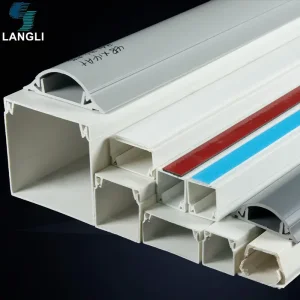
Modern cabling projects require specialized trunking configurations to match physical, thermal, and spatial environmental demands. Direct factory partnerships allow electrical contractors to source tailored trunk profiles suited for explicit deployment environments:
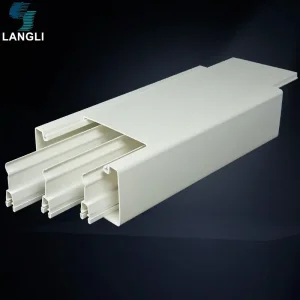
High-density fiber optic and CAT6A structured cabling require split-compartment trunking bodies to separate power from signal lines, eliminating electromagnetic interference (EMI). Smooth internal raceways prevent cable jacket abrasion during high-tension pulls.
Slotted-wall trunking bodies (wiring duct) allow flexible wire breakouts to terminal blocks, relays, and PLCs. Oil-resistant UPVC formulations resist breakdown when exposed to industrial lubricants, hydraulic fluids, and ambient heat.
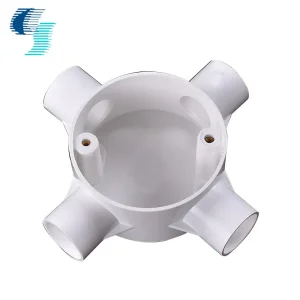
Where wall chasing is prohibited, self-adhesive decorative micro-trunking delivers rapid surface mounting. Matching clip-on fittings (flat elbows, internal angles, tees) streamline installer labor and maintain clean architectural lines.
Subway stations, airports, and hospitals require low-toxicity, self-extinguishing cable ducting. High impact resistance shields wiring against operational vibration and physical vandalism in heavily trafficked zones.
Operating from Foshan, Guangdong—the heart of China's advanced polymer cluster—our manufacturing complex spans decades of continuous process refinement. Achieving strict batch-to-batch repeatability across millions of linear meters of body trunking requires tight control over extrusion dynamics and mold geometry.
Unlike trading entities that outsource production, maintaining an in-house toolroom enables total control over socket dimensions, locking-lid tension, and wall thickness consistency. Custom profile tooling can be designed, prototyped, and tested within 30 to 45 days.
Every manufacturing run undergoes strict QA verification: raw resin moisture testing, online ultrasonic wall-thickness tracking, drop-weight impact evaluation, socket alignment testing with matching conduit pipes, and glow-wire thermal testing prior to automated packaging.
Navigating cross-border electrical tenders requires strict adherence to regional standardizations. Sourcing from a factory with verified international test reports speeds up customs clearance, eliminates site rejection risks, and satisfies project consulting engineers.
Engineered to meet British and Commonwealth conduit and trunking specs. Covers standard metric profiles (20mm, 25mm, 32mm, 40mm, 50mm) with precise socket fits for British Standard installations across the UK, Middle East, and Southeast Asia.
Fully compliant with European electrical enclosure and cable ducting specifications (DIN 49020 / EN 50085), covering standard industrial wiring duct dimensions with pre-punched base mounting slots.
Independent testing confirms our product lines are free from restricted heavy metals (lead, mercury, cadmium, hexavalent chromium, PBBs, PBDEs), fulfilling European environmental health and safety directives.
For global distributors, electrical wholesalers, and OEM brand owners, efficient landed-cost management relies heavily on container loading efficiency, custom branding options, and reliable lead times. Direct factory integration offers significant strategic advantages:
High-speed laser and inkjet printing lines apply your custom logo, SKU code, and metric positioning lines directly onto the body trunk profiles. Master export cartons are custom printed with your barcodes, branding, and localized regulatory labels.
Smaller mini-trunking sizes nest inside larger trunking channels during packing, dramatically reducing volumetric shipping space. A single mixed 40ft High Cube container can hold up to 30% more usable product value through nested packing schemes.
With 32 injection machines and continuous extrusion lines, standard catalog references ship within 15–25 days following order deposit. Mixed-SKU trial orders allow distributors to test new market segments with minimal inventory holding risk.
The next decade will demand smarter, greener, and more adaptable electrical containment solutions. Our R&D division is actively testing advanced material science innovations to prepare global buyers for emerging environmental mandates:
Integrating up to 30% post-industrial recycled UPVC compound without sacrificing tensile strength or flame-retardant properties, supporting circular economy initiatives across European and North American markets.
Redesigning cover snap profiles to increase pull-off resistance while reducing installer hand force. Integrated clip-in dividers speed up field multi-channel circuit separation by 40%.
Explore more high-demand trunking profiles and fitting accessories direct from our Foshan manufacturing facility.