 LANGLI PVC Request a Catalog LANGLI PVC Request a Catalog
 Top-tier wholesale solutions for electrical distribution, cable management, and high-impact structural ducting.
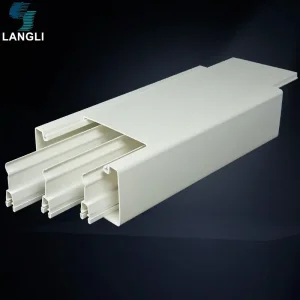
An in-depth analysis of Unplasticized Polyvinyl Chloride (PVC-U / UPVC) physical performance characteristics and chemical resilience.
Unplasticized Polyvinyl Chloride (PVC-U), also designated as rigid PVC, is a high-performance thermoplastic polymer synthesized through the free-radical polymerization of vinyl chloride monomer (VCM), deliberately omitting plasticizing agents. This structural omission retains the high intermolecular force between polymer chains, yielding a dense, highly rigid matrix that exhibits exceptional mechanical strength, chemical resistance, and dimensional stability.
In modern industrial applications, the physical dynamics of PVC-U systems depend heavily on precise chemical compounding. Strategic inclusion of heavy-metal-free Calcium-Zinc (Ca/Zn) or Organotin heat stabilizers prevents thermo-oxidative degradation during high-shear twin-screw extrusion processes. Concurrently, chlorinated polyethylene (CPE) or acrylic-based impact modifiers are integrated to boost Izod impact resistance, ensuring the piping medium retains structural toughness even under low ambient temperatures (0°C to -10°C) without brittle failure.
PVC-U possesses an exceptionally low Hazen-Williams friction coefficient (C ≈ 150) and a Manning roughness factor of n = 0.009. In hydraulic and fluid conveyance applications, this smooth internal bore suppresses boundary layer friction, preventing scale accumulation, biofilm adhesion, and pressure loss over extended operational distances. For electrical conduit applications, PVC-U provides a dielectric strength exceeding 30 kV/mm, establishing a robust non-conductive boundary against electrical fault leakage.
| Physical / Mechanical Parameter | PVC-U (Rigid UPVC) | HDPE (High-Density PE) | PPR (Polypropylene Random) | Galvanized Steel Conduit |
|---|---|---|---|---|
| Tensile Strength at Yield (MPa) | 50 - 55 | 22 - 30 | 25 - 28 | 330 - 450 |
| Modulus of Elasticity (MPa) | 3000 - 3600 | 800 - 1200 | 900 - 1400 | 200,000 |
| Thermal Conductivity (W/m·K) | 0.14 - 0.17 | 0.42 - 0.51 | 0.24 | 45 - 55 |
| Chemical Resistance (pH 2 - 12) | Exceptional | High | High | Poor (Prone to Oxidation) |
| Dielectric Insulation Rating | >30 kV/mm (Insulator) | >25 kV/mm | >25 kV/mm | 0 (Conductor) |
| Fire Behavior / Flammability | Self-Extinguishing (V-0) | Combustible (HB) | Combustible (HB) | Non-Combustible (A1) |
Analyzing global market adoption, international standard compliance, and sector-specific procurement drivers.
Driven by strict building codes compliance including ASTM D1785 (Schedule 40/80) for pressure systems and UL 651 / NEMA TC-2 for electrical conduits. High demand in commercial real estate retrofit, underground power grid modernization, and municipal stormwater projects prioritizing non-metallic corrosion prevention.
Regulated under BS EN 61386 / BS 4607 / DIN 8061 standards. In GCC countries (UAE, Saudi Arabia, Qatar), PVC-U piping is widely adopted due to severe soil salinity and aggressive coastal ambient conditions where conventional metallic conduits suffer rapid atmospheric oxidation and galvanic corrosion.
Driven by mega-scale urban infrastructure projects, smart city developments, telecom 5G fiber optic sub-ducting, and agricultural drip-irrigation networks. High volume requirements for standardized 20mm to 160mm containment ducting and light/heavy gauge pressure pipes.
Engineered deployment in electrical safety containment, chemical conveyance, and subsurface telecom sub-ducting.
In high-density commercial skyscrapers and residential complexes, electrical wiring pathways require strict fire isolation. Rigid PVC-U conduits formulated with self-extinguishing additives achieve UL94 V-0 flame ratings. Upon ignition removal, combustion ceases immediately, preventing flame propagation along cable risers. Low-smoke, zero-halogen (LSZH) variants prevent toxic acidic gas release, protecting building occupants during emergency evacuations.
Chemical processing plants, electroplating facilities, and semiconductor fabs process aggressive inorganic acids, sodium hydroxide solutions, and saline trade effluents. Metallic piping corrodes quickly in these environments. PVC-U remains chemically inert to most acids, alkalis, salts, and paraffinic hydrocarbons up to operating temperatures of 60°C (140°F), maintaining fluid purity and system uptime.
Modern telecommunications networks rely on high-density PVC-U micro-ducts and multi-way conduit channels for underground optical fiber deployment. Featuring high ring stiffness (SN4, SN8) to withstand dynamic surface traffic loads, and factory pre-lubricated inner walls, these pipes significantly lower cable pulling tension and increase installation efficiency over long spans.
Global agricultural infrastructure relies on UV-stabilized PVC-U pressure pipes for mainline water distribution and sub-surface drip irrigation networks. Reinforced with titanium dioxide (TiO2) solar protection screen packages, these systems resist solar degradation, soil moisture salinity, fertilizer chemicals, and root penetration over multi-decade deployment life cycles.
Leveraging industrial cluster economies, automated precision extrusion, and integrated logistics infrastructure in Foshan/Shunde.
Foshan Shunde has long served as global manufacturing epicenter for polymer processing and electrical containment hardware. Establishing a factory base within this specialized industrial hub grants distinct structural, technological, and logistical advantages for global importers and enterprise project contractors:
Direct supply contracts with domestic PVC resin refiners ensure consistent resin batch viscosity, controlled molecular weight distribution, and protection against global spot-market pricing volatility.
Equipped with high-efficiency parallel twin-screw extruders, closed-loop ultrasonic wall thickness monitoring systems, and fully automated online socketing/belling machines to deliver strict dimensional tolerances (±0.1mm).
Located near major ocean export hubs (Nansha, Yantian, Hong Kong), enabling direct FCL container consolidation across diverse product lines (conduits, fittings, trunking, junction boxes) to minimize landed shipping costs.
Exploring next-generation bio-resins, smart sensor integration, and nano-composite structural enhancements.
To support global Scope 3 decarbonization, polymer research focuses on bio-attributed PVC resins manufactured using bio-based ethylene derived from sustainable pine oil waste. Paired with 100% lead-free organic stabilizer systems, these zero-carbon resins significantly reduce carbon intensity without compromising mechanical strength.
Incorporating functionalized multi-walled carbon nanotubes (MWCNTs) and surface-modified nano-calcium carbonate (nano-CaCO3) elevates ring stiffness, tensile yield, and low-temperature impact resistance by up to 35%, allowing wall thickness reduction while maintaining structural integrity.
Integrating continuous conductive micro-traces and embedded optical fiber sensors into the pipe wall enables real-time monitoring of cable thermal anomalies, moisture ingress, and structural displacement across critical utility networks.
Verifiable E-E-A-T testing methods ensuring structural compliance with rigorous international standards.
To satisfy international municipal tenders, electrical contractor specifications, and customs compliance across 60+ countries, factory quality control operates under strict ISO 9001 quality management systems. Every batch undergoes 5 mandatory laboratory procedures before factory exit:
Conducted in water baths at 20°C and 60°C per ISO 1167 / ASTM D1598, subjecting pipes to continuous hoop stress for 1,000 hours to ensure zero structural micro-fracturing or localized deformation.
Conditioned at 0°C for 2 hours, samples are subjected to striker impacts from specified heights per BS EN 61386. Zero cracking or shatter fragmentation is permitted, proving compound toughness.
Evaluated using a 960°C glow-wire loop under IEC 60695-2-11. Flame duration must extinguish within 30 seconds of probe withdrawal with zero flaming drips falling on underlying tissue paper.
Ensures dimensional thermal stability (VST ≥ 82°C per ISO 306). Heat reversion testing at 150°C confirms longitudinal expansion remains below 3%, preventing joint dislodgement in hot climates.
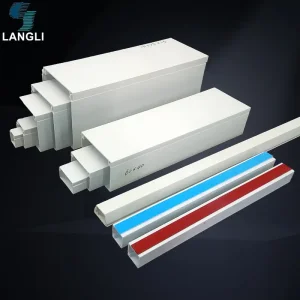
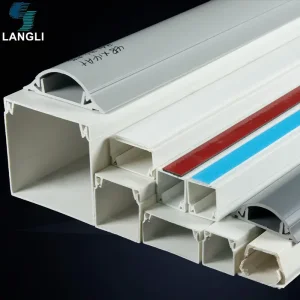
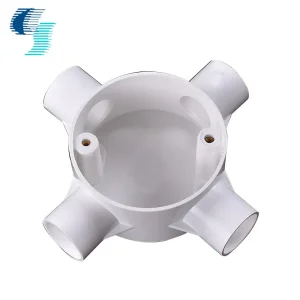
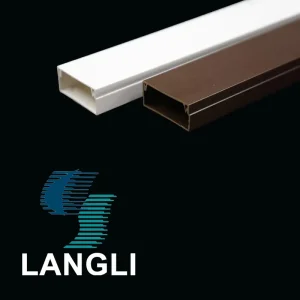
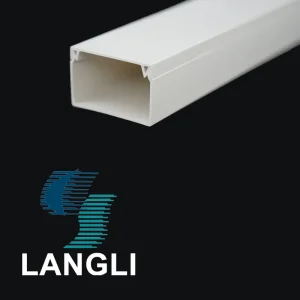
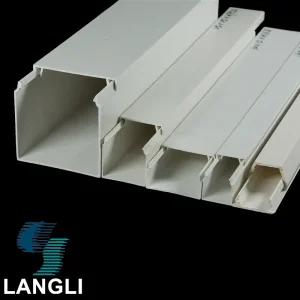
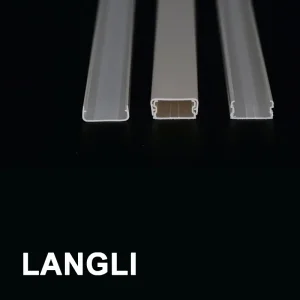
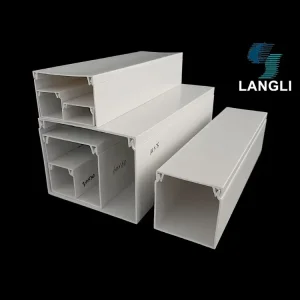
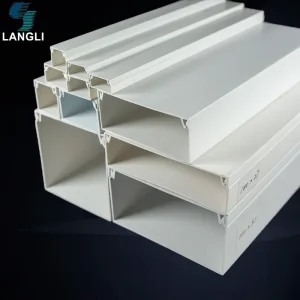
Explore our full wholesale range of custom PVC trunking, junction boxes, and wireway duct systems.
Answers to crucial technical, logistical, and compliance questions for commercial buyers and engineering contractors.